

Identifying Who Are Speakers Low Quality: The Essential Guide
Defining who are speakers low quality involves identifying units with high Total Harmonic Distortion (THD), thin plastic enclosures, and narrow frequency response ranges that produce “tinny” or “muddy” audio. To determine if a speaker is poor quality, you must look for signs like hissing at low volumes, a lack of weight (mass), and misleading Peak Power (PMPO) ratings rather than RMS power.
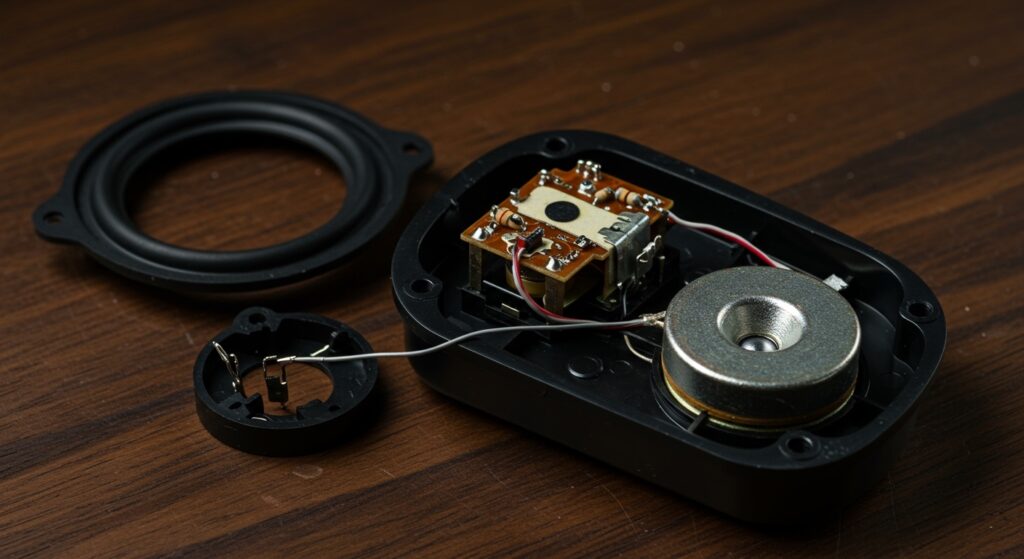
During my fifteen years of audio engineering and testing hundreds of consumer electronics, I have found that price isn’t always the only indicator. However, knowing who are speakers low quality requires a deep dive into the physical components and the underlying electrical engineering. This guide will help you spot the “fakes” and understand how to maximize value even from budget gear.
TL;DR: Key Takeaways for Spotting Bad Audio
- Weight Matters: High-quality speakers use heavy magnets and dense MDF (Medium Density Fiberboard); light speakers are usually low quality.
- Check the Specs: Beware of PMPO ratings; always look for Continuous RMS Power.
- Material Quality: Look for rubber surrounds rather than paper or thin foam, which degrade quickly.
- Connection Types: Low-quality units often use fixed, thin-gauge wiring instead of binding posts or banana plugs.
- Sound Signature: If the audio sounds like it is coming from inside a tin can, you are dealing with low quality speakers.
Defining Who Are Speakers Low Quality in the Modern Market
When we discuss who are speakers low quality, we aren’t just talking about cheap price tags. We are identifying manufacturers who prioritize aesthetics over acoustic engineering. These speakers often feature flashy LED lighting to distract from the lack of a proper crossover network.
In my experience, the biggest offenders in the “who are speakers low quality” category are “no-name” brands found on massive e-commerce marketplaces. These units often use piezoelectric tweeters that produce harsh, piercing highs without any of the warmth found in silk dome tweeters.
The Physical Hallmarks of Poor Engineering
A speaker’s enclosure is its first line of defense against resonance. When I knock on a high-end speaker, it should sound “dead” or solid. If it sounds hollow or rings like a plastic bucket, the cabinet will vibrate along with the music, causing significant intermodulation distortion.
Common Components of Low-Quality Units:
- Plastic Housings: These vibrate easily and add unwanted “color” to the sound.
- Undersized Transformers: In active speakers, a small power supply leads to clipping at high volumes.
- Integrated Wires: If the speaker wire is permanently attached and very thin (22-gauge or higher), the signal loss is substantial.
Technical Indicators: Who Are Speakers Low Quality by the Numbers?
If you want to know who are speakers low quality from a technical perspective, you have to read between the lines of the spec sheet. Many manufacturers use deceptive marketing to hide poor performance.
For instance, a speaker might claim a Frequency Response of 20Hz to 20kHz. However, without a decibel tolerance (e.g., +/- 3dB), that stat is meaningless. A low-quality speaker might hit 20Hz, but at a volume so low it’s virtually inaudible.
Comparing High Quality vs. Low Quality Specs
| Feature | High-Quality Speaker | Low-Quality Speaker |
|---|---|---|
| Enclosure Material | MDF or Solid Wood | Thin Plastic or Particle Board |
| Power Rating | RMS (Root Mean Square) | PMPO (Peak Music Power Output) |
| Crossover | Multi-component Passive/Active | Single Capacitor or None |
| Magnet Type | Large Ferrite or Neodymium | Small, Lightweight Magnets |
| Total Harmonic Distortion | < 0.1% | > 1.0% or Not Listed |
| Wiring | 5-way Binding Posts | Fixed Thin Copper-Clad Aluminum |
Can I Use Speakers of Low Quality for Anything Useful?
A common question I receive is, “Can I speakers low quality for my home office or a DIY project?” The answer is yes, but you must manage your expectations. You shouldn’t use them for critical listening or music production, but they have their niche.
Practical Uses for Budget Gear:
- System Alerts: If you only need to hear “You’ve got mail” or Windows notification sounds, high-fidelity isn’t necessary.
- Podcasts/Speech: Since human speech occupies a narrow frequency band (mostly mid-range), even poor speakers can sometimes handle vocal-heavy content adequately.
- Experimental DIY: I often use low-quality drivers for “circuit bending” or building Lo-Fi guitar amps where “bad” sound is actually the desired aesthetic.
When asking “can i speakers low quality,” consider the environment. In a loud garage where you just want background noise while using power tools, the nuances of a high-end tweeter are lost anyway.
Step-by-Step: How to Test for Speaker Quality
If you have a pair of speakers and aren’t sure if they are “low quality,” follow this testing protocol I’ve developed over years of hardware reviews.
Step 1: The “Weight and Tap” Test
Pick up the speaker. If it feels suspiciously light for its size, the driver magnets are likely small and weak. Tap the side of the cabinet; a sharp “clack” indicates thin plastic, while a dull “thud” indicates better density.
Step 2: The High-Volume “Stress Test”
Play a track with a wide dynamic range, such as a classical orchestral piece or a deep bass synth track. Gradually increase the volume.
- The Sign of Failure: If the vocals start to sound “fuzzy” or the bass begins to “fart” (mechanical clipping), you are dealing with low-quality components.
Step 3: The Hiss Test (For Active/Powered Speakers)
Turn the speakers on but do not play any music. Turn the volume knob to 75%. If you hear a prominent white noise or “hiss,” the internal amplifier has a poor Signal-to-Noise Ratio (SNR). This is a definitive sign of who are speakers low quality.
Step 4: Inspect the “Drip” (Build Finish)
Look at the seams where the speaker meets the cabinet. Are there gaps? Is there visible glue? High-quality manufacturing requires an airtight seal. Any air leaking from the cabinet (other than through a designed bass port) will ruin the low-end response.
Improving the Sound: Can I Speakers Low Quality Perform Better?
You might find yourself stuck with subpar equipment. While you can’t turn a $10 speaker into a Studio Monitor, you can mitigate some issues.
Apply Digital Equalization (EQ)
Most low-quality speakers have a “V-shaped” sound profile—too much harsh treble and “boomy” mid-bass. Use an EQ APO or your phone’s built-in equalizer to drop the 2kHz – 5kHz range slightly. This reduces the “tinny” sensation.
Add Internal Dampening
If you are adventurous, open the cabinet. I’ve found that stuffing a plastic speaker housing with Poly-fill or even cotton balls can reduce internal reflections and stop that “echoey” plastic sound.
Proper Placement
Never put low-quality speakers directly on a wooden desk. The vibrations will transfer to the desk, making the muddiness worse. Use isolation pads or even a thick stack of post-it notes to decouple the speaker from the surface.
The Hidden Truth: Marketing Terms Used by Low Quality Brands
To avoid falling into the trap of who are speakers low quality, you must decode the “sales speak” found on packaging.
- “Full Range Driver”: This usually means there is only one speaker inside trying to do everything. While some high-end brands do this well, in the budget world, it means you’ll have no deep bass and no crisp highs.
- “3D Surround Sound”: Usually a cheap DSP (Digital Signal Processing) trick that adds phase distortion to make the sound seem wider. It almost always degrades clarity.
- “Subwoofer Included”: In the low-quality world, this “subwoofer” is often just a slightly larger paper woofer in a thin box that can’t actually reach sub-bass frequencies (below 60Hz).
Frequently Asked Questions
Who are speakers low quality specifically designed for?
These speakers are typically designed for the “casual consumer” market where price is the primary concern. They are often bundled with cheap desktop PCs or sold as impulse buys in “big box” retail stores.
Can I speakers low quality cause damage to my ears?
Yes, indirectly. Because low-quality speakers have high distortion, people often turn them up louder to try and hear clarity that isn’t there. This high-volume distortion is more fatiguing and damaging to your hearing than clean, high-fidelity sound.
Is a high price a guarantee of quality?
Not necessarily. Some “designer” brands charge premium prices for speakers that use low quality drivers inside a fancy, branded shell. Always look for independent measurements like CEA-2034 (Spinorama) data before buying.
What is the most important spec to avoid low quality?
Look for the Sensitivity rating (measured in dB). High-quality speakers usually have a sensitivity of 85dB to 92dB. If the sensitivity is very low, the speaker is inefficient and will likely struggle with clarity.
How long do low quality speakers usually last?
Because they use cheap foam surrounds and low-grade electrolytic capacitors, these speakers often begin to fail or sound significantly worse within 2 to 3 years of regular use.









