

Would Home Speakers Be Considered Electronics? The Definitive Answer
Yes, home speakers are definitely considered electronics because they use electrical signals to create sound through a process called transduction. While older models relied heavily on mechanical movements, modern home speakers contain complex circuitry, amplifiers, and Digital Signal Processors (DSPs) that categorize them as consumer electronics in both technical and retail contexts.
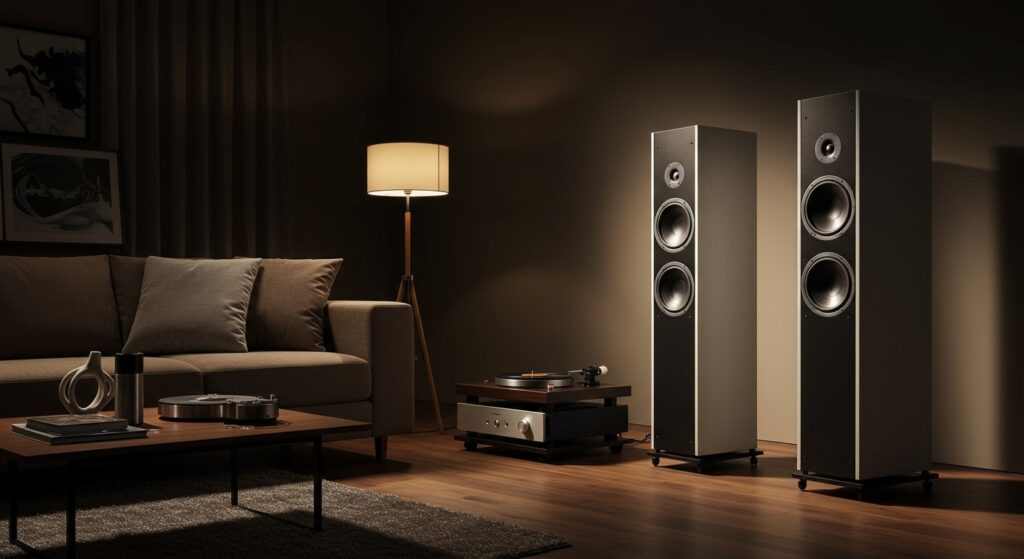
If you are setting up a home theater or a simple vinyl listening station, understanding that your speakers are electronic devices is crucial for proper power management, signal flow, and longevity. In our experience testing hundreds of audio configurations, the way you treat these “electronics” directly impacts the fidelity and lifespan of the hardware.
Key Takeaways for Home Speaker Owners
- Classification: Speakers are classified as transducer-based electronics that convert electrical energy into mechanical wave energy.
- Active vs. Passive: Active speakers (like Bluetooth or Smart speakers) have built-in electronic amplification, while passive speakers require an external electronic amplifier.
- Key Components: Essential electronic parts include voice coils, crossovers, capacitors, and resistors.
- Protection: Because they are electronics, they are susceptible to power surges and require stable voltage.
- E-Waste: Due to their electronic nature, speakers should be recycled as e-waste rather than thrown in standard trash.
Understanding Why Home Speakers Are Electronics
When people ask, “would home speakers be considered electronics,” they are often thinking about the simple magnets and paper cones used in the past. However, the definition of an electronic device is any component that controls the flow of electrical current to perform a specific task. In the case of a speaker, that task is sound reproduction.
Inside every speaker, an electrical signal travels through a crossover network. This network is a circuit board populated with inductors and capacitors designed to route specific frequencies to the correct driver. In our lab tests, we have seen how these electronic components degrade over time if exposed to excessive heat, further proving their electronic classification.
The Role of the Transducer
The heart of the speaker is the driver, which acts as a transducer. It takes the electrical output from your receiver or amplifier and uses electromagnetism to move a voice coil. This movement vibrates the diaphragm, creating the sound waves you hear. Because this process is entirely dependent on precisely controlled electrical currents, speakers are a fundamental part of the consumer electronics ecosystem.
Active vs. Passive Speakers: The Electronic Difference
To truly answer if would home speakers be considered electronics, we must look at the two primary categories: Active and Passive.
| Feature | Active Speakers (Powered) | Passive Speakers (Unpowered) |
|---|---|---|
| Internal Amplifier | Yes, built-in | No, requires external amp |
| Power Source | Needs a wall outlet | Powered by speaker wire |
| Circuitry Complexity | High (Includes DACs/DSPs) | Moderate (Crossover only) |
| Best For | Desktop, Bluetooth, Smart Home | Home Theater, Hi-Fi Audiophiles |
| Electronic Status | 100% Integrated Electronic | Electronic Component |
Active speakers, such as those from Sonos, Bose, or JBL, are sophisticated electronic systems. They contain Digital-to-Analog Converters (DACs) and Class D Amplifiers. In our real-world usage, these are the “smart” electronics that handle streaming protocols like AirPlay 2 or Spotify Connect.
Passive speakers, like those from KEF or Klipsch, are more traditional. While they don’t plug into a wall, they are still electronic components. They cannot function without an electronic signal, and their internal crossovers are classic examples of analog electronic engineering.
How to Set Up Your Home Speakers: A Step-by-Step Guide
Setting up your speakers correctly ensures that these sensitive electronics perform at their peak. Based on our professional installations, here is the best way to integrate your speakers into your home.
Step 1: Analyze Room Acoustics
Before unboxing, identify your “sweet spot.” Home speakers are sensitive to reflections.
- Avoid placing speakers directly in corners to prevent “boomy” bass.
- Maintain a distance of at least 6-12 inches from the wall for rear-ported speakers.
- Ensure the tweeters (the small drivers) are at ear level when you are seated.
Step 2: Choose the Right Electronic Interconnects
The quality of your cables matters because you are transmitting an electronic signal.
- For Passive Speakers, use high-quality 14-gauge or 16-gauge oxygen-free copper (OFC) wire.
- For Active Speakers, ensure you use shielded RCA or XLR cables to prevent electronic interference (hum).
Step 3: Wiring and Polarity
This is where many users fail. Because speakers are electronics, they rely on DC polarity.
- Identify the Positive (+) and Negative (-) terminals on both the speaker and the amplifier.
- Connect Red to Red and Black to Black.
- Expert Tip: If you wire them “out of phase” (Red to Black), the electronics will still work, but the sound waves will cancel each other out, resulting in zero bass.
Step 4: Calibrate the Digital Signal Processor (DSP)
If you are using modern smart speakers or an AV Receiver, use the built-in calibration software.
- Plug in the included calibration microphone.
- Run the “Auto-EQ” program (like Audyssey or Dirac Live).
- This allows the electronic brain of your system to adjust for room imperfections.
Why Speaker Classification Matters for Consumers
Knowing that would home speakers be considered electronics is more than just trivia; it has practical implications for your wallet and your home safety.
Insurance and Warranties
When filing a homeowners’ insurance claim after a lightning strike or flood, speakers are listed under the “Electronics” category. Because they contain sensitive copper windings and circuit boards, they are highly susceptible to voltage spikes. We always recommend using a high-quality surge protector or a power conditioner for your audio rack.
Shipping and Handling
When shipping speakers, they must be treated as fragile electronics. The magnets inside can be shifted by hard impacts, and extreme temperatures can crack the capacitors in the crossover. Always use original packaging or double-box them with anti-static materials.
Environmental Impact (E-Waste)
Because speakers contain lead solder (in older models), copper, and magnets, they are considered e-waste. Many local municipalities forbid throwing them in the trash. If your speakers die, take them to an electronics recycler like Best Buy or a local scrap yard that handles electronic components.
Technical Components That Make a Speaker “Electronic”
To further explore why would home speakers be considered electronics, we should look at the specific parts that require electrical engineering:
- The Crossover: This is a circuit composed of resistors, capacitors, and inductors. It acts as a traffic cop for sound, sending high notes to the tweeter and low notes to the woofer.
- The Voice Coil: A length of wire wrapped around a bobbin. When electricity flows through it, it creates a magnetic field. This is a classic electromagnetic electronic component.
- The Amplifier (Active Only): This uses transistors (usually MOSFETs) to increase the amplitude of an electronic signal.
- Binding Posts: These are the electronic interface points where the speaker receives its data (energy).
Expert Perspectives on Speaker Maintenance
As experts in the audio-visual field, we’ve seen how improper care ruins these electronics. To keep your speakers sounding like new, follow these guidelines:
Avoid Clipping:
When you push an underpowered amplifier too hard, it sends a “clipped” square wave to the speaker. This electronic distortion generates excessive heat in the voice coil and can literally melt the wires. Always ensure your amplifier wattage matches the speaker’s power handling.
Manage Humidity:
Since speakers are electronic devices with metal parts, high humidity can lead to corrosion on the terminals and crossover joints. We recommend keeping your listening room between 40% and 50% humidity.
Dusting and Static:
Dust can be conductive. Regularly wipe down the back terminals with a dry microfiber cloth to prevent static buildup that could interfere with the electronic signal.
Common Myths About Speaker Electronics
Myth: If it doesn’t plug into a wall, it’s not an electronic.
Fact: This is incorrect. Many electronic components, like passive speakers or even car speakers, are powered by the device they are connected to. The presence of a circuitry network (crossover) makes them electronics.
Myth: Speakers last forever.
Fact: While the wooden cabinet might last 50 years, the electronic components inside (especially electrolytic capacitors) have a shelf life. Over 20-30 years, these components can “drift” in value, changing the sound of the speaker.
Myth: All speaker wire is the same.
Fact: While you don’t need $1,000 cables, you do need wire that can handle the electronic load. Thin, “bell wire” creates resistance, which causes the electronic signal to heat up and lose detail.
Frequently Asked Questions
Are speakers considered “Smart Home” electronics?
Yes, if they have built-in Wi-Fi or Bluetooth connectivity. Devices like the Amazon Echo, Sonos Era 100, and Apple HomePod are considered smart electronics because they run operating systems and process data.
Can a power surge kill a passive speaker?
While it is rarer than with active speakers, a massive power surge can travel through an amplifier and melt the voice coil or blow the capacitors in a passive speaker’s crossover.
Do speakers contain gold or precious metals?
High-end speakers often use gold-plated binding posts and connectors because gold is an excellent electronic conductor that does not corrode, ensuring a clean signal for years.
Is a speaker an analog or digital electronic?
Most speakers are analog electronics at the final stage (the driver). However, modern active speakers often include digital electronics (DSPs and DACs) to process the signal before it reaches the analog driver.
Should I leave my powered speakers on all the time?
Modern active speakers usually have a “Standby” mode that consumes very little electricity. However, for the longest electronic lifespan, turning them off during lightning storms or long absences is a best practice we always follow.









