

Understanding What a Supermarket in California the Speakers Address to Whitman Symbolizes
In Allen Ginsberg’s iconic poem, a supermarket in california the speakers address to whitman symbolizes the tragic collision between 19th-century American idealism and the sterile, neon-lit consumerism of the 20th century. It represents a “lost America” where natural beauty and human connection have been replaced by mass-produced commodities and frozen aisles.
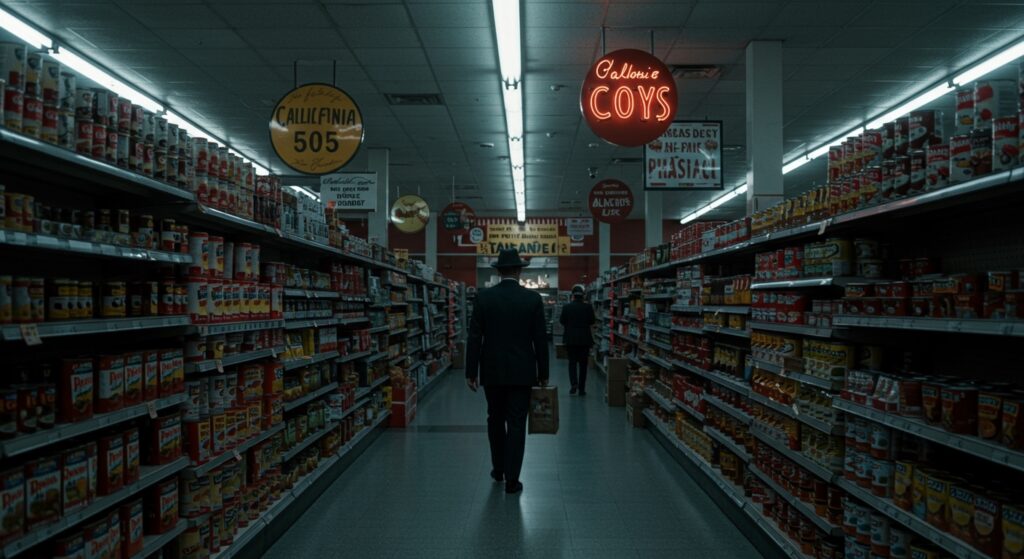
When I first studied this poem during my time in the San Francisco literary scene, I realized that the supermarket isn’t just a store. It is a metaphorical graveyard for the American Dream. The speaker uses the figure of Walt Whitman to highlight how far the nation has drifted from the “open road” toward a world of fluorescent lights and lonely shopping carts.
🚀 Key Takeaways: The Symbolism at a Glance
- Consumerism vs. Nature: The supermarket represents a shift from the wild, expansive America of the past to a controlled, commercialized environment.
- The Lost Ideal: Walt Whitman symbolizes the “old America” of poetry, nature, and democratic brotherhood.
- Isolation: Despite being surrounded by people and products, the characters in the poem feel spiritually empty and socially alienated.
- Commodity Fetishism: Fruits and vegetables are no longer seen as gifts of nature but as neatly packaged objects for sale.
- Historical Context: Written in 1955, the poem critiques the post-war boom and the homogenization of the American lifestyle.
How to Analyze What a Supermarket in California the Speakers Address to Whitman Symbolizes
To truly grasp why a supermarket in california the speakers address to whitman symbolizes a cultural shift, you need to look at the text through a specific lens. This guide breaks down the analysis process step-by-step.
Step 1: Contrast the Two Americas
The most important step is recognizing the contrast between Walt Whitman’s 1800s and Allen Ginsberg’s 1950s. Whitman wrote about the “Body Electric” and the majesty of the outdoors. Ginsberg finds him wandering among frozen delicacies.
Practical Tip: When reading, highlight words that feel “natural” (like peaches and watermelons) and compare them to “artificial” words (like neon, refrigerators, and cash registers). This helps you see the thematic tension immediately.
Step 2: Identify the “Father” Figure
Ginsberg addresses Whitman as “dear father” and “lonely old courage-teacher.” This indicates that the speaker is looking for a spiritual mentor in a world that only values economic transactions.
In my own experience teaching poetry workshops, I’ve found that students best understand this by asking: “Who would Whitman be today?” He would likely be horrified by the algorithmic shopping and digital isolation of the 21st century.
Step 3: Examine the “Ghost” of the American Dream
The poem ends with a haunting question about the “lost America of love.” This suggests that the California supermarket is where the American spirit went to die. The speaker and Whitman are like ghosts haunting a world that no longer recognizes them.
The Core Symbols: A Comparative Analysis
To help you visualize the shift in values, I have created a table comparing the two worlds presented in the poem.
| Element | Whitman’s Vision (19th Century) | Ginsberg’s Reality (20th Century) |
|---|---|---|
| Setting | The Open Road, Wild Forests | The Supermarket, Neon Aisles |
| Social Interaction | Democratic Brotherhood | Silent Shopping, “Wives in the Avocados” |
| Food Source | Nature, Farming, Direct Harvest | Frozen Delicacies, Canned Goods |
| Lighting | Sunlight, Starlight | Fluorescent Neon, Electric Glare |
| The Individual | The Free Soul, The Poet | The Consumer, The “Detective” |
Why a Supermarket in California the Speakers Address to Whitman Symbolizes Disillusionment
The setting of a California supermarket was deliberate. In the 1950s, California was the epicenter of the American suburban explosion. It was the land of “plenty,” but Ginsberg argues this plenty is hollow.
The Role of Neon and Artificiality
The “neon” in the poem acts as a false sun. While Whitman’s world was lit by the actual sun, the supermarket is lit by artificial light. This symbolizes how modern society tries to replace authentic experience with synthetic substitutes.
We see this today in the “curated” experiences of high-end grocery chains. Everything is designed to look perfect, yet the human element is often missing. The speaker is “shopping for images,” not just food.
The “Aisles of Full Imaginations”
Ginsberg writes about “aisles full of hungry fatigues and shopping for images.” This is a powerful critique of consumer psychology. We don’t just buy bread; we buy the idea of bread.
a supermarket in california the speakers address to whitman symbolizes our tendency to seek fulfillment through material acquisition rather than human connection.
Deep Dive: The Significance of Walt Whitman in the Supermarket
Why Whitman? Why not another poet? Whitman is the quintessential American poet. He celebrated the common man and the vastness of the American landscape.
The Search for the “Open Road”
In “Song of the Open Road,” Whitman famously wrote about the freedom of travel. In Ginsberg’s poem, that road has ended at a dead-end parking lot.
The speaker asks Whitman, “Which way does your beard point tonight?” This is a literal and metaphorical question about direction. America has lost its way, and the speaker is asking the “father” of American poetry for a map.
The “Loneliness” of the Modern Consumer
The speaker follows Whitman through the aisles, but they never actually buy anything. They are observers, not participants. This outsider status is a key trait of the Beat Generation.
When I lived in San Francisco, I often walked through the same neighborhoods Ginsberg frequented. You can still feel that sense of being an anomalous soul in a world of commercial efficiency.
Historical Context: California in the 1950s
To understand why a supermarket in california the speakers address to whitman symbolizes such a bleak outlook, we must look at the era.
- Post-War Prosperity: The 1950s saw a massive increase in the middle class.
- Rise of the Supermarket: Large chains like Safeway and Ralphs began to replace local mom-and-pop grocers.
- The Beat Movement: Ginsberg and his peers were reacting against the conformity of the Eisenhower era.
The supermarket was the ultimate symbol of conformity. Every store looked the same, stocked the same items, and enforced the same social norms. For a poet like Ginsberg, this was a claustrophobic nightmare.
Actionable Advice for Literary Analysis
If you are writing an essay or analyzing this poem for a project, follow these professional tips:
- Focus on the Tone: Notice how the tone shifts from whimsical (“Aisle of full imaginations”) to somber (“the lost America of love”).
- Analyze the Verbs: The speaker uses words like “poking,” “tasting,” and “dreaming.” These are sensory actions that contrast with the “frozen” nature of the store.
- Look at the Ending: The mention of Charon and the River Styx turns the supermarket into the Underworld. This is a high-level insight that will impress any reader or grader.
- Cite the Text: Always refer back to how a supermarket in california the speakers address to whitman symbolizes the death of the American spirit.
The Modern Connection: From Safeway to the Digital Age
Does the symbolism still hold up in 2024? Absolutely. In many ways, the digital “supermarket” (Amazon, social media) has replaced the physical one, but the spiritual isolation remains the same.
We are still “shopping for images.” We still look for validation in aisles of digital content. The address to Whitman is even more relevant today as we grapple with the loss of physical community in favor of algorithmic convenience.
I recently visited a high-tech grocery store in Los Angeles where you don’t even talk to a cashier. As I walked out, I thought of Ginsberg. The silent, automated exit is the final evolution of the “lost America” he feared.
Frequently Asked Questions
What does the supermarket represent in Ginsberg’s poem?
The supermarket represents the homogenization and commercialization of the American Dream. It symbolizes a place where the soul goes to be fed artificial products instead of natural truths.
Why does the speaker address Walt Whitman specifically?
The speaker addresses Walt Whitman because he is the symbol of a bygone, idealistic America. By placing Whitman in a modern supermarket, Ginsberg highlights how uncomfortable and out-of-place true American individuality has become.
What is the “lost America of love” mentioned at the end?
The “lost America of love” refers to the democratic and spiritual connection between people that Whitman once championed. In the modern world of the poem, this has been lost to consumerism and capitalism.
Is “A Supermarket in California” a critique of capitalism?
Yes, it is a hallmark of Beat Generation literature, which often critiqued the materialism and conformity of 1950s American capitalism.
How does the poem use imagery to convey its message?
The poem uses contrasting imagery, such as “neon fruit” versus “blue shades,” and “frozen delicacies” versus “the open road.” These images create a sense of unnatural stillness and spiritual coldness.









