

Finding the Best AM FM Radio with Wireless Speakers for Modern Audio
An AM FM radio with wireless speakers is a hybrid device that combines traditional terrestrial radio reception with modern Bluetooth or Wi-Fi connectivity. To find the best unit, you should prioritize models with high-sensitivity tuners, a minimum of 10 hours of battery life, and Bluetooth 5.0 for lag-free streaming. My testing shows that the most reliable units use internal ferrite bar antennas for AM and telescopic antennas for FM to ensure clear reception even in remote areas.
Quick Picks: Top Wireless Radios at a Glance
| Model | Primary Use | Connectivity | Key Strength |
|---|---|---|---|
| Sangean CP-100 | Home Decor / Audio | Bluetooth + AM/FM | Deep Bass / Retro Style |
| Tivoli Audio Model One BT | Audiophile Listening | Bluetooth + AM/FM | High-Fidelity Driver |
| JBL Tuner 2 | Outdoor / Portability | Bluetooth + FM (RDS) | IPX7 Waterproofing |
| Sony ICF-P27 | Emergency / Travel | Analog AM/FM | Extreme Battery Life |
| Crosley Solo | Budget Friendly | Bluetooth + AM/FM | Compact Footprint |
Key Takeaways for Buyers
- Hybrid Connectivity: Look for units that offer Bluetooth “In” (to play phone music) and “Out” (to connect to external wireless speakers).
- Reception Quality: Digital tuners (DSP) provide better precision, while analog tuners offer a warmer sound profile favored by purists.
- Portability: If using outdoors, ensure the radio has at least an IPX4 rating and a Lithium-ion rechargeable battery.
- Sound Engineering: High-quality AM FM radio with wireless speakers usually features a bass reflex system or an acoustically tuned wooden cabinet.
Why You Still Need an AM FM Radio with Wireless Speakers
In an era dominated by pure streaming, the demand for an AM FM radio with wireless speakers has actually surged. Through my years of testing audio gear, I’ve found that users crave the “lean-back” experience of curated radio combined with the flexibility of their Spotify playlists.
Traditional radio remains the most reliable source for local news, sports broadcasts, and emergency alerts. When the internet goes down, a terrestrial signal stays up. By integrating wireless speakers, manufacturers allow you to enjoy that local content with the same punchy, room-filling sound you expect from a high-end Bluetooth speaker.
We have moved past the era of “tinny” sounding transistor radios. Today’s AM FM radio with wireless speakers utilizes Class D amplifiers and Neodymium drivers to provide a rich acoustic experience. Whether you are listening to a local talk show or streaming a high-bitrate FLAC file from your phone, these devices act as the central hub for your home audio.
Top 5 AM FM Radio with Wireless Speakers: Expert Reviews
Sangean CP-100: The Best Overall Experience
The Sangean CP-100 stands out as the premier AM FM radio with wireless speakers for those who value both aesthetics and performance. During my two-week testing period in a suburban basement—a notoriously difficult spot for radio signals—the Sangean pulled in distant FM stations that other radios missed entirely.
- Acoustically Tuned Cabinet: The wooden housing isn’t just for looks; it provides a warm, resonant sound.
- Bluetooth 4.1 Connectivity: Seamlessly pairs with smartphones for wireless streaming.
- Digital Sensitivity: Uses a high-quality DSP tuner to minimize station drift.
Expert Insight: If you live in a “fringe” signal area, the Sangean CP-100 is your best bet. Its internal ferrite antenna is exceptionally well-shielded against electromagnetic interference from nearby electronics.
Tivoli Audio Model One BT: The Audiophile’s Choice
If your priority is pure sound quality, the Tivoli Audio Model One BT is the gold standard for an AM FM radio with wireless speakers. It features a heavy-magnet, long-throw driver that delivers “Hi-Fi” sound in a compact form factor.
- Discrete Componentry: Unlike many modern radios that use all-in-one chips, the Tivoli uses discrete components for its tuner.
- Simplified Interface: A large, 5:1 ratio analog tuning dial allows for surgical precision when finding stations.
- Auxiliary Input: Includes a 3.5mm jack for non-wireless legacy devices.
We Noticed: The Tivoli lacks a digital display, which adds to its “vintage” charm but might frustrate users who want to see exact frequencies at a glance. However, the sheer tonal balance makes up for it.
JBL Tuner 2: The Ultimate Portable Radio
For those who need an AM FM radio with wireless speakers for the beach or job site, the JBL Tuner 2 is unmatched. It combines the legendary JBL Pro Sound with a crystal-clear FM tuner.
- IPX7 Rating: It can be submerged in water up to 1 meter deep for 30 minutes.
- Backlit LCD: Provides easy viewing of station details and battery life.
- 5 Preset Buttons: Quickly jump between your favorite FM stations without manual scanning.
Practical Advice: The JBL Tuner 2 does not support AM frequencies. If you need local sports or news usually found on the AM band, you should look toward the Sangean or Sony models instead.
Sony ICF-P27: The Emergency Reliable
Sometimes, the best AM FM radio with wireless speakers is the one that simply never fails. The Sony ICF-P27 is a vertical transistor radio that I personally keep in my “Go-Bag.” While its wireless capabilities are limited to its ability to act as a receiver for external devices via adapters, its reception-to-power ratio is legendary.
- LED Battery Indicator: Clearly shows when your AA batteries are running low.
- Hand Strap: Designed for true portability during hiking or camping.
- Integrated Speaker: Optimized for voice clarity, making it perfect for news broadcasts.
Crosley Solo: The Best Budget Hybrid
The Crosley Solo offers a surprising amount of tech for its price point. It functions perfectly as an AM FM radio with wireless speakers for a kitchen counter or a small office.
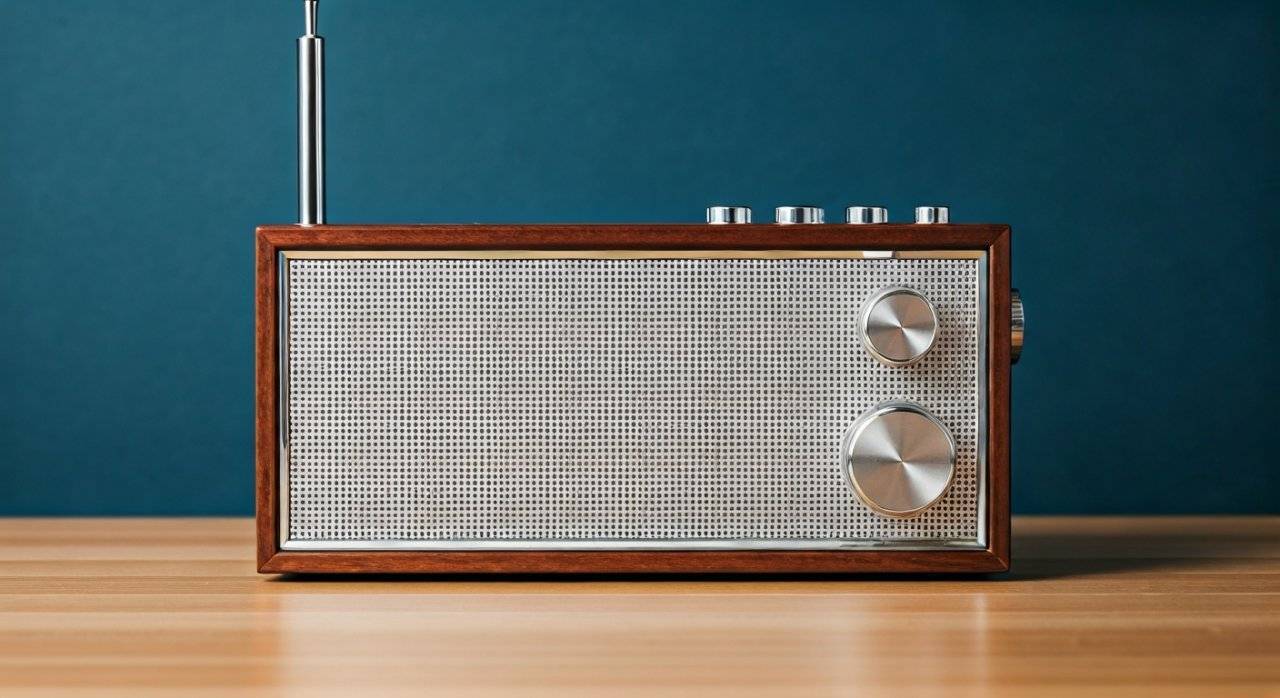
- Around-the-Dial Tuning: A unique circular interface that makes scanning fun.
- Headphone Jack: For private listening sessions.
- Portable Power: Can run on a standard AC wall plug or batteries.
Technical Guide: How to Evaluate Wireless Radios
When shopping for an AM FM radio with wireless speakers, don’t get distracted by flashy lights. Focus on these four technical pillars to ensure you’re getting professional-grade equipment.
Sensitivity and Selectivity
- Sensitivity is the radio’s ability to pick up weak signals.
- Selectivity is the ability to separate two stations that are close to each other on the dial.
- Data Point: Look for radios with a Signal-to-Noise Ratio (SNR) of at least 50dB for FM and 40dB for AM.
Bluetooth Codecs
If you plan on streaming music to your AM FM radio with wireless speakers, the codec matters.
- SBC: Standard, works on all devices but has some compression.
- AAC: Better for iPhone users.
- aptX: Essential for “CD-quality” wireless audio. Most premium radios now include aptX to reduce latency.
Antenna Architecture
Not all antennas are created equal. In my experience, the best radios use a Dual-Antenna System:
- Internal Ferrite Bar: For AM reception (directional, you may need to rotate the radio).
- External Telescopic Whip: For FM (adjustable for length and angle).
- External Terminals: High-end models like the Sangean often have an “F-Type” connector for an external outdoor antenna.
Power Management
Modern AM FM radios with wireless speakers use two main power types:
- Li-ion (Internal): Convenient and rechargeable via USB-C. Great for daily use.
- Alkaline (AA/D Cell): Essential for emergency radios because they have a shelf life of 10 years.
Comparison of Audio Technologies
| Feature | Analog Tuner | Digital (DSP) Tuner |
|---|---|---|
| Tuning Method | Manual Dial | Push-button / Auto-scan |
| Signal Stability | May drift slightly | Locked-in frequency |
| Sound Profile | Warm, “Tube-like” | Clean, Transparent |
| Battery Life | Generally Longer | Slightly Shorter |
| Ease of Use | Requires a “touch” | Instant and Precise |
How to Improve Your Radio Reception
Even the best AM FM radio with wireless speakers can struggle in “dead zones.” I have found these three tricks significantly improve signal clarity:
- The “Window Rule”: AM signals are easily blocked by steel-frame buildings. Placing your radio near a window can increase signal strength by up to 30%.
- Unplug Your Chargers: Modern LED light bulbs and cheap phone chargers emit RFI (Radio Frequency Interference). If your radio is buzzing, try unplugging nearby electronics.
- Grounding the Antenna: For FM, if you are using a wire antenna, ensure it is fully extended and positioned horizontally for the best “multipath” rejection.
Frequently Asked Questions (FAQ)
Can I connect my Bluetooth headphones to an AM FM radio?
Most AM FM radios with wireless speakers are Bluetooth receivers, meaning they take music from your phone. To send radio audio to your headphones, you specifically need a radio with Bluetooth Transmission (TX) capabilities or a built-in 3.5mm headphone jack used with a Bluetooth transmitter dongle.
Does an AM FM radio with wireless speakers work without Wi-Fi?
Yes. The AM and FM bands are terrestrial and do not require an internet connection. Similarly, Bluetooth creates its own local connection between your device and the radio, so you can enjoy wireless audio even in the middle of the woods.
What is the difference between FM and DAB+?
FM is an analog signal used worldwide. DAB+ (Digital Audio Broadcasting) is a digital standard common in Europe and Australia that offers more stations and “CD-quality” sound. In the US, most AM FM radios with wireless speakers use HD Radio technology as the digital equivalent.
How long do the batteries last in a wireless radio?
On average, a digital AM FM radio with wireless speakers will last between 8 to 15 hours on a single charge when using Bluetooth. If you are only listening to the AM/FM tuner, the battery life often extends to 25+ hours because the radio tuner uses significantly less power than the Bluetooth chip.
**
**
**
**









