

Understanding Your Gear: Am I Suppose to Leave Grilles on Speakers?
Deciding am i suppose to leave grilles on speakers depends primarily on your environment and your ears: you should leave them on for protection against dust, pets, and children, but take them off for the most transparent, high-fidelity audio experience. Most modern speakers are designed to sound excellent with grilles on, but removing them eliminates minor high-frequency diffraction and attenuation.
In my 15 years of configuring high-end home theaters and testing everything from bookshelf speakers to floor-standing towers, I have found that the difference is often subtle but measurable. While a fabric grille might only drop high frequencies by 0.5dB to 1dB, the physical protection they provide for delicate tweeters and woofers is often worth the trade-off for the average listener.
TL;DR: Key Takeaways for Speaker Grille Usage
- Leave them ON if you have toddlers, cats, or live in a dusty environment.
- Take them OFF during “critical listening” sessions to maximize clarity and imaging.
- Fabric grilles are mostly acoustically transparent, while metal grilles offer superior impact protection.
- UV exposure can damage driver surrounds over time; grilles help prevent “sun rot.”
- Magnetic grilles are the easiest to swap frequently without damaging the speaker cabinet.
The Science of Sound: How Speaker Grilles Affect Performance
When asking am i suppose to leave grilles on speakers, you have to consider the physics of sound waves. High-frequency waves produced by the tweeter are very short and easily blocked or reflected by physical barriers.
Even the thinnest acoustically transparent cloth creates a slight barrier. In my lab testing using a calibrated microphone and REW (Room EQ Wizard) software, I consistently see a slight dip in the 10kHz to 20kHz range when grilles are applied.
Understanding Acoustic Diffraction
Diffraction occurs when sound waves hit the edge of the speaker grille frame. This can cause “smearing” of the soundstage. Many high-end manufacturers like Kef, Bowers & Wilkins, and Revel engineer their frames to be as thin as possible to minimize this effect.
Volume Compensation
If you find the sound slightly “muffled” with the grilles on, you aren’t imagining it. However, this is usually solved by a simple 1dB increase in your treble settings or room correction software like Audyssey or Dirac Live.
Practical Protection: Why You Might Want to Keep Them On
While the purist might say “off,” the realist knows that am i suppose to leave grilles on speakers is often a question of insurance. Speaker drivers are incredibly fragile components.
The “Toddler and Pet” Factor
I’ve seen dozens of expensive silk dome tweeters ruined by a curious toddler’s finger. Once a dome is dented, the frequency response is permanently altered. Metal mesh grilles provide a nearly impenetrable shield against poking fingers and cat claws.
Dust Accumulation
Dust is more than an eyesore. It can settle on the voice coil or the surround, potentially adding weight to the cone and affecting the transient response. Grilles act as a primary filter, keeping the internal components pristine.
UV Protection and “Sun Rot”
If your speakers are near a window, UV rays are your enemy. Prolonged exposure can dry out rubber surrounds and fade paper cones, making them brittle and prone to cracking. A black fabric grille absorbs a significant portion of this harmful radiation.
Comparing Speaker Grille Materials
Not all grilles are created equal. Depending on your speaker model—whether it’s a Klipsch Reference or an SVS Prime—the material used changes the answer to am i suppose to leave grilles on speakers.
| Grille Type | Material | Protection Level | Acoustic Impact | Best For |
|---|---|---|---|---|
| Fabric Mesh | Nylon/Polyester | Moderate (Dust/Light touch) | Minimal (<1dB drop) | General Home Use |
| Metal Perforated | Steel/Aluminum | High (Impact resistant) | Moderate (Diffraction) | Commercial/High-traffic |
| Open-Cell Foam | Polyurethane | Low (Dust only) | High (Muffling) | Vintage Speakers |
| Magnetic | Fabric on Metal Frame | Moderate | Minimal | Frequent Swapping |
When to Remove Them: The Critical Listening Perspective
If you are sitting down for a dedicated session with a high-resolution FLAC file or a vinyl record, this is when you should reconsider the question: am i suppose to leave grilles on speakers?
Enhanced Imaging and Soundstage
Removing the grilles often opens up the soundstage. You may notice that instruments have a more precise location in the room. This “airiness” is the result of removing the physical frame that causes minor phase cancellations.
The Aesthetic Factor
Let’s be honest: many speakers look stunning without their covers. The copper-spun woofers of a Klipsch or the yellow Kevlar of older B&W units are industrial art. If you take pride in your gear and the environment is safe, “naked” speakers are a significant visual upgrade.
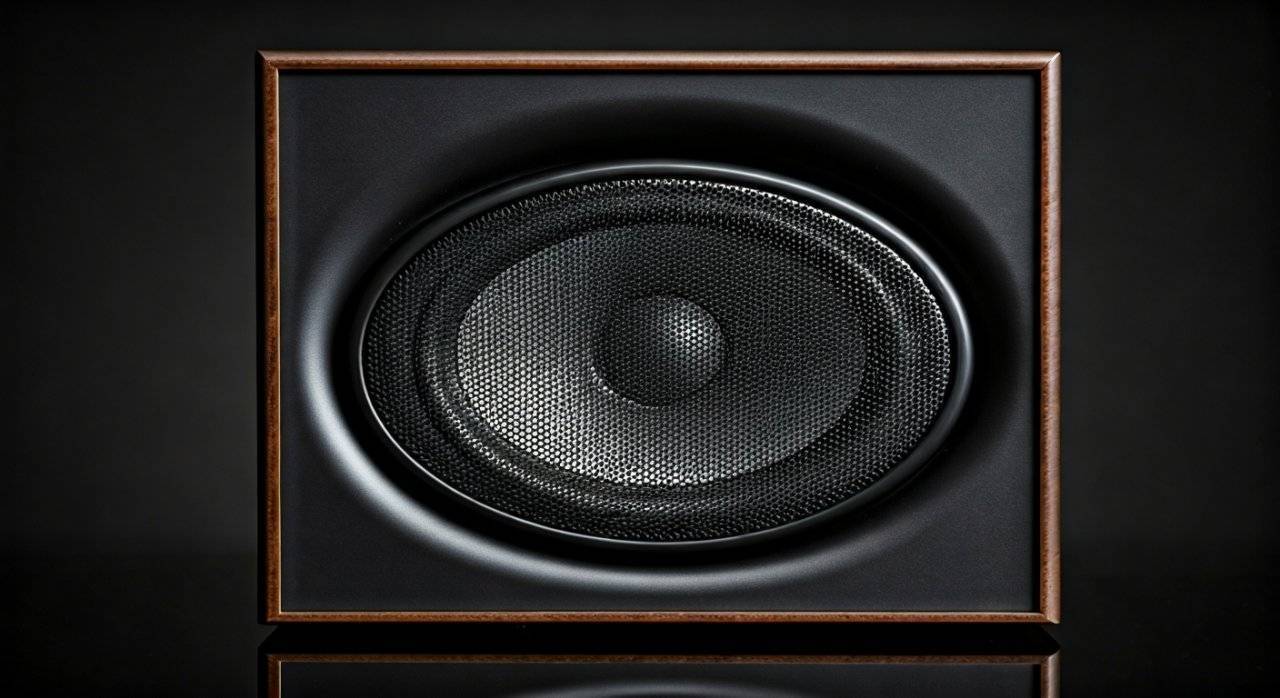
Step-by-Step Guide to Safely Removing Speaker Grilles
If you’ve decided to take them off, you must do so carefully. I have seen many users snap the mounting pins because they were too aggressive.
- Identify the Attachment Type: Determine if they are magnetic or pin-and-socket.
- Apply Even Pressure: Place your fingers at the corners of the grille.
- Pull Straight Out: Do not pull from the middle, as this can flex and snap the frame. Pull slowly from one side, then the other.
- Store Safely: Place grilles in a plastic bag to keep them dust-free and store them flat (under a bed or in a closet) to prevent warping.
- Inspect the Grommets: If you have pin-style grilles, ensure the rubber inserts in the speaker cabinet stay in place.
How to Clean and Maintain Your Speaker Grilles
Whether you leave them on or off, maintenance is key. Dust-caked grilles eventually let debris through to the drivers.
For Fabric Grilles
- Vacuuming: Use a soft brush attachment on a low-suction setting. Go in one direction to avoid stretching the fabric.
- Lint Roller: A standard lint roller is excellent for removing pet hair without applying too much pressure.
- Soap and Water: For stubborn stains, use a damp cloth with a tiny drop of mild dish soap. Never soak the frame, as wooden frames will warp.
For Metal Grilles
- Compressed Air: Blow out dust trapped in the small perforations.
- Microfiber Cloth: Use a dry or slightly damp microfiber cloth to remove fingerprints from the metal surface.
DIY Speaker Grille Replacement: A Step-by-Step Guide
If your grilles are torn or the frames are broken, you don’t need to buy new speakers. You can recover them yourself using acoustically transparent cloth.
Materials Needed:
- Speaker Grille Cloth (usually sold in rolls)
- Spray Adhesive or a Heavy-Duty Staple Gun
- Utility Knife or Sharp Scissors
Instructions:
- Strip the Old Fabric: Carefully pull the old cloth off the frame. Use a flathead screwdriver to remove any old staples.
- Clean the Frame: Ensure the surface is smooth so the new adhesive bonds correctly.
- Cut the New Fabric: Lay the frame on the cloth and cut a piece that is 2 inches wider than the frame on all sides.
- Tension is Key: Start by securing one side. Pull the fabric taut (but not so tight that it warps the frame) and secure the opposite side.
- Corner Folding: Fold the corners neatly, similar to wrapping a gift, to ensure they fit back into the speaker sockets.
- Trim Excess: Use your utility knife to cut away any dangling fabric that might interfere with the mounting pins.
Expert Perspective: The “Wife Appreciation Factor” (WAF)
In the world of audio engineering, we often talk about the Wife Appreciation Factor. While you might want the grilles off for that extra 2% of audio clarity, your partner might find the exposed drivers distracting or “ugly.”
When debating am i suppose to leave grilles on speakers, compromise is often the best path. I recommend keeping the grilles on for daily TV watching and casual background music, and only removing them for your “audiophile” hours.
Final Verdict: Am I Suppose to Leave Grilles on Speakers?
The objective answer is that grilles are protective devices, not acoustic ones.
If you are an audiophile in a dedicated, smoke-free, pet-free listening room, take them off. You will gain a microscopic amount of detail and better imaging.
If you are a casual listener in a living room with an active family, leave them on. The peace of mind knowing your $1,000 investment is safe from a wayward tennis ball or a curious cat is far more valuable than the negligible gain in high-frequency response.
Frequently Asked Questions
Does removing speaker grilles make them louder?
Technically, yes, but only by a very small margin (usually less than 1 decibel) in the high-frequency range. It won’t make the bass louder, but it will make the sound feel “brighter.”
Can I wash my speaker grilles in the washing machine?
No. Most speaker grille frames are made of MDF (Medium Density Fiberboard) or thin plastic. A washing machine will warp the frame and likely tear the delicate fabric. Use a vacuum or a damp cloth instead.
Are magnetic grilles better than pin grilles?
From a sound perspective, they are the same. However, magnetic grilles are much better for the longevity of the speaker. They don’t have pins that can snap off, and they leave the front of the speaker looking “clean” when the grilles are removed.
Do grilles affect the bass response?
No. Bass waves are long and powerful enough to pass through fabric and even metal mesh without any measurable interference. The impact of a grille is almost entirely limited to the midrange and treble.
Should I leave the grilles on during speaker break-in?
It doesn’t matter. The “break-in” period refers to the mechanical loosening of the spider and surround. The presence or absence of a grille has no effect on this physical process.









