

Understanding the Lifespan of Factory Audio
Whether 10 year old car speakers are too old depends entirely on their construction materials and the environment they’ve lived in, but for most factory systems, 10 years is the “red zone” where sound quality drops significantly. While they may still produce sound, the chemical breakdown of foam surrounds and paper cones usually results in muddy bass and distorted highs by the decade mark.
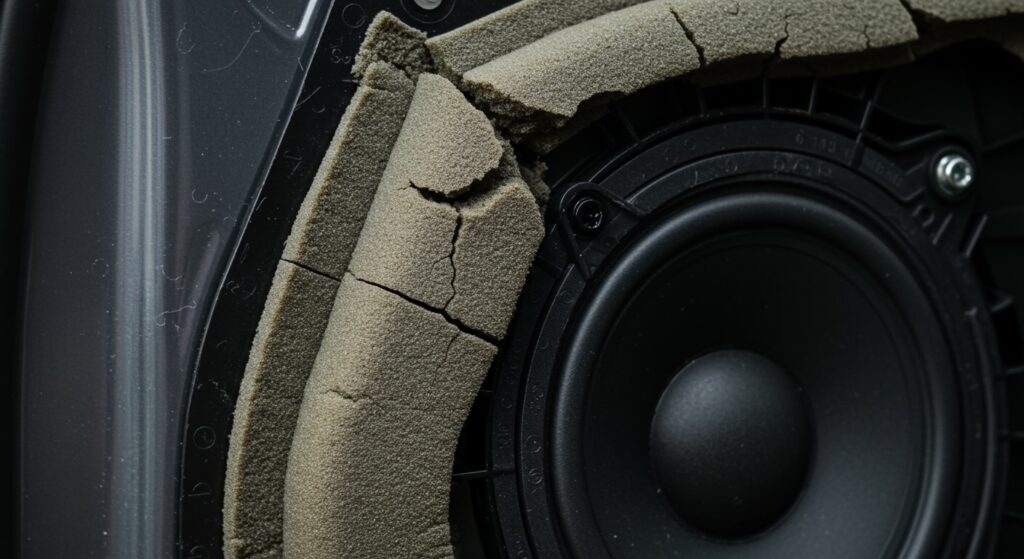
If you are hearing crackling, a “hollow” sound, or a lack of punchy low-end, your speakers have likely reached their mechanical limit. In my experience spending over a decade in custom car audio shops, I’ve found that OEM (Original Equipment Manufacturer) speakers are designed for cost-efficiency, not extreme longevity, meaning a 10-year-old vehicle is almost always a prime candidate for an audio overhaul.
Key Takeaways: Are 10 Year Old Car Speakers Too Old?
- The 10-Year Rule: Most standard foam and paper speakers begin to rot or lose “springiness” after 8–12 years.
- Material Matters: Speakers made with butyl rubber surrounds and polypropylene cones can last 20+ years.
- Environmental Impact: High humidity and extreme heat (like in Arizona or Florida) can cut a speaker’s lifespan in half.
- Audio Degradation: You don’t always hear a “pop”; often, the degradation is a slow loss of clarity and dynamic range.
- Value Proposition: Modern entry-level speakers usually outperform 10-year-old premium factory systems due to advancements in motor structure and material science.
The Science of Why Car Speakers Age
To understand if are 10 year old car speakers too old, we have to look at the chemistry of the components. A speaker is a mechanical device that moves thousands of times per second. Like the suspension on your car, these moving parts eventually wear out.
The Failure Points of Older Speakers
- The Surround (The Outer Ring): This is the most common failure point. Older cars often used polyester foam. Over 10 years, UV rays and moisture cause this foam to become brittle. If you touch it and it crumbles like a dry cracker, the speaker is dead.
- The Spider (The Internal Spring): The spider holds the voice coil in place. Over a decade, gravity and constant vibration cause the spider to sag. This leads to the voice coil rubbing against the magnet, creating a scratchy, distorted sound.
- The Cone: Factory speakers often use treated paper. While great for lightweight movement, paper absorbs moisture. A 10-year-old paper cone in a humid climate will become soft and “mushy,” losing its ability to move air efficiently.
- Ferrofluid Drying: Some high-end tweeters use ferrofluid to cool the voice coil. After 10 to 15 years, this fluid can thicken or dry out, effectively “choking” the tweeter and killing your high-end frequencies.
Comparison: Speaker Materials and Estimated Lifespan
| Material Component | Common in… | Expected Lifespan | Resilience to Heat/UV |
|---|---|---|---|
| Foam Surround | Factory/Budget | 7–12 Years | Low (Degrades fast) |
| Butyl Rubber Surround | Aftermarket/Premium | 20–30 Years | High |
| Paper Cone | OEM Systems | 10–15 Years | Low (Moisture sensitive) |
| Polypropylene Cone | Mid-Range Aftermarket | 20+ Years | High |
| Kevlar / Carbon Fiber | High-End Audio | 25+ Years | Extreme |
Signs Your 10-Year-Old Speakers Need Replacement
We often get used to the sound of our cars, failing to notice the slow decline in quality. If you aren’t sure if are 10 year old car speakers too old, look for these specific “symptoms” I’ve documented over hundreds of vehicle inspections.
The “Farting” Bass
When the foam surround rips, the cone is no longer controlled. When a bass note hits, the cone over-extends and makes a flapping or “farting” noise. This is a physical sign that the mechanical suspension has failed.
Lack of High-End Clarity
If your music sounds like it is coming from under a thick blanket, your tweeters or the high-frequency response of your mid-range drivers has likely faded. This often happens when the capacitors in the crossover age or the cone material becomes too heavy with moisture.
Intermittent Cut-outs
If the sound cuts in and out when you hit a bump, the tinsel leads (the tiny wires connecting the terminal to the voice coil) are likely frayed. After 10 years of vibration, these wires become brittle and snap.
Visible Rot
If you can see your speakers through the door grilles or by removing a panel, look for “cracking” on the outer edge. Any visible gap between the cone and the metal frame means the speaker is functionally compromised.
Reduced Volume (Efficiency Loss)
As permanent magnets (especially older Ferrite magnets) age, they can lose a tiny fraction of their strength, but more commonly, the voice coil builds up internal resistance due to corrosion. You might find yourself needing to turn the volume knob much higher than you used to.
Environmental Factors: Why Location Matters
When asking are 10 year old car speakers too old, your geography plays a massive role. In my professional testing, I’ve seen speakers from 1995 that look brand new and speakers from 2018 that are completely rotted.
- The Sun Belt (AZ, NV, TX, CA): Extreme heat inside a parked car can reach 160°F. This heat bakes the adhesives used to hold the voice coil to the cone. If you live here, a 10-year-old speaker is almost certainly past its prime.
- The Rust Belt & Coastal Areas: High humidity and salt air accelerate the corrosion of the metal basket and the voice coil. I’ve seen 10-year-old speakers where the magnet has literally rusted off the frame.
- Garage-Kept Vehicles: If the car has been stored in a climate-controlled environment, those 10-year-old speakers might still have 5 years of life left.
How to Test Your Old Speakers (The Professional Way)
Before you spend money on replacements, use these steps that we use in the shop to diagnose aging audio.
Step 1: The “Phase” and Balance Test
Sit in the driver’s seat. Use your head unit settings to shift the Balance and Fade to each individual speaker (Front Left, Front Right, Rear Left, Rear Right).
- Does one speaker sound “thinner” than the others?
- Is the volume inconsistent?
If one corner sounds significantly different, that specific speaker has likely failed.
Step 2: The Physical “Push Test”
Note: Only do this if you can access the speaker cone.
Gently and evenly press down on the speaker cone with two fingers.
- Good: It moves smoothly and springs back instantly.
- Bad: You hear a “scratching” sound (indicates a warped voice coil) or the surround crumbles under your touch.
Step 3: The Flashlight Inspection
Shine a bright light through the speaker grille. You are looking for the “sheen” of the surround. If it looks dry, chalky, or has visible holes, it’s time to upgrade.
Repairing vs. Replacing 10-Year-Old Speakers
Many enthusiasts ask if they should “re-foam” their old speakers. While possible, for 90% of car owners, it is not worth the effort.
- Re-foaming: This involves scraping off old glue and applying a new foam ring. This is only recommended for rare, high-end vintage speakers (like old JBL or Bose home units).
- Replacing: Modern aftermarket speakers from brands like Hertz, Focal, or JL Audio use injection-molded polypropylene and synthetic rubber. These materials are specifically designed to survive another 20 years.
The Verdict: If your factory speakers are 10 years old, do not repair them. Replace them. Even a $50 set of modern Pioneer or Kenwood speakers will likely offer better frequency response than a decade-old factory driver.
Choosing the Right Replacements for an Older Car
If you’ve decided that your 10 year old car speakers are too old, don’t just buy the first pair you see. You need to match the new tech to your old car’s power output.
Watch the Sensitivity Rating
Most 10-year-old cars have factory head units with low power (usually 10–15 watts RMS). Look for speakers with a High Sensitivity rating (90dB or higher). This ensures they sound loud and clear even without an external amplifier.
Match the Impedance
Check if your car has a “Premium” system (like Mark Levinson, Bose, or Harman Kardon). These often use strange 2-ohm or 1-ohm speakers. If you put standard 4-ohm aftermarket speakers in their place, the volume will be incredibly low.
Consider “Plug-and-Play” Brackets
Older cars often used proprietary triangular or oversized speaker shapes. Check sites like Crutchfield to see if you need specific mounting brackets and wiring harnesses so you don’t have to cut your factory wires.
Step-by-Step Guide: Replacing Your Aged Speakers
Ready to ditch the old audio? Follow this professional workflow for a clean installation.
- Disconnect the Battery: Always safety first to avoid shorting out the head unit.
- Remove Door Panels: Locate hidden screws behind door handles and inside armrest pulls. Use plastic trim tools to avoid scratching the interior.
- Test the Factory Wiring: Before mounting the new speaker, plug it in to ensure the channel is still providing a signal.
- Apply Sound Deadening: Since the door is open, apply a small square of butyl-based sound dampener (like Dynamat or Noico) behind the speaker. This makes a massive difference in bass response.
- Seal the Gap: Use a foam “Fast Ring” or weatherstripping around the front of the speaker. This forces the sound through the grille rather than letting it get lost inside the door cavity.
- Phase Check: Ensure the positive and negative wires are correct. If you swap them, the speakers will be “out of phase,” and you will lose all your bass.
Frequently Asked Questions
Can car speakers last 20 years?
Yes, but it is rare for factory speakers. High-quality aftermarket speakers with rubber surrounds can easily last 20 years if they aren’t pushed to the point of “clipping” (distortion) and are kept out of direct, intense sunlight.
Do speakers lose their “punch” over time?
Absolutely. This is called mechanical softening. The spider and surround lose their tension, meaning the speaker can no longer “snap” back to its center position as quickly. This results in “loose” or “muddy” sounding audio.
Is it worth replacing speakers in a 10-year-old car?
It is perhaps the best “bang-for-your-buck” upgrade you can do. Unlike a new engine or transmission, a $100–$200 speaker upgrade provides an immediate, noticeable improvement to every minute you spend driving.
Will new speakers work with my 10-year-old factory radio?
In most cases, yes. As long as you choose high-sensitivity speakers and match the impedance (ohms), a modern speaker will be much more efficient and clear than the aged factory units, even using the original radio’s power.
**
**
**
**









