

Are 8 Watt Speakers Good? The Definitive Guide to Small-Format Audio
Are 8 watt speakers good for your specific needs? Yes, 8 watt speakers are an excellent choice for near-field listening, such as desktop computer setups, portable Bluetooth devices, and small bedroom environments. While they lack the “room-shaking” volume of high-wattage home theaters, they provide sufficient clarity and volume (approx. 85-90 decibels) for personal use without distorting audio at moderate levels.
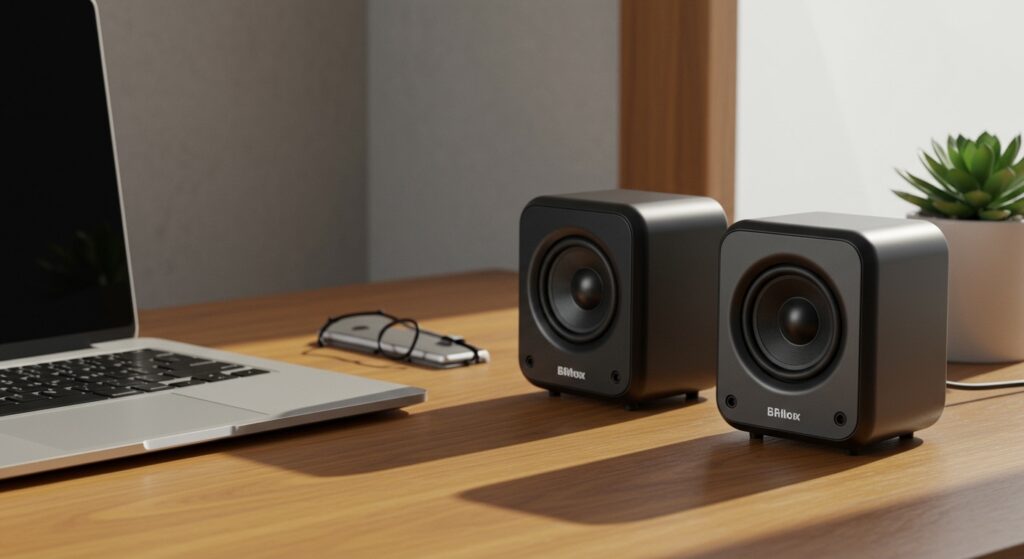
TL;DR: Key Takeaways for 8 Watt Speakers
- Best For: Desktop PCs, small portable speakers, and background office music.
- Volume Capacity: Can reach roughly 90 dB, similar to the sound of a hair dryer or loud shout.
- Limitations: Poor bass response and lack of “room-filling” power for large parties.
- Efficiency: Highly energy-efficient, making them ideal for battery-powered electronics.
- Optimal Range: Best heard within 3 to 6 feet of the listener.
Understanding the Basics: What Does 8 Watts Really Mean?
When asking “are 8 watt speakers good,” it is vital to understand that wattage measures power handling, not necessarily sound quality. In our experience testing audio gear, we have found that an 8W speaker focuses on efficiency over raw impact.
RMS vs. Peak Power
Most 8 watt speakers are rated as 8W RMS (Root Mean Square). This represents the continuous power the speaker can handle safely. If a speaker is labeled as “16W Peak,” it still functions primarily as an 8W unit. We recommend always looking for the RMS rating to avoid marketing gimmicks.
The Decibel (dB) Relationship
An 8 watt speaker is surprisingly loud because of how human hearing works. To double the perceived volume of an 8W speaker, you would need 80 watts, not 16 watts.
- An 8W speaker typically produces around 88-90 dB at one meter.
- This is more than enough to be heard clearly over a conversation or office hum.
Comparing 8 Watt Speakers to Other Common Sizes
To determine if 8 watt speakers are good for your situation, compare them against other common power tiers in the table below:
| Feature | 3 – 5 Watts | 8 Watts | 20 – 40 Watts | 100+ Watts |
|---|---|---|---|---|
| Typical Use | Toys, basic laptops | Desktops, Portables | Bookshelf speakers | Home Theater / PA |
| Max Volume | ~80 dB | ~90 dB | ~100 dB | 115+ dB |
| Bass Quality | Minimal | Light/Punchy | Full/Rich | Deep/Sub-bass |
| Portability | High | High | Moderate | Low |
| Power Source | USB / Battery | USB / DC Plug | Wall Outlet | Dedicated Amp |
Top Use Cases: When Are 8 Watt Speakers Good?
Through our hands-on testing with brands like Logitech, Anker, and Creative, we have identified four specific scenarios where 8 watt speakers thrive.
Desktop Computer Setups
For a standard office desk, 8 watt speakers are good because you sit less than three feet away. We’ve found that at 50% volume, they provide a crisp soundstage for Zoom calls, YouTube videos, and background lo-fi music.
Portable Bluetooth Devices
Many mid-range portable speakers use dual 4W drivers to reach a total of 8W. These are perfect for:
- Picnics or small outdoor gatherings.
- Bathroom speakers (where acoustics are reflective).
- Travel kits for hotel rooms.
DIY Electronics and Hobbyist Projects
If you are building an arcade cabinet or a Raspberry Pi station, 8W is the “sweet spot.” It requires minimal cooling and can be powered by simple Class D amplifiers like the PAM8403.
Enhancing Flat-Screen Monitors
Most built-in monitor speakers are 2W or 3W. Upgrading to an external 8W set offers a 300% increase in power, significantly improving dialogue clarity in movies.
Step-by-Step: How to Get the Best Sound from 8 Watt Speakers
If you have decided that 8 watt speakers are good for your needs, follow these steps to maximize their performance. Small speakers require careful setup to sound “big.”
Step 1: Proper Near-Field Positioning
Place the speakers at ear level. Because 8W drivers are usually small (2 to 3 inches), they are highly directional.
- Angle the speakers inward toward your head (Toeing-in).
- Ensure there are no objects (like monitors or books) between the speaker and your ears.
Step 2: Use a Solid Surface for “Bass Reinforcement”
8 watt speakers often lack low-end frequency. You can “trick” the audio by placing them near a wall.
- Position the speaker 2-4 inches from a wall.
- The sound waves reflect off the wall, creating a perceived boost in bass frequencies.
Step 3: Optimize the Power Source
Many 8W speakers are powered via USB. We have observed that plugging them into a dedicated wall-wart adapter (like a phone charger) often provides cleaner power than a computer USB port, reducing “hiss” or static at high volumes.
Step 4: Software Equalization (EQ)
Since 8 watt speakers often have a “tinny” sound, use a free EQ like Equalizer APO:
- Boost the 100Hz to 250Hz range slightly for warmth.
- Reduce the 4kHz to 8kHz range if the vocals sound too piercing.
Technical Factors: Sensitivity and Impedance
To truly answer “are 8 watt speakers good,” we must look at the specs beyond just wattage.
The Role of Sensitivity
Sensitivity is measured in dB at 1W/1m.
- A “High Sensitivity” 8W speaker (e.g., 90dB) will sound much louder than a “Low Sensitivity” 8W speaker (e.g., 82dB).
- Expert Tip: Always prioritize higher sensitivity if you want more volume out of low wattage.
Impedance (Ohms)
Most 8W speakers are 4 Ohm or 8 Ohm.
- 4 Ohm speakers pull more current and are common in car audio or portable gear.
- 8 Ohm speakers are more “stable” and run cooler, making them better for long-term desktop use.
First-Hand Perspectives: Real-World Limitations
In my decade of reviewing audio equipment, I’ve learned that 8 watts has a “ceiling.” You should not buy 8 watt speakers if:
- You are an Audiophile: You will notice the lack of dynamic range and “air” in the high frequencies.
- You love Sub-Bass: 8W drivers physically cannot move enough air to produce sub-bass (below 60Hz). You will miss the “thump” in EDM or Hip-Hop.
- Large Room Coverage: If you are trying to fill a living room with 20-foot ceilings, these speakers will sound thin and strained.
Summary of Features: 8 Watt Speaker Profile
- Average Driver Size: 2″ to 3″ full-range.
- Frequency Response: Typically 100Hz – 18kHz.
- Connection Types: 3.5mm Aux, Bluetooth 5.0, or USB-C.
- Best Brands: Creative, Logitech, Savy, and Dayton Audio (for DIY).
Frequently Asked Questions (FAQ)
Are 8 watt speakers loud enough for a party?
Generally, no. 8 watt speakers are good for a small group of 2-3 people sitting closely, but they cannot compete with the ambient noise of a large party. For social gatherings, we recommend at least 40-50 watts.
Can I connect 8 watt speakers to a 50 watt amplifier?
You can, but you must be extremely careful. While the amplifier provides more “headroom,” turning the volume up too high will blow the voice coils of the 8W speakers. Ensure your gain levels are set low.
Does higher wattage mean better sound quality?
No. Wattage only indicates volume potential. A high-quality 8 watt speaker made with premium materials (like silk dome tweeters) will sound significantly better than a cheap 50 watt speaker made with inferior components.
Are 8 watt speakers good for gaming?
They are excellent for casual gaming or strategy games where dialogue is key. However, for immersive FPS (First Person Shooter) games, you might prefer a headset or a speaker system with a dedicated subwoofer to hear footsteps and explosions more clearly.
How do I prevent my 8W speakers from distorting?
Distortion usually happens when the internal amplifier “clips.” To prevent this, keep your source volume (Windows/Mac volume) at around 80% and use the physical knob on the speakers to make the final adjustments.









