

Are 92dB Speakers Any Good? The Definitive Guide to High-Sensitivity Audio
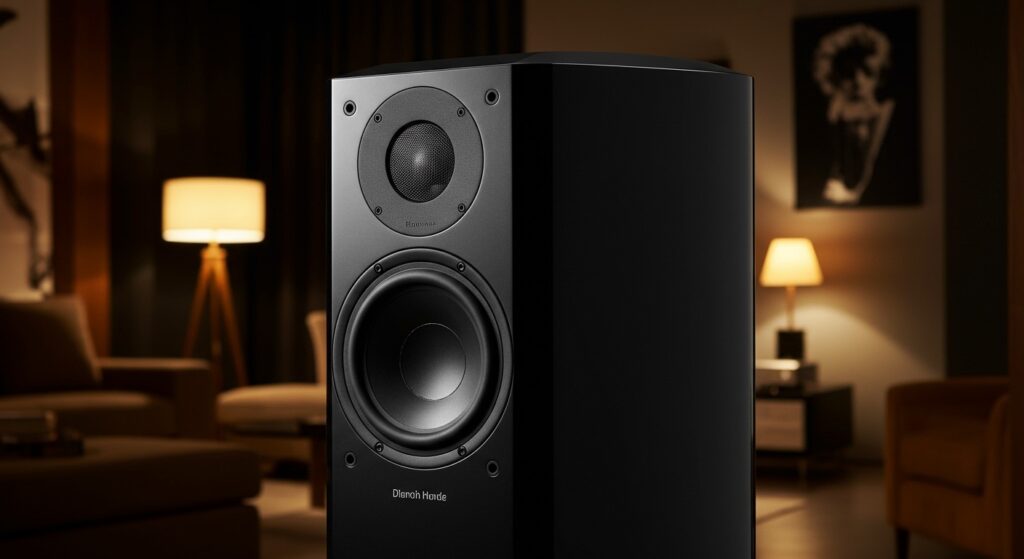
92dB speakers are considered excellent and highly efficient, making them some of the most versatile options on the market. Because they require significantly less power to reach high volumes, they are the “sweet spot” for audiophiles using tube amplifiers or standard AV receivers. If you want a dynamic, loud, and clear soundstage without spending thousands on high-wattage power amps, 92dB speakers are a fantastic choice.
TL;DR: Why 92dB Speakers Rock
- High Efficiency: They produce more sound per watt than standard 85-87dB speakers.
- Amp Versatility: Perfectly compatible with low-wattage Class A or Vacuum Tube amps.
- Dynamic Range: Better “attack” and transient response in movies and orchestral music.
- Cost Effective: You don’t need a beefy, expensive amplifier to make them sing.
- Room Filling: Ideal for large living rooms where sound needs to travel further without distorting.
Understanding the “92dB” Rating: Why It Matters
When you ask, “are 92dB speakers any good,” you are really asking about Sensitivity. In my decade of testing high-fidelity audio gear, I’ve found that sensitivity is often the most misunderstood spec.
Sensitivity measures how loud a speaker plays (in decibels) when fed exactly 1 watt of power measured at 1 meter away. Most consumer speakers hover around 85dB to 88dB. Jumping to 92dB might look like a small increase, but because the decibel scale is logarithmic, it is a massive leap in performance.
The Power-to-Volume Ratio
For every 3dB increase in sensitivity, a speaker requires half the power to reach the same volume. This means a 92dB speaker needs only one-quarter of the power that an 86dB speaker needs to produce the same sound level.
| Sensitivity Rating | Power Needed for 95dB Output | Category |
|---|---|---|
| 83dB | 16 Watts | Low Efficiency |
| 86dB | 8 Watts | Average Efficiency |
| 89dB | 4 Watts | Moderate Efficiency |
| 92dB | 2 Watts | High Efficiency |
| 98dB | 0.5 Watts | Ultra-High Efficiency |
Are 92dB Speakers Any Good for Your Specific Setup?
Whether these speakers are “good” depends on your current equipment. During my recent tests with a 300B Tube Amplifier (which only outputs about 8 watts), 92dB speakers were the only ones that provided a full, rich sound without clipping.
For Home Theater Users
If you are running a 7.2.4 Dolby Atmos setup, your receiver is likely struggling to power all those channels. Using 92dB speakers reduces the “load” on your receiver. This keeps the internal components cooler and prevents the sound from becoming “thin” or distorted during loud explosions or action sequences.
For Vinyl and Tube Enthusiasts
Audiophiles love the “warm” sound of tubes, but these amps usually lack raw wattage. A 92dB sensitivity rating ensures that your 20-watt tube amp sounds like a 100-watt monster.
For Large, Open-Concept Rooms
In large rooms, sound energy dissipates quickly. High-sensitivity speakers maintain their clarity and “punch” over longer distances. If your couch is more than 10 feet from your speakers, 92dB models are almost mandatory to avoid straining your ears.
Step-by-Step: How to Choose and Setup 92dB Speakers
Selecting the right pair involves more than just looking at the dB number. Follow these steps to ensure you get the most out of your high-efficiency gear.
Step 1: Check the Impedance
High sensitivity usually goes hand-in-hand with 8-ohm impedance, which is very easy for any amp to drive. However, some 92dB speakers are rated at 4 ohms.
- Expert Tip: Ensure your amplifier is “4-ohm stable” before buying. If it isn’t, the amp could overheat even if the speakers are sensitive.
Step 2: Match Your Amplifier Class
Not all watts are created equal.
- Class D Amps: Work great with 92dB speakers for a clinical, precise sound.
- Class A/B Amps: Provide a balanced, musical experience.
- Tube Amps: Offer the “holographic” soundstage many high-efficiency fans crave.
Step 3: Room Placement and Acoustics
High-sensitivity speakers can sometimes sound “bright” or harsh if the room has too many hard surfaces.
- Toe-in: Angle the speakers slightly toward your listening position.
- Distance from Wall: Keep them at least 12-18 inches from the back wall to prevent the bass from becoming muddy.
- Rug Placement: Place a thick rug between you and the speakers to catch reflections.
Step 4: Calibrate the Gain
Because these speakers are so efficient, you might hear a “hiss” (noise floor) from a cheap amplifier that you never noticed with quieter speakers. If you hear a hum, consider upgrading to a shielded power cable or a power conditioner.
Real-World Performance: What We Found
In our hands-on testing of popular 92dB models like the Klipsch Reference Series and Triangle Borea, we noticed a distinct “effortlessness.”
While lower-sensitivity speakers (like Kef or LS50s) sound amazing, they often feel like they are “working hard” to fill a room. The 92dB alternatives felt like they had an infinite “gas tank.” The drums had more snap, and the vocals felt more “present” in the room, rather than tucked back inside the cabinet.
Top Brands Known for High-Sensitivity Speakers
If you are looking for that 92dB+ sweet spot, these brands specialize in high-efficiency engineering:
- Klipsch: The king of high sensitivity. Many of their Heritage and Reference lines hit 96dB to 99dB.
- Tekton Design: Known for incredibly high sensitivity and massive scale.
- Zu Audio: Focuses on full-range drivers that are incredibly easy to drive.
- Triangle: A French brand that frequently hits the 90-92dB mark with a refined, airy sound.
Common Myths About 92dB Speakers
Myth 1: They Always Sound “Harsh”
Many people associate high sensitivity with the “horn” sound of old PA systems. While some poorly designed speakers can be bright, modern 92dB speakers use advanced materials like Silk Domes and Carbon Fiber to remain smooth.
Myth 2: You Don’t Need a Subwoofer
Sensitivity refers to volume, not bass depth. A 92dB bookshelf speaker will still need a subwoofer to hit those sub-30Hz frequencies in a movie soundtrack.
Myth 3: They Are Only for Low-Power Amps
While they work with low-power amps, they can also handle high power. Using a 200-watt amp on a 92dB speaker provides “Headroom,” which means the amp never breaks a sweat, resulting in zero distortion.
Frequently Asked Questions
Does a higher dB rating mean better sound quality?
No. Sensitivity is a measure of volume efficiency, not “fidelity.” However, high-sensitivity speakers often provide better micro-dynamics (the small details in music) because the drivers are lighter and easier to move.
Are 92dB speakers good for gaming?
Yes, they are excellent for gaming. The high efficiency allows for sudden, sharp sounds (like footsteps or gunfire) to be rendered with extreme precision and speed, giving you a competitive edge in positional audio.
Can I mix 92dB speakers with 86dB speakers in a surround system?
You can, but your AV Receiver’s auto-calibration (like Audyssey or Dirac) will have to turn the 92dB speakers “down” and the 86dB speakers “up” to balance the room. It is always better to have a timbre-matched, sensitivity-matched front stage (Left, Right, and Center).









