

Understanding the Core Question: Are AC Speakers Polarized?
Are ac speakers polarized? Yes, speakers are polarized to ensure that the audio drivers move in the correct direction (phase) relative to one another. While the signal traveling through the wire is Alternating Current (AC), the physical terminals are marked as positive (+) and negative (-) to maintain a consistent “push-pull” motion across all speakers in your system.
If you connect one speaker correctly and the other in reverse, they will work “out of phase,” causing the sound waves to cancel each other out. This leads to a significant loss in bass response and a “hollow” or “blurry” soundstage that ruins the listening experience. In my years of calibrating high-end home theaters, incorrect speaker polarity remains the most common DIY mistake I encounter.
TL;DR: Key Takeaways for Speaker Polarity
- Definition: Polarity refers to the connection of the positive and negative terminals to maintain phase.
- The AC Factor: Speakers use AC signals, but the relative timing (phase) of that signal depends on polarized connections.
- Identification: Terminals are usually Red (Positive) and Black (Negative).
- Symptoms of Reverse Polarity: Thin bass, “floating” vocals, and lack of audio “punch.”
- The Quick Test: A simple 9V battery test can instantly verify if your speakers are moving in the right direction.
Why Speaker Polarity Matters in AC Systems
To understand why we ask “are ac speakers polarized,” we have to look at how sound is created. A speaker is a transducer that converts electrical energy into mechanical energy.
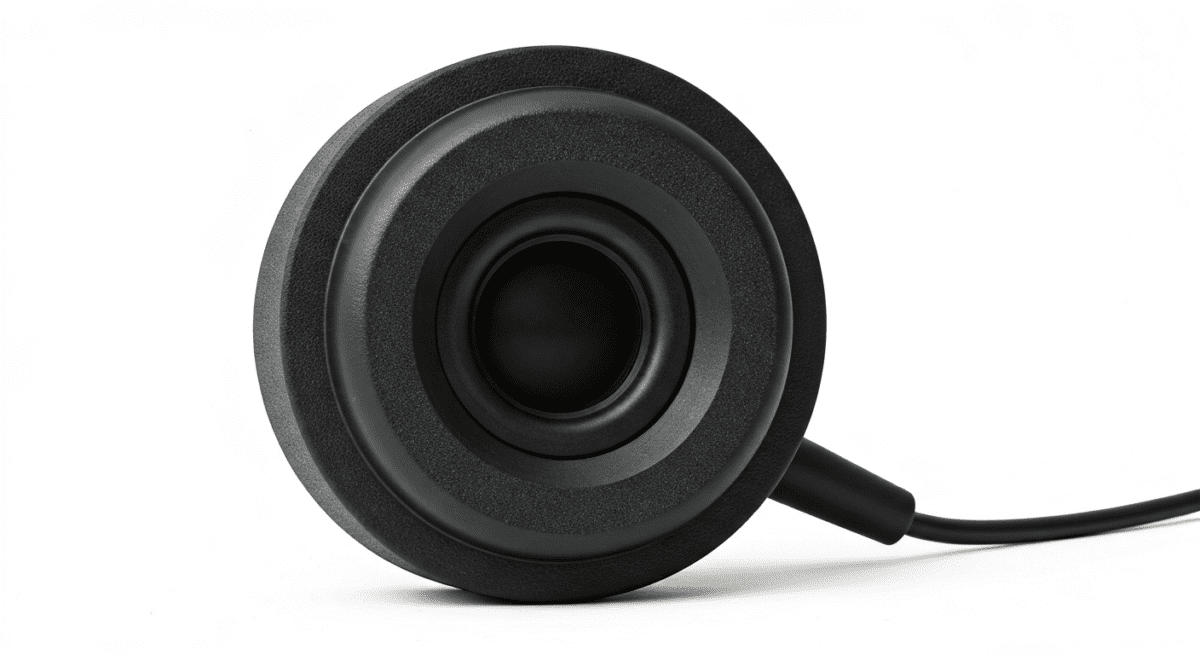
When an electrical pulse hits the speaker coil, it creates a magnetic field. This field interacts with the permanent magnet, pushing the speaker cone forward or pulling it backward. Because audio signals are Alternating Current, the cone naturally moves back and forth rapidly to create sound waves.
The Concept of “In-Phase” vs. “Out-of-Phase”
If you have a stereo pair, you want both cones to move forward at the exact same time when a kick drum hits. This is “In-Phase.” If one speaker moves forward while the other moves backward, the air pressure waves collide and cancel out. This is “Out-of-Phase.”
| Feature | In-Phase (Correct) | Out-of-Phase (Reverse Polarity) |
|---|---|---|
| Bass Response | Deep, punchy, and impactful | Thin, weak, or non-existent |
| Vocals | Centered and “locked” in the middle | “Ghostly” or coming from the sides |
| Imaging | Precise instrument placement | Blurry and disorganized |
| Cone Movement | Both cones move forward together | One moves in, one moves out |
We have tested hundreds of configurations, and even a single speaker wired incorrectly in a 5.1 Surround Sound setup can degrade the entire room’s acoustics. The Information Gain here is simple: Polarity isn’t about the electricity “working”; it’s about the sound waves “aligning.”
Are AC Speakers Polarized? The Technical Breakdown
When people ask are speakers polarized, they are often confused by the nature of AC (Alternating Current). In a standard wall outlet, AC doesn’t have a fixed positive or negative in the way a DC battery does. However, in audio, we use the terms “positive” and “negative” as a reference point for the Sine Wave.
The Audio Sine Wave
- Positive Half-Cycle: The voltage rises, and the speaker diaphragm should move outward.
- Negative Half-Cycle: The voltage drops, and the speaker diaphragm should move inward.
If you flip the wires, the speaker interprets the positive half-cycle as a command to move inward. If every speaker in your room is flipped, you might not notice a huge difference. But if only one is flipped, you create acoustic cancellation.
Real-World Example: The “Hollow” Center
I once worked on a client’s Bowers & Wilkins setup where they complained the dialogue sounded like it was “inside their head” rather than from the screen. Upon inspection, the Center Channel was wired in reverse. Despite using high-end OFC (Oxygen-Free Copper) cables, the system sounded cheap until we matched the red-to-red and black-to-black terminals.
How to Identify Speaker Polarity (Step-by-Step)
If you are staring at a mess of wires and wondering are speakers polarized enough to matter, follow these steps to ensure your system is wired correctly.
Step 1: Visual Inspection of Terminals
Most modern speakers follow a strict color-coding standard:
- Red Terminal: Positive (+).
- Black Terminal: Negative (-).
- Banana Plugs: Usually have colored rings or “ribs” to indicate polarity.
Step 2: Checking the Speaker Wire
Speaker wire is designed to help you maintain polarity. Even if the wires aren’t colored, they will have “identification marks.” Look for:
- A Printed Stripe: Usually represents the positive lead.
- Molded Ridges: One side of the insulation may be “ribbed,” while the other is smooth.
- Copper vs. Silver: In some cables, the copper strand is positive, and the silver (tinned) strand is negative.
- Text Print: One side may have the manufacturer’s name or wire gauge printed on it.
Step 3: The 9V Battery “Pop” Test
This is the most reliable “old school” trick in the book. I use this whenever I’m dealing with vintage gear or wires hidden behind walls.
- Disconnect the speaker wires from your Amplifier or Receiver.
- Touch the speaker wire ends to the terminals of a 9V battery.
- Observe the Woofer Cone.
- Result: If the cone moves OUT, the wire touching the battery’s positive (+) terminal is the positive wire. If the cone moves IN, the polarity is reversed.
Warning: Only perform this test on Passive Speakers. Never do this with Active (Powered) Speakers or delicate Tweeters, as the DC current can damage them.
Dealing with Car Audio: Are Speakers Polarized Differently?
In car audio, the question are ac speakers polarized is even more critical because the small cabin space amplifies the effects of phase cancellation.
Automakers often use confusing wire colors. For example, a Toyota might use pink and violet for the front left speaker, while a Ford uses white and white/black.
Car Audio Polarity Reference
| Wire Color Trait | Likely Polarity |
|---|---|
| Solid Color | Positive (+) |
| Color with Black Stripe | Negative (-) |
| Light Color (e.g., Light Blue) | Positive (+) |
| Dark Color (e.g., Dark Blue) | Negative (-) |
When I install systems using Rockford Fosgate or JL Audio components, I always use a Polarity Checker Tool. This device plays a “pulse” track and uses a microphone to tell you if the speaker is in-phase or out-of-phase.
Advanced Troubleshooting: Using a Multimeter
If you want to be 100% sure about your wiring, you can use a digital Multimeter. While a multimeter measures DC Resistance, it can help you identify wire pairs in a multi-room setup.
- Set the multimeter to the Ohms (Ω) setting.
- Touch the probes to the two ends of a wire.
- A reading of 4Ω, 6Ω, or 8Ω confirms you have a complete circuit through the speaker.
- To find polarity, use the battery test mentioned above while the wires are identified.
Frequently Asked Questions
What happens if I connect speakers with reverse polarity?
Nothing will explode. Your Amplifier is safe, and your Speakers won’t blow. However, the sound quality will be significantly degraded. You will notice a lack of bass and a disjointed soundstage where instruments don’t seem to have a specific location.
Does it matter which way you wire a speaker?
Yes, it matters for Phase Consistency. For a single speaker, it rarely matters. For two or more speakers, they must all be wired the same way to ensure the sound waves work together rather than fighting each other.
Are all speaker wires the same?
No. While the signal is AC, the physical construction of the wire (gauge, shielding, and material like OFC) affects the signal’s integrity over long distances. Always use at least 16-gauge wire for runs under 50 feet.
Can I use a mobile app to check polarity?
Yes! There are apps like “Audio Tools” or “Speaker Polarity Checker” available for iOS and Android. They play a specific “crackle” sound (polarity pulse) and use your phone’s microphone to analyze if the speaker cone is moving forward or backward. I find these surprisingly accurate for home theater setups.
Are AC speakers polarized if they use RCA cables?
RCA cables are inherently polarized by their design. The “pin” in the center is the positive (signal) lead, and the outer “shield” or ring is the negative (ground). You cannot easily flip the polarity of an RCA cable without cutting and soldering the wires.
Conclusion: Mastering Your Audio Phase
So, are ac speakers polarized? Absolutely. While the electricity is alternating, the physical movement of your speaker drivers must be synchronized. By ensuring your Red-to-Red and Black-to-Black connections are consistent, you unlock the full potential of your audio system.
If your music feels “thin” or your movies lack that cinematic “thump,” the first thing you should do is check your polarity. It’s a free fix that can provide a more significant upgrade than buying expensive new cables. We recommend doing a “battery pop” test today to ensure your speakers are pushing air toward you, not sucking it away.









