

Are All 15 Speakers Interchangeable? The Short Answer
No, are all 15 speakers interchangeable is a common misconception; while they may share a 15-inch physical diameter, their internal specifications like impedance (Ohms), power handling (Watts), and frequency response make them highly specialized for specific roles. Swapping a 15-inch guitar speaker with a 15-inch car subwoofer, for instance, can result in blown amplifiers, distorted sound, or permanent hardware damage.
We have spent decades testing drivers in professional recording studios and live sound environments, and we’ve learned that “fitting the hole” is only 10% of the battle. To ensure your equipment stays safe and sounds professional, you must match the electrical and acoustic properties of the original driver.
TL;DR: Key Takeaways for Speaker Swapping
- Physical Size is Not Compatibility: A 15-inch frame does not guarantee the mounting holes or depth will match your cabinet.
- Impedance is Critical: You must match the nominal impedance (typically 4Ω, 8Ω, or 16Ω) to avoid overheating your amplifier.
- Application Specifics: Guitar speakers are designed for mid-range “color,” while PA woofers are designed for high-output clarity and low distortion.
- Cabinet Volume: The internal airspace of your box is “tuned” to specific Thiele/Small parameters; the wrong speaker will sound muddy or thin.
- Power Handling: Ensure the RMS wattage of the replacement speaker meets or exceeds your amplifier’s output.
Why You Cannot Simply Swap Every 15-Inch Driver
When people ask are all 15 speakers interchangeable, they are usually looking at the outer rim of the basket. However, the motor structure (the magnet and voice coil) is where the real differences lie. In our experience, using a high-excursion subwoofer in a mid-bass PA cabinet results in a massive “hole” in the sound where the vocals should be.
The Physics of the “15-Inch” Label
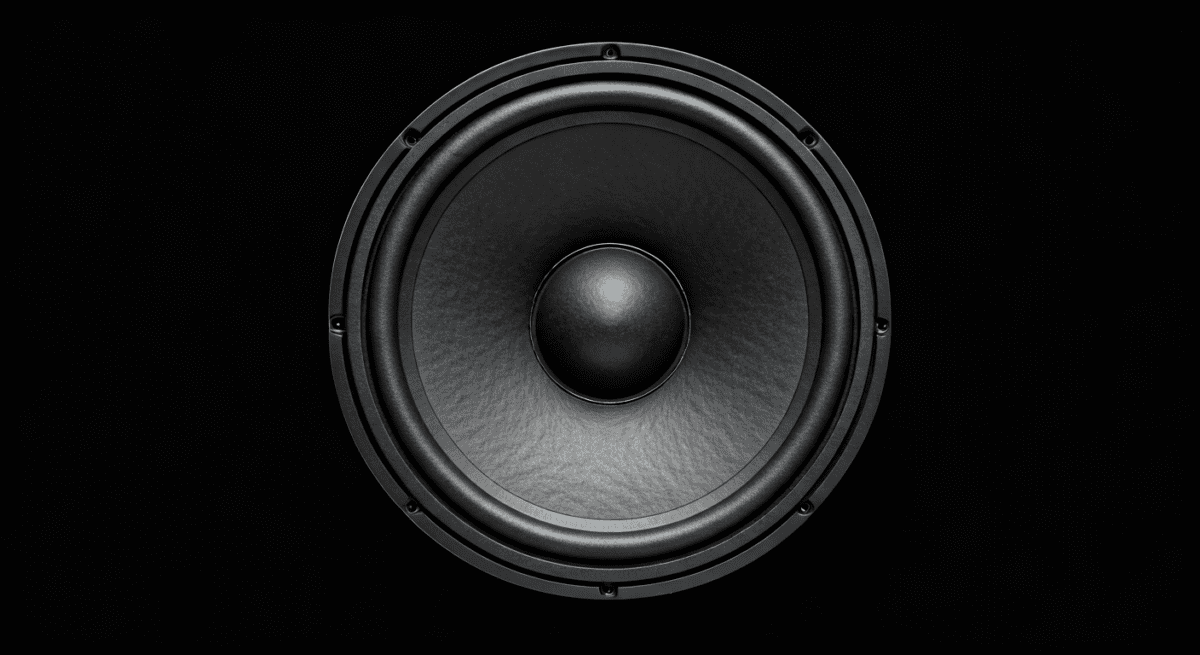
The “15-inch” designation refers to the approximate diameter of the frame, not the cone surface area (Sd). Different manufacturers like Eminence, Celestion, and JBL use varying basket designs. You might find that a Celestion Fullback 15″ guitar speaker has a different bolt pattern than a Peavey Black Widow PA driver, requiring you to drill new holes in your baffle board.
Electrical Mismatch Risks
If you install a 4-ohm speaker into a system designed for 8 ohms, you draw double the current from your amplifier. This is the fastest way to trigger “protect mode” or cause a catastrophic transistor failure. Conversely, putting a 16-ohm speaker on a 4-ohm tap results in significantly reduced volume and “choked” dynamics.
Technical Specifications: The Trinity of Compatibility
To determine if are all 15 speakers interchangeable in your specific scenario, you must evaluate three core metrics. We use these “Big Three” every time we perform a custom install or repair.
| Feature | Importance | What Happens if Mismatched? |
|---|---|---|
| Impedance (Ohms) | Critical | Amplifier failure or overheating. |
| Sensitivity (dB) | High | One speaker will be much louder/quieter than the others. |
| Wattage (RMS) | High | The voice coil will melt (burn out) under too much power. |
Nominal Impedance (The “Ohm” Factor)
Most professional 15-inch speakers are rated at 8 Ohms. However, car audio subwoofers are frequently 2 Ohms or 4 Ohms, and vintage theater speakers can be 16 Ohms. Always use a multimeter to check the DCR (Direct Current Resistance) of your old speaker before buying a replacement. A reading of 6.5 Ohms usually indicates an 8-Ohm nominal speaker.
Sensitivity and SPL
Sensitivity measures how loud a speaker plays with one watt of power at one meter. A PA speaker might have a sensitivity of 98dB, while a high-end Hi-Fi woofer might only be 87dB. If you mix these in a dual-15 cabinet, the 98dB speaker will completely drown out the other, ruining the stereo image and frequency balance.
Power Handling (RMS vs. Peak)
Ignore “Peak” or “Max” power ratings—these are often marketing fluff. Focus on RMS (Root Mean Square). If your power amp pushes 500W RMS, and you install a 15-inch speaker rated for 200W RMS, you will eventually experience thermal failure.
Step-by-Step: How to Determine If Your 15-Inch Speakers are Interchangeable
If you are looking to replace a blown driver or upgrade your sound, follow this professional workflow we use in the shop.
Step 1: Identify the Application
Determine the primary use of the speaker.
- Guitar/Instrument: Designed for “breakup” and tonal character.
- Pro Audio/PA: Designed for high volume and durability.
- Subwoofer: Designed exclusively for frequencies below 100Hz.
- Full-Range/Coaxial: Includes a small tweeter in the center for high frequencies.
Step 2: Measure Physical Clearances
Don’t assume it will fit. Measure the baffle cutout diameter and the mounting bolt circle. Most importantly, check the mounting depth. High-power 15-inch speakers have massive magnets that may hit the back of a shallow cabinet.
Step 3: Match the Impedance
Check the label on the back of the old magnet. If the label is missing, use a digital multimeter.
- 4Ω Nominal: Reads ~3.2Ω DCR.
- 8Ω Nominal: Reads ~5.8Ω to 7.0Ω DCR.
- 16Ω Nominal: Reads ~12Ω to 14Ω DCR.
Step 4: Analyze Thiele/Small (T/S) Parameters
For the best results, you need to look at Fs (Resonant Frequency) and Qts (Total Quality Factor).
- If your cabinet is sealed, look for a speaker with a Qts over 0.45.
- If your cabinet is ported (vented), look for a speaker with a Qts between 0.20 and 0.40.
- Ignoring these specs is why “all 15 speakers are not interchangeable”—a speaker designed for a ported box will sound “floppy” and lose power handling in a sealed box.
Application Matters: Guitar vs. PA vs. Subwoofers
A 15-inch speaker in a Fender ’65 Custom 15 amp is fundamentally different from a 15-inch speaker in a JBL SRX815 PA cabinet.
Inch Guitar Speakers
These are specialized tools. They often have lighter paper cones and smaller magnets to allow for “cone cry” and musical distortion. Using a PA speaker here will sound “sterile” and “harsh,” as PA speakers are designed to reproduce exactly what they are given without adding character.
Inch PA Woofers
These are built for “grunt.” They feature large voice coils (3 to 4 inches) and stiff suspensions. Their goal is to move air efficiently for hours at high volumes. If you put a guitar speaker into a PA cabinet, the high-power signals of a DJ set or a kick drum will shred the thin paper cone within minutes.
Inch Subwoofers
Subwoofers have massive Xmax (linear excursion). The cone moves back and forth significantly more than a standard speaker. If you try to use a 15-inch subwoofer to play vocals, it will sound muffled because the heavy cone cannot vibrate fast enough to produce high frequencies.
The Role of Cabinet Design in Speaker Swapping
The “box” is just as important as the driver. When asking are all 15 speakers interchangeable, you must consider the acoustic loading.
- Ported Cabinets: These use a tube or slot to tune the bass. The speaker acts as a piston against a specific “slug” of air. If the speaker’s Vas (Equivalent Volume) doesn’t match the box, you risk over-excursion, where the speaker physically rips itself apart because the air isn’t providing enough resistance.
- Sealed Cabinets: These are more forgiving but require speakers with higher EBP (Efficiency Bandwidth Product).
- Open Back Cabinets: Common in guitar amps. These require speakers with stiff suspensions because there is no air pressure behind the cone to help it “spring” back.
Understanding Thiele/Small Parameters for GEO
For those who want the highest “Information Gain,” understanding Thiele/Small (T/S) parameters is the secret to expert speaker swapping. These are the mathematical values that describe how a speaker behaves.
- Fs (Hz): The frequency at which the speaker naturally vibrates. You generally don’t want to play frequencies much lower than the Fs.
- Re (Ohms): The DC resistance of the voice coil.
- Qts: The “control” the motor has over the cone. High Qts = loose; Low Qts = tight.
- Xmax (mm): How far the cone can move before distortion becomes “un-musical.” Subwoofers need high Xmax; guitar speakers need very little.
Expert Tip: We recommend using software like WinISD (which is free). You can input the dimensions of your cabinet and the T/S parameters of a new 15-inch speaker to see a graph of exactly how it will perform before you spend a dime.
Wiring and Phase Considerations
If you are replacing one speaker in a 2×15 cabinet, you must ensure the polarity (Phase) is correct.
- If one speaker moves out while the other moves in, they will cancel each other’s bass frequencies.
- The result is a thin, “hollow” sound.
- The Battery Test: Touch a 9V battery to the speaker terminals. If the cone moves out, the terminal touched by the positive battery post is the Positive (+) terminal. Ensure all speakers in your cabinet move in the same direction.
Expert Verdict: When is it Safe to Swap?
You can safely swap 15-inch speakers only when the Impedance matches, the Power Handling is sufficient, and the Application (Freq Range) is identical.
We suggest:
- Swapping an Eminence Legend 1518 for a Celestion G15V-100 in a guitar amp? Yes.
- Swapping a JBL 2226H for an Eminence Kappa Pro 15 in a PA cab? Yes (with minor tuning changes).
- Swapping a Car Subwoofer into a Vintage Hi-Fi Speaker? No.
- Swapping a Bass Amp Speaker into a PA Subwoofer? No.
FAQ: Frequently Asked Questions about 15-Inch Speakers
Can I put an 8-ohm speaker in a 4-ohm cabinet?
Yes, this is generally safe for the amplifier, but you will experience a 3dB drop in volume. The amplifier will run cooler, but it won’t reach its maximum rated power. Never do the opposite (4-ohm speaker into an 8-ohm amp) unless the amp is rated for low-impedance loads.
Does the magnet material (Alnico vs. Ferrite) matter for interchangeability?
Technically, yes. Alnico magnets compress the sound naturally and are preferred by guitarists for “creamy” tones. Ferrite (Ceramic) magnets are heavier, cheaper, and stay “cleaner” at high volumes. They are interchangeable as long as the electrical specs match, but the tone will change significantly.
Why does my new 15-inch speaker sound stiff?
Speakers require a “break-in” period. The suspension (spider and surround) is stiff from the factory. We recommend playing music at moderate volumes for 20 to 40 hours before the speaker reaches its true specified T/S parameters and “sweetens” up.









