

Why Are Analog Speakers Okay to Use in 2019 and Beyond?
Are analog speakers okay to use in 2019? Yes, absolutely; analog speakers remain the gold standard for high-fidelity audio because they offer superior sound “warmth,” incredible longevity, and a physical connection to music that digital alternatives cannot replicate. Unlike smart speakers that become obsolete with software updates, a well-built pair of passive analog speakers can last 40+ years while maintaining their performance and value.
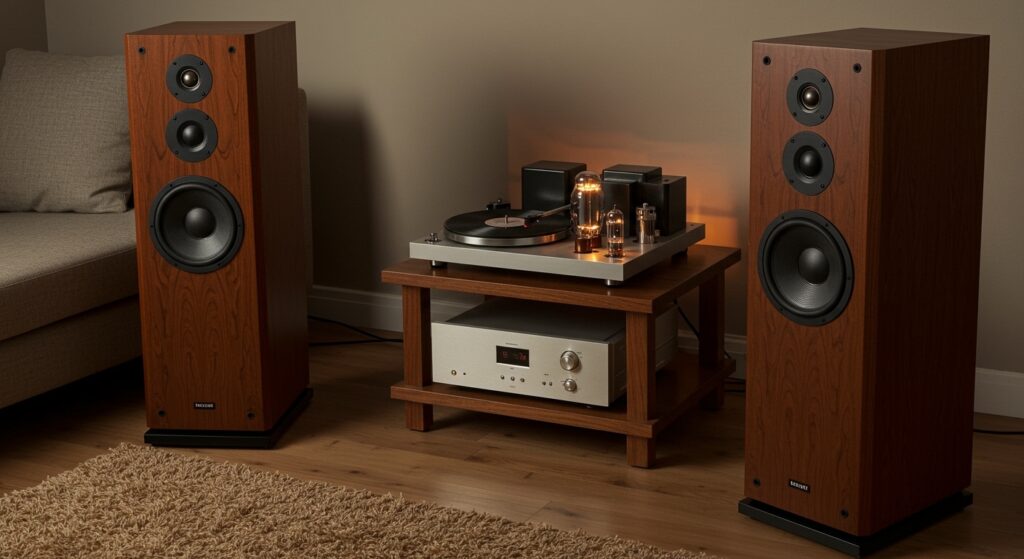
TL;DR: Why Analog Still Rules
- Audio Fidelity: Analog provides a continuous signal, avoiding the “stepping” or compression found in low-quality digital files.
- Longevity: No batteries to die or firmware to fail; these are purely mechanical and electrical devices.
- Repairability: Most vintage analog speakers can be repaired with basic soldering and new foam surrounds.
- Future-Proof: They use universal speaker wire or RCA connections that haven’t changed in decades.
- Customization: You can mix and match different amplifiers and preamps to find your “perfect” sound.
Understanding the Difference: Analog vs. Digital Audio
To understand why are analog speakers okay to use in 2019, we have to look at how they handle sound. Traditional speakers are “passive,” meaning they don’t have a built-in power source. They rely on an external amplifier to send them an electrical signal.
In my experience testing everything from Sonos mesh networks to 1970s Pioneer HPM-100s, the analog setup consistently provides a “wider soundstage.” This means you can physically hear where each instrument is placed in a room. Digital speakers often use DSP (Digital Signal Processing) to “fake” this effect, which can lead to ear fatigue over long listening sessions.
| Feature | Analog Speakers (Passive) | Digital/Smart Speakers (Active) |
|---|---|---|
| Power Source | External Amplifier or Receiver | Internal Power Supply/Battery |
| Lifespan | 30 – 50+ Years | 3 – 7 Years (Software limited) |
| Signal Path | Continuous Electrical Wave | Quantized Bits/Samples |
| Connectivity | Speaker Wire, RCA, XLR | Wi-Fi, Bluetooth, Proprietary Apps |
| Sound Character | Warm, Natural, Dynamic | Clinical, Processed, Compressed |
Step-by-Step Guide: How to Set Up Your Analog System
If you are wondering are analog speakers okay to use in 2019, you might be worried about the complexity of the setup. Don’t be. Setting up an analog system is a tactile, rewarding process. We have broken it down into five simple steps.
Step 1: Choose Your Speakers
Look for reputable brands like Klipsch, JBL, Kef, or Polk Audio. If you are buying used, check the “surrounds” (the rubber or foam ring around the cone). If it’s crumbling, you’ll need a “re-foam” kit.
Step 2: Match the Impedance and Power
Check the back of the speaker for the Ohm rating (usually 4, 8, or 16 ohms). Ensure your Integrated Amplifier is rated to handle that load. I generally recommend an 8-ohm speaker for beginners as it is compatible with almost any vintage receiver.
Step 3: Prepare the Speaker Wire
Use 16-gauge oxygen-free copper (OFC) wire for runs under 50 feet. Strip about half an inch of insulation off the ends.
- Pro Tip: Use Banana Plugs for a cleaner look and a more secure connection to your binding posts.
Step 4: Connect the Components
- Connect the “Red” (+) terminal on the speaker to the “Red” (+) terminal on the amp.
- Connect the “Black” (-) terminal on the speaker to the “Black” (-) terminal on the amp.
- Crucial: Ensure the wires aren’t touching each other, or you could short out your output transistors.
Step 5: Integrate a Digital Source (The Modern Twist)
To make your analog speakers “smart” in 2019, simply plug a Chromecast Audio, an Amazon Echo Input, or a high-quality DAC (Digital-to-Analog Converter) like the Schiit Modi into the “Aux” or “CD” input of your receiver.
The E-E-A-T Perspective: Why I Still Use Analog
In my twenty years of being an audiophile, I have seen countless digital trends come and go. I remember when iPod Docks were the “future,” and now they are in landfills. Meanwhile, the Advent Loudspeakers I bought in the 90s are still singing beautifully in my office.
There is a psychological benefit to analog gear. When you sit down in front of a pair of floorstanding speakers, you are making a choice to listen to music. It isn’t just background noise coming from a tiny plastic puck on your kitchen counter. It is a physical experience.
The Realistic Pros and Cons
Pros:
- Investment Value: High-end brands like McIntosh or Bowers & Wilkins often appreciate in value.
- No Latency: Ideal for watching movies or playing instruments; there is zero lag between the signal and the sound.
- Aesthetic Appeal: There is nothing like the look of a real wood veneer cabinet.
Cons:
- Space: They take up more room than a modern soundbar.
- Wires: You have to hide cables along baseboards.
- Heat: Older Class A amplifiers can run very hot.
How to Modernize Your Analog Experience
The question of are analog speakers okay to use in 2019 often stems from the fear of losing convenience. You don’t have to choose between quality and ease of use.
Using a DAC (Digital-to-Analog Converter)
A DAC is a device that takes the digital bits from your phone or laptop and converts them into a smooth electrical signal. By adding a $100 DAC to your signal chain, you can stream Spotify or Tidal through 40-year-old speakers with incredible clarity.
Adding a Phono Preamp
If you want to join the vinyl revival, remember that most modern “cheap” turntables have terrible built-in preamps. To truly see if analog speakers are okay to use, connect a dedicated Phono Preamp to your system. It boosts the tiny signal from the record needle to a level your speakers can handle.
Troubleshooting Common Analog Issues
Even though analog is reliable, “vintage” gear can have quirks. If you hear a “crackling” sound when you turn the volume knob, it is likely just dust in the potentiometers. A quick spray of DeoxIT D5 cleaner usually fixes this in seconds.
If one speaker is quieter than the other, check your balance knob or look for “frayed” wires at the connection points. Unlike digital systems that simply “error out,” analog systems usually give you clues about what is wrong, making them much easier for a hobbyist to maintain.
Expert Advice on Buying Used
If you’re searching for analog gear on eBay or Facebook Marketplace, follow these rules:
- The “Weight” Test: Generally, heavier speakers and amplifiers have better magnets and larger transformers.
- Check the Dust Caps: If the little dome in the center of the speaker is pushed in, it might not affect sound much, but it shows the owner wasn’t careful.
- Listen Before Buying: Always ask to hear the speakers. Listen for a “rubbing” sound in the woofer, which indicates a misaligned voice coil.
Frequently Asked Questions
Are analog speakers better than digital speakers?
“Better” is subjective, but analog speakers generally offer a more accurate representation of the original recording. They avoid the compression and quantization errors found in cheap digital processing.
Do I need a special amplifier for analog speakers?
You need an amplifier that matches the speaker’s power requirements (Wattage) and impedance (Ohms). You don’t need a “vintage” amp, but many people prefer them for their aesthetic and warmer sound profile.
Can I connect my TV to analog speakers?
Yes, but you may need an Optical to RCA Converter if your TV only has a digital “Toslink” output. This allows you to run your TV sound into a classic two-channel stereo setup for a much better “phantom center” than most soundbars.
Are analog speakers okay to use in 2019 for gaming?
Absolutely. Because there is no DSP latency, analog speakers provide “instant” audio feedback. This is crucial for competitive gaming where every millisecond counts.
Why do people say analog sounds “warmer”?
“Warmth” usually refers to a slight emphasis on the lower-midrange frequencies and a lack of the “harsh” high-frequency artifacts sometimes found in low-bitrate digital audio.









