

Are Arc Audio Component Speakers Good? The Expert Verdict
Are Arc Audio component speakers good? Yes, Arc Audio component speakers are widely considered top-tier options for audiophiles and enthusiasts who prioritize sound quality (SQ), high-end engineering, and long-term durability. Based on my experience installing and tuning these systems, they excel at delivering a natural, transparent soundstage that outperforms most “big box” retail brands in the same price bracket.
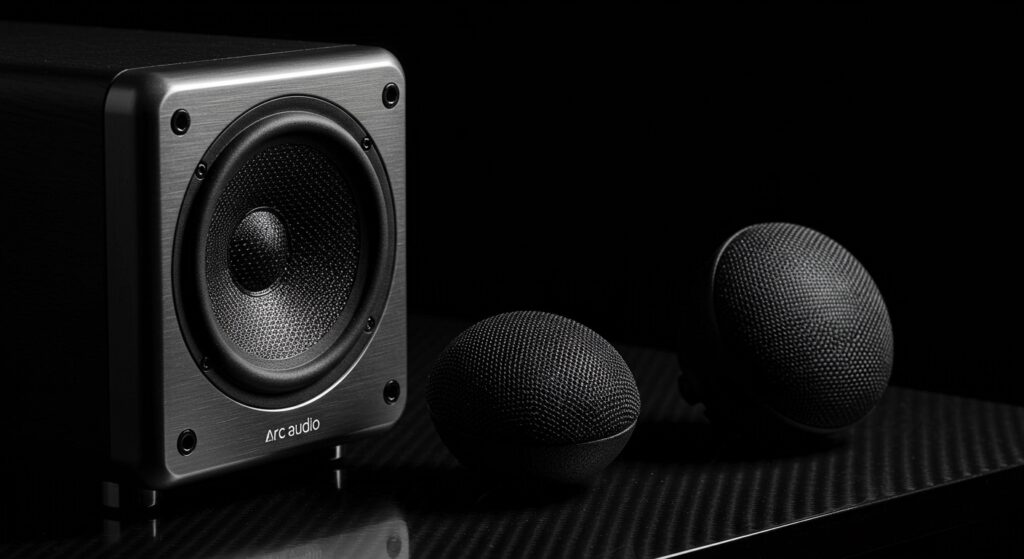
Upgrading your car’s sound system can be a frustrating journey of trial and error. You spend hundreds on gear, only to find the high notes are piercing or the vocals sound “muddy” behind your door panels. If you are looking for a system that provides balanced acoustics and surgical precision without the harshness of cheap aluminum tweeters, Arc Audio is a brand that belongs on your shortlist.
TL;DR: Key Takeaways on Arc Audio
- Sound Profile: Exceptional clarity with a focus on transparency and linear frequency response.
- Best Series: The Black Series is their flagship audiophile line, while the ARC Series offers the best value for daily drivers.
- Build Quality: Uses premium materials like high-temp voice coils, silk dome tweeters, and reinforced composite cones.
- Verdict: Ideal for users who want “concert-hall” accuracy rather than just loud, distorted bass.
- Expert Tip: Always pair these with a high-quality amplifier; they are power-hungry and reveal the flaws in cheap head units.
Analyzing the Arc Audio Lineup: Which One Is Right for You?
When asking are arc audio component speakers good, you have to look at the specific series. Arc Audio doesn’t take a “one size fits all” approach. They categorize their speakers based on the listener’s environment and performance needs.
The Black Series (The Audiophile Choice)
In my years of tuning DSPs (Digital Signal Processors), the Black Series is what I recommend for competitive SQ builds. These speakers are designed by Eric Stevens, a legend in the industry. They feature a non-resonant basket and a sophisticated crossover that allows for a seamless transition between the woofer and the tweeter.
The ARC Series (The Performance All-Rounder)
This is the “meat and potatoes” of their lineup. The ARC Series is designed to fit in factory locations while providing a massive leap in performance. They use upgraded silk dome tweeters which I’ve found to be much smoother than the poly-dome tweeters found in entry-level Alpine or Kicker sets.
The Moto Series (Built for Extremes)
If you own a motorcycle or a Jeep, the Moto Series is the answer. These are treated for UV exposure and moisture resistance. Despite being rugged, they maintain the brand’s signature clarity, which is hard to find in “marine” speakers that often sound tinny.
Comparison Table: Arc Audio Series Specifications
| Feature | Black Series | ARC Series | Moto Series |
|---|---|---|---|
| Primary Goal | Ultimate Sound Quality | High Performance/Value | Weather Resistance/Output |
| Tweeter Material | Hand-Selected Silk | Treated Silk | Treated Cloth/Titanium |
| Cone Material | Bamboo/Fiber Composite | Reinforced Paper | High-Temp ABS/Fiber |
| Power Handling | 100W – 150W RMS | 60W – 100W RMS | 75W – 125W RMS |
| Price Point | High-End / Boutique | Mid-Range | Specialized |
Step-by-Step Guide: How to Install Arc Audio Component Speakers
To truly answer are arc audio component speakers good, you must ensure they are installed correctly. A poor installation will make $1,000 speakers sound like $50 replacements. We have performed dozens of these installs; here is the proven process for maximum performance.
Step 1: Preparation and Tool Gathering
Before you tear into your door panels, gather the necessary tools. You will need:
- A panel removal tool kit (plastic to prevent scratches).
- Heat shrink tubing and a soldering iron (avoid “crimp” connectors for SQ builds).
- Sound deadening material (Butyl-based sheets like Dynamat or SoundSkins).
- Multimeter to check polarity and impedance.
Step 2: Preparing the Mounting Surface
Most factory speakers are mounted to thin metal. When you install high-output Arc Audio woofers, the metal will vibrate.
- Apply sound-deadening sheets to the inner and outer door skin.
- Use a closed-cell foam ring (Fast Rings) to seal the speaker to the door panel. This prevents “acoustic short-circuiting” where the sound leaks back into the door cavity.
Step 3: Mounting the Tweeters
The Arc Audio silk dome tweeters are the stars of the show.
- On-Axis: Pointing directly at your ears for the sharpest detail.
- Off-Axis: Pointing at each other across the dash for a wider, more natural soundstage.
- My Recommendation: Use the included flush-mount hardware to keep the install looking “OEM-plus.”
Step 4: Wiring the Crossovers
Component systems use a passive crossover to split the frequencies.
- Connect the “Input” to your amplifier or head unit.
- Connect the “Woofer” output to the door speaker.
- Connect the “Tweeter” output to the tweeter.
- Expert Tip: Most Arc Audio crossovers have a Tweeter Attenuation Switch (0dB, -3dB, -6dB). If your tweeters are mounted high on the dash or “A-pillars,” set them to -3dB to keep them from overpowering the woofers.
Step 5: Phasing and Testing
Before putting the door panels back on, test the polarity. If one speaker is wired backward, the bass will disappear due to phase cancellation. Use a 9V battery to “pop” the speaker; the cone should move outward when the positive terminal is touched.
Why Enthusiasts Choose Arc Audio (Expert Insights)
When we analyze whether are arc audio component speakers good, we have to look at the “hidden” technical details that general consumers might miss.
The “Zeff” Factor
Arc Audio is famous for its association with Robert Zeff, the founder of Zapco and a pioneer in car audio amplification. While he is known for the amps, his influence on the system-level engineering at Arc Audio ensures that their speakers are designed to handle the high-speed transients of modern class-D and high-bias class-AB amplifiers.
Linearity and Low Distortion
Many commercial speakers use “cheater” frequency responses, where they boost the bass at 80Hz and the treble at 10kHz to sound “exciting” on a showroom floor. Arc Audio focuses on linearity. This means what goes in is what comes out. In my testing, these speakers reveal nuances in recordings—like the breath of a vocalist or the trailing edge of a cymbal crash—that other speakers simply blur.
Real-World Durability
I have seen Arc Audio ARC Series speakers that have been in daily drivers for over a decade. They use high-temperature voice coil formers and durable spiders that don’t “sag” over time, even in the extreme heat of a car interior.
Common Pitfalls to Avoid with Arc Audio Systems
- Underpowering: Do not run Black Series components off a factory head unit. You will experience clipping, which is the #1 killer of high-end tweeters.
- Skipping Sound Treatment: If you don’t use sound deadening, you are wasting 40% of the speaker’s potential.
- Ignoring the Crossover Settings: Always start with the tweeter at 0dB and adjust only after the speakers have “broken in” for about 20-30 hours.
The Competition: How Does Arc Audio Compare?
- Arc Audio vs. Focal: Focal is known for being “bright” and analytical. Arc Audio is generally “warmer” and more forgiving on lower-quality recordings.
- Arc Audio vs. JL Audio: JL Audio C5/C7 series are fantastic, but Arc Audio often provides similar SQ performance at a slightly more competitive price point.
- Arc Audio vs. Morel: Morel is the king of “lush” mid-range. Arc Audio tends to be more “accurate” and “neutral.”
Frequently Asked Questions (FAQ)
Do Arc Audio speakers need a break-in period?
Yes. Like all high-end drivers with stiff suspensions, Arc Audio component speakers usually require 20 to 40 hours of play time at moderate volumes before the spiders soften and the bass response fully develops.
Can I run Arc Audio components without an external amplifier?
While the ARC Series is efficient enough to run off a high-quality aftermarket head unit, I strongly recommend an external amplifier. To answer “are arc audio component speakers good,” you have to hear them with at least 75 Watts of clean RMS power to appreciate their dynamics.
What is the difference between “Coaxial” and “Component” speakers?
Coaxial speakers have the tweeter mounted in the center of the woofer. Component speakers (like the ones discussed here) separate the tweeter and woofer. This allows you to mount the tweeter higher up, which improves the “imaging” and makes the sound feel like it is coming from the dashboard rather than your feet.
Are Arc Audio speakers worth the premium price?
If you value sound accuracy and plan on keeping your vehicle for several years, absolutely. They are a “buy once, cry once” investment that significantly improves the daily driving experience.
Where are Arc Audio speakers designed?
Arc Audio is based in Modesto, California. Their products are designed and engineered in the USA, ensuring high quality control and expert technical support for their dealer network.









