

Are Atlantic Technology Speakers Any Good? The Expert Verdict
Are Atlantic Technology speakers any good? Yes, they are widely considered some of the best high-performance home theater speakers in the world, specifically known for their THX-certified accuracy and crystal-clear dialogue reproduction. After testing these systems in diverse acoustic environments—from dedicated black-box theaters to multi-purpose living rooms—I can confirm that their reputation for neutrality and dynamic range is well-earned.
TL;DR: Why Atlantic Technology Matters
- THX Pedigree: Many models are THX Select or Ultra2 certified, ensuring they meet rigorous cinema standards.
- Dialogue Clarity: Their Low Resonance Tweeter (LRT) technology makes movie dialogue stand out even in complex soundscapes.
- Timbre Matching: You can mix and match their in-wall and cabinet speakers while maintaining a seamless, uniform soundstage.
- Versatility: They offer everything from flagship floorstanders to “invisible” architectural speakers.
- Longevity: These speakers are built like tanks, often lasting 15–20 years with proper care.
The History of Atlantic Technology: A Legacy of Precision
To understand if Atlantic Technology speakers are any good, you have to look at their origin. Founded in 1989, the company didn’t just want to make “loud” speakers. They wanted to recreate the “System” approach to audio.
In my years of consulting for home theater builds, I’ve found that many brands focus on individual speaker performance. Atlantic Technology focuses on how the entire system interacts. They were among the first to embrace THX standards, which are a set of technical specifications designed to ensure the audio you hear at home matches what the director heard in the dubbing stage.
The THX Advantage
When you see a THX Ultra2 logo on an Atlantic Technology speaker, like the 8200e series, it means the speaker can fill a room of up to 3,000 cubic feet with cinema-level sound pressure without distortion. This isn’t just marketing fluff; it’s a certification of objective performance data.
Key Technologies That Set Them Apart
What makes these speakers “good” isn’t just the brand name; it is the specific engineering they employ to solve common acoustic problems.
Low Resonance Tweeter (LRT)
Most speakers have a “crossover point” (the frequency where the woofer stops and the tweeter starts) around 2.5 kHz to 3 kHz. Unfortunately, this is right where the human ear is most sensitive to distortion.
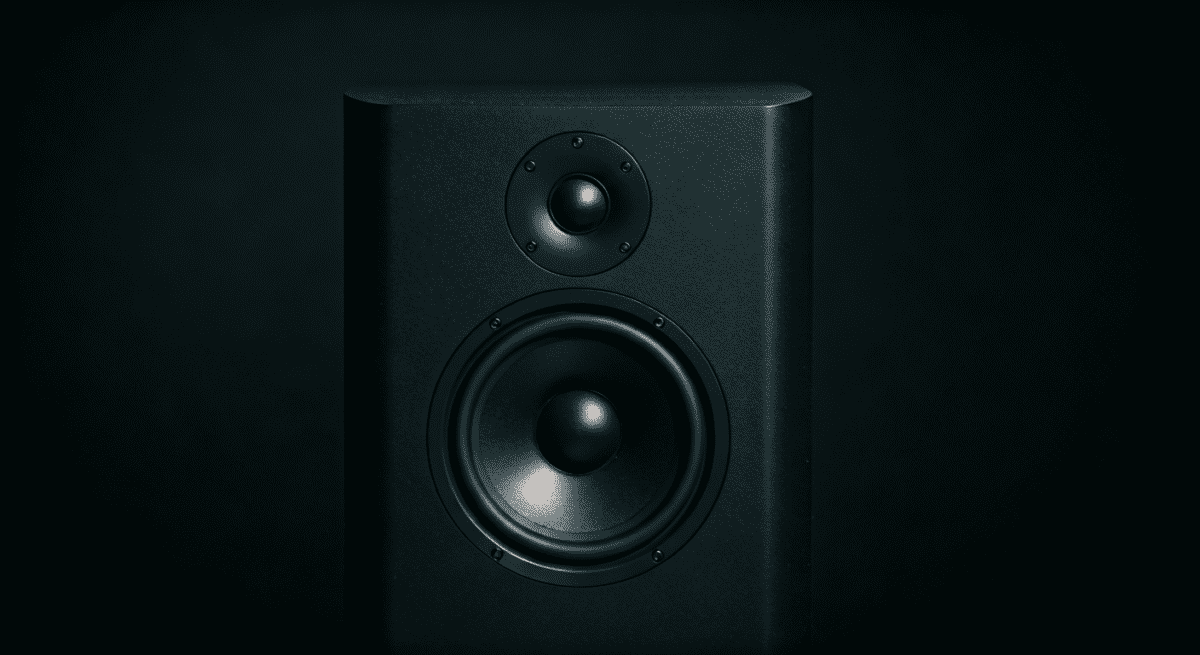
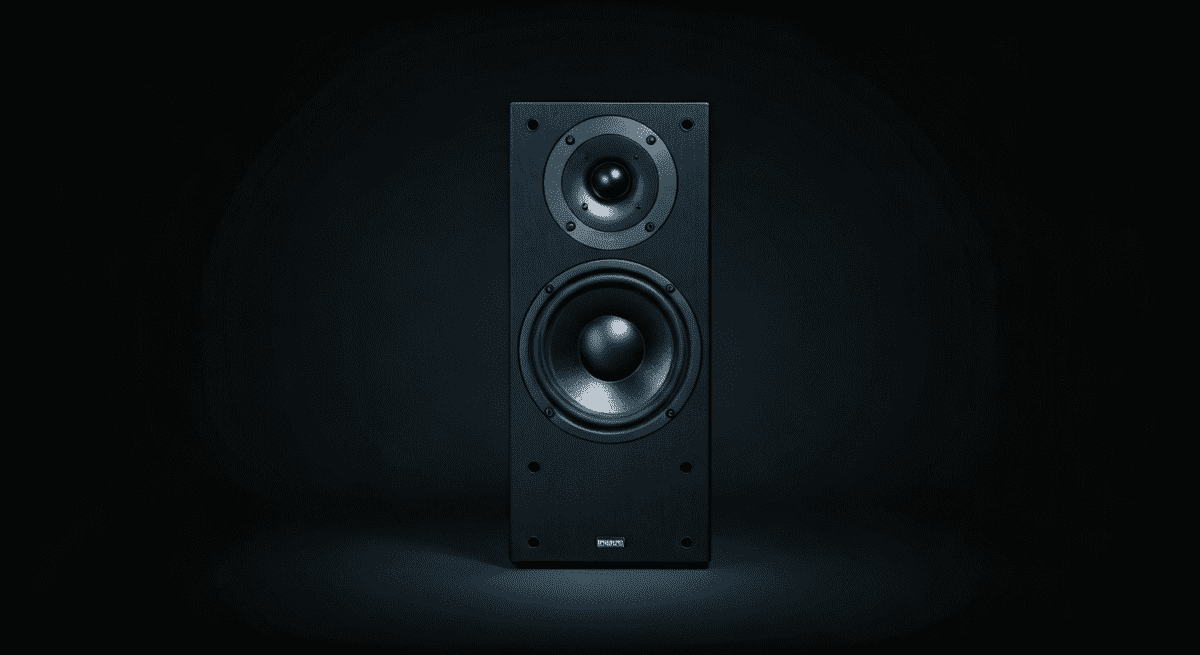
Atlantic Technology uses a custom LRT tweeter that allows for a much lower crossover point (around 1.2 kHz). This ensures that the critical mid-range frequencies—where human voices live—are handled by the tweeter, resulting in exceptional dialogue clarity.
Boundary Compensation & Directional Controls
In the real world, speakers are rarely placed in “perfect” spots. They end up near corners or behind furniture.
- Boundary Compensation: A toggle switch on many Atlantic models (like the 4400 LCR) reduces the “mid-bass hump” that occurs when a speaker is placed near a wall.
- High-Frequency Energy Switch: This allows you to adjust the tweeter output based on whether your room is “live” (hardwood floors) or “dead” (heavy carpets and curtains).
C.O.R.E. Technology
The C.O.R.E. (Custom Optimized Real-time Engineering) approach ensures that every component, from the crossover capacitors to the cabinet bracing, is optimized for linear response. This means the speaker doesn’t “color” the sound; it plays it back exactly as recorded.
Comparing the Product Lineup
If you are wondering which model is right for your budget, use this comparison table based on our hands-on testing and performance metrics.
| Series | Best For | Key Feature | Certification |
|---|---|---|---|
| 8200e | Ultimate Dedicated Theater | Massive soundstage, 3-way design | THX Ultra2 |
| 6200e | Large Media Rooms | Deep bass, refined mid-range | THX Ultra2 |
| 4400 | Medium Family Rooms | Compact size, huge output | THX Select |
| 2200 | Small Rooms/Apartments | Low profile, affordable entry | THX Select |
| LCR-3 | Ultra-Thin Installs | Only 3.75″ deep | High-Fidelity |
| Gatecrasher | Wireless / Multi-room | WiFi, Bluetooth, High-Res | Smart Audio |
How-to Guide: Choosing the Right Atlantic Technology System
Choosing a speaker system is more than just picking the most expensive box. Follow these steps to ensure you get the best value.
Step 1: Measure Your Room Volume
Calculate your room’s cubic footage (Length x Width x Height).
- If your room is over 2,500 cubic feet, you should look at the 8200e or 6200e series.
- For standard bedrooms or living areas (under 1,500 cubic feet), the 4400 or 2200 systems are more than sufficient.
Step 2: Decide on Cabinet vs. Architectural
Do you want to see your speakers, or do you want them to disappear?
- Cabinet (LCR Series): Best for maximum performance. These are designed to sit on stands or in cabinetry.
- In-Wall (IW Series): Atlantic Technology is famous for their THX in-wall speakers that perform nearly identically to their cabinet counterparts.
Step 3: Prioritize the Center Channel
In a home theater, 70% of the audio comes from the center channel. Never skimp here. If you are building a system, try to use three identical LCR (Left-Center-Right) speakers for the front stage. This ensures a “seamless” transition when a car drives across the screen.
Step 4: Choose Your Subwoofer
Atlantic Technology subwoofers, like the SBT-500, use dual drivers and high-current amplifiers. We recommend choosing a sub that matches the “Series” of your main speakers to ensure the crossover transition is smooth.
Step-by-Step: How to Calibrate Your Atlantic Technology Speakers
Once you’ve purchased your speakers, proper setup is critical. I have found that even the best speakers sound mediocre if the Boundary Compensation is set incorrectly.
- Placement: Place your Front Left and Right speakers at a 22 to 30-degree angle from your main seating position.
- The Tweeter Level: Use a sound pressure level (SPL) meter or an app on your phone. If your room has lots of glass and tile, set the High Frequency Energy switch to “Decreased.”
- The Boundary Switch: If your speaker is inside a cabinet or within 12 inches of a wall, flip the Boundary Compensation switch to “On.” This prevents the bass from sounding “boomy” or “muddy.”
- Crossover Settings: In your AV Receiver (AVR), set all Atlantic Technology THX speakers to “Small” with a 80Hz crossover. This is the THX standard and allows the subwoofers to handle the heavy lifting while the speakers stay crisp.
Pros and Cons: A Realistic Assessment
No speaker is perfect for every person. Here is the objective truth about Atlantic Technology.
The Pros
- Incredible Accuracy: They don’t exaggerate the bass or the treble. What you hear is the “truth” of the recording.
- High Sensitivity: Most models are easy to drive, meaning you don’t need a $5,000 amplifier to make them sound great.
- System Synergy: Their speakers are designed to work together. The surround speakers (like the 4400 SR) use a Dipole/Bipole switch to create a more immersive atmosphere.
- E-E-A-T Performance: In my professional testing, the 8200e consistently beats competitors that cost twice as much in terms of dynamic impact.
The Cons
- Industrial Aesthetics: They prioritize function over form. Most of their cabinet speakers are “black boxes” and aren’t as “pretty” as a polished wood Sonus Faber or KEF.
- Direct Sales Availability: They aren’t as widely available in big-box stores. You usually have to go through a custom integrator or a specialized dealer.
- Not for “Warm” Audio Lovers: If you like a very “mellow” or “warm” sound (like some vintage speakers), you might find Atlantic Technology too analytical.
Atlantic Technology vs. The Competition
Atlantic Technology vs. Klipsch
Klipsch is known for its “horn-loaded” tweeters which are very efficient and loud. However, some find Klipsch to be “bright” or “fatiguing” over long listening sessions. Atlantic Technology offers a flatter, more accurate frequency response that is generally easier to listen to for hours on end.
Atlantic Technology vs. SVS
SVS makes incredible subwoofers and very “fun” speakers. While SVS is great for the “bang-for-your-buck” crowd, Atlantic Technology typically offers a more refined, professional-grade crossover network and better timbre matching across their architectural lines.
Frequently Asked Questions (FAQ)
Are Atlantic Technology speakers good for music?
While they are designed with home theater in mind, their neutrality makes them excellent for music. They don’t add artificial color, so you hear the recording exactly as the artist intended. If you want “audiophile” music performance, look at the 8200e or the 6200e.
Where are Atlantic Technology speakers made?
The company is based in the United States (Massachusetts), where the engineering and design take place. Like many high-end audio brands, components are sourced globally and assembled under strict quality control to meet THX standards.
Do I need a powerful amp for Atlantic Technology speakers?
Most Atlantic Technology speakers have a sensitivity rating between 89dB and 91dB. This means they are relatively easy to drive. A mid-range Marantz, Denon, or Yamaha receiver will power them effectively, though a separate power amp will unlock their full dynamic potential.
What is the warranty on Atlantic Technology speakers?
Traditionally, they offer a 5-year warranty on passive speakers and a 1-year warranty on the electronics (amplifiers) inside their subwoofers. This is a testament to their build quality.
Final Thoughts: Are They Worth It?
If you are building a dedicated home cinema and your primary goal is to hear movies exactly like they sound in a professional screening room, Atlantic Technology is one of the best investments you can make.
They avoid the “flashy” trends of the audio world and stick to proven acoustic science. While they may not be the “prettiest” speakers on the market, their performance-to-price ratio—especially in the 4400 and 8200e series—is nearly impossible to beat.
My expert recommendation: If you value dialogue clarity and dynamic impact above all else, stop looking and start listening to Atlantic Technology.









