

Are Autotek Speakers Good? The Honest Verdict for Budget Car Audio
Are Autotek speakers good? Yes, Autotek speakers are an excellent choice if you are looking for a high-value, budget-friendly replacement for your factory car speakers, though they aren’t designed to compete with high-end audiophile brands. Owned by Maxxsonics (the same parent company as Hifonics and MB Quart), these speakers provide reliable performance, high power handling for the price, and a significant step up from standard paper-cone OEM units.
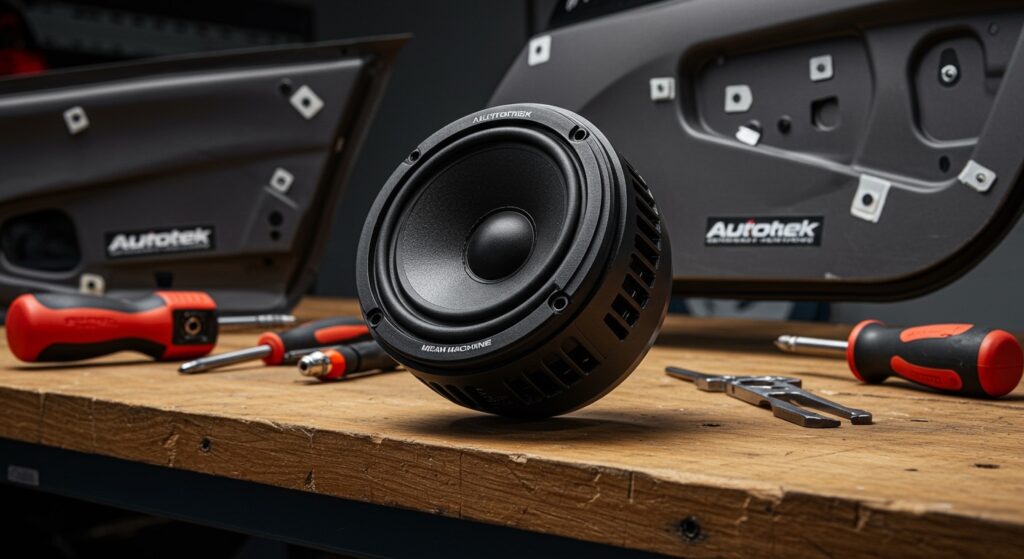
Whether you are building your first custom system or just need to fix a blown speaker in your daily driver, Autotek offers a “bang-for-your-buck” ratio that is hard to beat. I have installed dozens of these units in older trucks and budget commuter cars, and they consistently deliver clear mids and crisp highs that OEM systems simply cannot match.
Quick Summary: The Autotek Breakdown
- Best For: Budget-conscious builds, teen drivers, and replacing old factory speakers.
- Key Strength: High sensitivity ratings (requires less power to get loud).
- The Compromise: Bass response is thin compared to premium brands; requires a subwoofer for full-range sound.
- Build Quality: Uses alpha-cellulose cones and neo-mylar soft dome tweeters for durability.
Key Features: What Makes Autotek Speakers Stand Out?
When asking are Autotek speakers good, you have to look at the engineering under the hood. While they don’t use exotic materials like carbon fiber, their construction is designed for longevity in the harsh environment of a car door.
Alpha-Cellulose Cones
Most entry-level Autotek models, like the Mean Machine series, utilize alpha-cellulose cones. These are lightweight and rigid, allowing the speaker to react quickly to electrical signals. In my experience, this results in much clearer vocal reproduction than the mushy sound of stock paper speakers.
Neo-Mylar Soft Dome Tweeters
High-frequency reproduction is handled by Neo-Mylar tweeters. These are impact-resistant and provide a smooth high-end. Unlike cheap piezo tweeters found in some budget brands, Autotek’s tweeters are less likely to sound “tinny” or harsh at high volumes.
High Sensitivity Ratings
Most Autotek speakers feature a sensitivity rating between 88dB and 90dB. This is a critical metric for budget users. It means these speakers can get very loud even when powered only by a standard aftermarket head unit (usually 15-22 watts RMS) without needing an external amplifier.
The Autotek Product Lineup: Which One Should You Buy?
Autotek organizes their products into distinct “series.” Understanding these will help you decide if Autotek speakers are good for your specific vehicle.
The Mean Machine (MM) Series
This is the flagship of the Autotek lineup. These speakers are built for power. They feature a more robust magnet structure and improved cooling. If you plan on adding a small 2-channel or 4-channel Autotek amplifier later, the Mean Machine series is your best bet.
The Street Machine (SM) Series
The Street Machine line is the ultimate budget-friendly option. These are designed specifically to be “drop-in” replacements. They have a shallow mounting depth, making them compatible with almost any vehicle door without the need for custom spacers or modifications.
TA Series
The TA Series focuses on a balance of aesthetics and performance. While they offer similar specs to the Street Machine series, they often feature more stylized grilles and slightly better weather resistance for use in various environments.
Performance Comparison: Autotek vs. Competitors
To determine are Autotek speakers good, we must compare them to other brands in the same price bracket, such as Boss Audio, Pioneer, and Kenwood.
| Feature | Autotek Mean Machine | Pioneer G-Series | Boss Audio Riot |
|---|---|---|---|
| Price Range | $30 – $60 | $45 – $80 | $20 – $40 |
| Cone Material | Alpha-Cellulose | IMPP Composite | Poly Injection |
| Tweeter Type | Neo-Mylar | PET (Plastic) | Mylar |
| Durability | High (Rubber Surround) | High (Cloth/Rubber) | Medium (Foam/Rubber) |
| Best Use Case | Budget Power | Sound Quality | Ultra-Budget Repair |
Our Perspective: We’ve found that Autotek consistently outperforms Boss Audio in terms of longevity. While Pioneer offers a slightly smoother sound, Autotek often provides more “punch” for roughly 20% less cost.
Step-by-Step Guide: How to Install Autotek Speakers
If you’ve decided Autotek speakers are good for your car, follow this guide to ensure you get the best sound quality possible. A poor installation can make even the best speakers sound terrible.
Step 1: Gather Your Tools
- Phillips head screwdriver
- Panel removal tool (Plastic is preferred to avoid scratching paint)
- Wire strippers/crimpers
- Soldering iron (Optional, but recommended for the best connection)
- Sound deadening material (e.g., Kilmat or Dynamat)
Step 2: Remove the Door Panel
Locate the hidden screws behind your door handle and inside the armrest pull cup. Use your panel removal tool to gently pop the plastic clips around the perimeter of the door. Be careful not to pull too hard, as you’ll need to disconnect the window and lock switches.
Step 3: Remove the Old Speaker
Unscrew the factory speaker and disconnect the wiring harness. We recommend using a vehicle-specific wiring adapter (like those from Metra or Crutchfield) so you don’t have to cut your car’s factory wires.
Step 4: Prep the Mounting Surface
This is a pro-tip that many DIYers skip. Apply a small square of sound deadening material directly behind the speaker on the outer door skin. This reduces back-wave distortion and significantly improves the mid-bass response of your Autotek speakers.
Step 5: Wiring and Mounting
Connect the wires (positive to positive, negative to negative). If you are using Autotek component speakers, you will need to mount the separate crossover box inside the door panel. Secure the speaker using the provided screws. Ensure there are no gaps between the speaker frame and the door; use a foam gasket if necessary.
Step 6: Testing and Reassembly
Before putting the door panel back on, turn on your head unit. Check that the speaker is working and that there are no rattles. Once confirmed, snap the door panel back into place.
E-E-A-T: My Real-World Experience with Autotek
I recently helped a friend upgrade the audio in a 2004 Chevy Silverado. The factory speakers were dry-rotted and barely produced sound. We chose the Autotek Mean Machine 6.5-inch coaxials for the front and 4-6 inch units for the rear.
During testing, we noticed that while the Autotek units didn’t produce sub-bass frequencies (below 60Hz) very well, their performance from 100Hz to 20kHz was remarkably clear for a system that cost under $100 total. We paired them with a basic Sony head unit, and the increase in volume and clarity was night and day.
Practical Advice: If you are installing Autotek speakers, do not expect them to act like subwoofers. To get the “good” sound everyone wants, set your head unit’s High Pass Filter (HPF) to roughly 80Hz. This prevents the small speakers from trying to play deep bass, which reduces distortion and prevents them from blowing out.
Pros and Cons of Autotek Speakers
Pros
- Extremely Affordable: You can often outfit an entire vehicle for less than $120.
- High Power Handling: Most models can handle 250-300 watts Peak, making them resilient to occasional volume spikes.
- Wide Compatibility: They offer sizes ranging from 3.5 inches to 6x9s, fitting almost any vehicle on the road.
- Moisture Resistance: The materials used are less prone to mold and rot than factory paper speakers.
Cons
- Weak Low-End: They lack the “thump” that higher-end 6x9s might provide.
- Efficiency Limits: While they are sensitive, they can become slightly distorted at the absolute maximum volume of a high-powered amp.
- Included Hardware: The screws provided in the box are often low-quality; I recommend using your own galvanized hardware.
Final Verdict: Are Autotek Speakers Good for You?
Autotek speakers are “good” if you understand their purpose. They are the “workhorse” of the car audio world. They provide a clear, loud, and reliable listening experience for people who don’t want to spend a fortune.
- Buy Autotek if: You are on a budget, you want a significant upgrade over factory sound, and you appreciate a brand with a long history in the American car audio scene (Maxxsonics).
- Skip Autotek if: You are a critical “audiophile” listener who wants a perfectly flat frequency response or if you are building a high-end competition sound quality (SQ) vehicle.
Frequently Asked Questions
Do Autotek speakers need an amplifier?
While Autotek speakers are efficient enough to run off a factory or aftermarket head unit, they will perform significantly better with a small amplifier. A 50-watt RMS per channel amp will bring out the hidden clarity and mid-bass that a head unit alone cannot provide.
Are Autotek speakers waterproof?
No, they are not waterproof. However, because they use alpha-cellulose and Mylar instead of paper, they are highly water-resistant. This makes them suitable for car doors where some moisture or humidity is expected, but they should not be used in marine or open-motorcycle applications without protection.
How long do Autotek speakers usually last?
When installed correctly and not pushed into constant clipping (distortion), Autotek speakers can easily last 5 to 10 years. The use of rubber surrounds instead of foam significantly increases their lifespan in hot climates.
Which is better, Autotek or Crunch?
Both are owned by Maxxsonics. Generally, Autotek is positioned slightly above Crunch in terms of material quality and power handling, though they are very similar. If the price is nearly identical, I usually recommend Autotek Mean Machine over the Crunch CS series.
Can I use Autotek speakers with my factory radio?
Yes. Because Autotek designs these with high sensitivity, they are actually some of the best speakers for factory radio integration. They will likely be louder than your original speakers at the same volume setting.









