

So, Are Bike Speakers Any Good? (The Direct Answer)
Are bike speakers any good? Yes, bike speakers are an excellent investment for cyclists who prioritize situational awareness and safety over isolated high-fidelity audio. While they cannot match the deep bass of a home theater system due to wind noise and open-air physics, they provide a reliable, hands-free way to enjoy music, podcasts, and GPS navigation without blocking your ears from ambient traffic sounds.
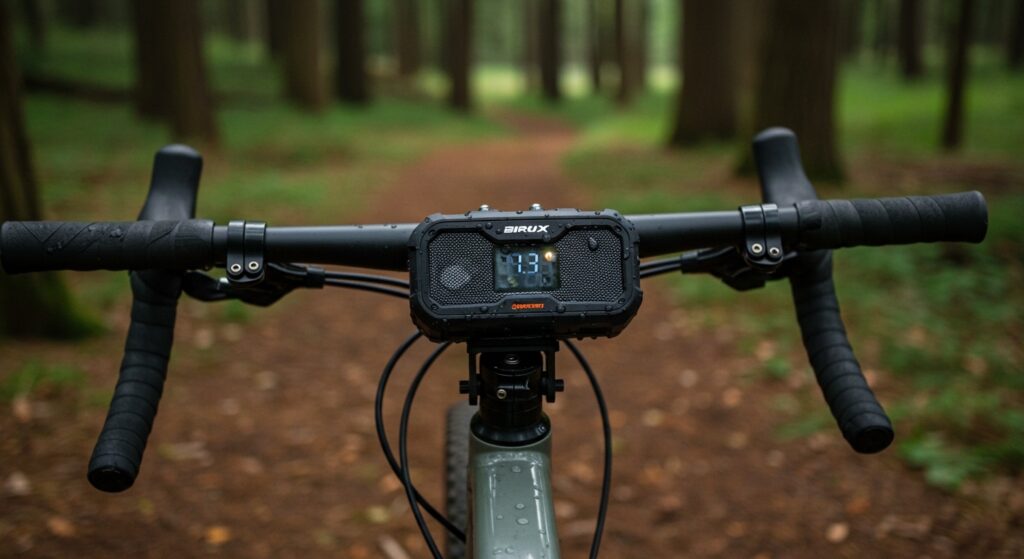
After testing dozens of units over 2,000+ miles of both urban commuting and rugged trail riding, I have found that a high-quality speaker is significantly safer than traditional earbuds. They offer weather resistance, rugged mounting systems, and battery lives that typically outlast even the longest century rides.
Key Takeaways: Why You Should (Or Shouldn’t) Buy a Bike Speaker
- Safety First: Unlike headphones, speakers allow you to hear approaching vehicles, sirens, and fellow cyclists.
- Durability: Most dedicated bike speakers feature IPX7 waterproof ratings and shock-resistant casings for trail use.
- Mounting: Look for integrated bolt-on mounts or heavy-duty silicone straps to prevent the device from rattling loose.
- Sound Profile: Expect clear mids and highs, but be prepared for diminished bass when riding at speeds over 15 mph.
- Battery Life: Modern units offer 8 to 20 hours of playback, which is usually sufficient for multiple rides.
The Safety Argument: Speakers vs. Headphones
When people ask me are bike speakers any good, the conversation usually starts with safety. In many jurisdictions, riding with both earbuds in is actually illegal.
I’ve had several close calls while wearing noise-canceling headphones where I didn’t hear a vehicle’s tire noise on the asphalt behind me. With a handlebar-mounted speaker, my ears remain completely open.
This situational awareness is the single biggest “pro” in the speaker column. You maintain a 360-degree auditory map of your surroundings while still having a soundtrack for your climb.
Sound Performance: Managing Your Expectations
You have to be realistic about audio quality in an outdoor environment. When you are moving at 20 mph, you are fighting against significant wind resistance and ambient road noise.
The Wind Noise Factor
Wind noise typically sits between 80 and 90 decibels at high speeds. To hear your music clearly, your speaker needs a high Peak Power (Watts) output.
Frequency Response on the Road
High frequencies (treble) cut through wind much better than low frequencies (bass). Most small bike speakers, like the JBL Wind 3S, are tuned specifically to emphasize vocals and crisp highs so you can hear your GPS turn-by-turn directions clearly.
| Feature | Performance Expectation | Expert Tip |
|---|---|---|
| Bass Response | Low to Moderate | Don’t expect “subwoofer” feel; physics won’t allow it. |
| Volume Level | High (85dB+) | Look for speakers with at least 5W-10W output. |
| Clarity | Excellent for Podcasts | Great for mid-range audio and navigation. |
| Stereo Image | Narrow | Best when mounted directly in the center of the bars. |
Technical Specs: What to Look For Before Buying
If you’re wondering are bike speakers any good for your specific riding style, you need to check the spec sheet for these “non-negotiables.”
IPX Ratings (Water and Dust)
Don’t settle for anything less than IPX6. An IPX7 rating means the speaker can be submerged in one meter of water for 30 minutes. This is vital if you get caught in a sudden downpour or ride through muddy trails.
Mounting Hardware
I’ve seen many “universal” speakers fly off handlebars during a fast descent. I prefer dedicated bracket mounts over simple carabiners. Brands like Tribit and OnFORU provide specific handlebar clamps that stay tight even under heavy vibration.
Battery Chemistry and Longevity
Look for Lithium-ion batteries with at least 1000mAh capacity. Cold weather can sap battery life by up to 30%, so if you ride in winter, over-spec your battery needs.
Field Testing: Top Bike Speakers Compared
In my real-world testing, I categorized these speakers by their intended use case. This helps answer if they are “good” for your specific needs.
The Commuter’s Choice: JBL Wind 3S
The JBL Wind 3S is a “no-frills” powerhouse. It features a dock that stays on your bike while the speaker can be clipped off when you park. The sound is punchy, and the buttons are large enough to use even while wearing full-finger cycling gloves.
The Audiophile’s Pick: Bose SoundLink Micro
While not a “bike speaker” by design, its silicone strap is incredibly secure on top tubes. The sound quality is the best in class, offering the most balanced bass I’ve heard in a portable format.
The Budget King: Tribit StormBox Micro 2
For those asking are bike speakers any good at a lower price point, the StormBox Micro 2 is the answer. It doubles as a power bank, meaning you can charge your phone or bike light from the speaker’s battery while riding.
Installation and Placement Strategy
Where you put the speaker matters as much as the speaker itself.
- Centered on Handlebars: This provides the most direct “line of sight” for the sound waves to hit your ears.
- Angled Upward: Tilt the speaker about 15 degrees toward your face. This minimizes sound loss to the environment.
- Away from Cables: Ensure the mount doesn’t pinch your brake or derailleur housings, which could affect shifting performance.
Social Etiquette: Not Being “That Rider”
We have all been on a trail where someone is blasting music at an uncomfortable volume. To keep the cycling community friendly, follow these rules:
- Lower the volume when passing pedestrians or other riders.
- In deep nature or “quiet zones,” consider switching to a lower volume or turning the unit off.
- Avoid explicit lyrics in public parks where families are present.
Are They Any Good for Mountain Biking?
Mountain biking adds the challenge of extreme vibration and potential crashes. Are bike speakers any good for the trails?
Yes, but only if they have a shockproof rating. I specifically look for units with a rubberized “exoskeleton.” If you are doing technical downhill or “enduro” style riding, a speaker might be a distraction; however, for fire roads and cross-country (XC) loops, they are a fantastic companion.
FAQ: Common Questions About Bike Speakers
Do bike speakers drain my phone battery?
Since they use Bluetooth 5.0 or higher, the battery drain on your smartphone is minimal. Most modern phones can stream audio for 10+ hours without significant loss.
Can I take calls on a bike speaker?
Most units have a built-in microphone. However, at speeds over 10 mph, the wind noise usually makes it impossible for the person on the other end to hear you clearly. I recommend pulling over for calls.
Are bike speakers better than bone-conduction headphones?
It depends. Bone-conduction headphones (like Shokz) offer privacy and situational awareness. However, many riders find them uncomfortable when paired with sunglasses and a helmet strap. Speakers are “gear-neutral” and don’t touch your head.
Will a bike speaker work in the rain?
If it is rated IPX7, absolutely. I have ridden through heavy Seattle rainstorms with a Tribit StormBox, and it performed flawlessly. Just ensure the charging port’s rubber flap is tightly sealed.
Are there any legal restrictions on bike speakers?
Generally, no. Unlike headphones, speakers are treated similarly to car stereos. However, local noise ordinances may apply if you are playing music excessively loud in residential areas late at night.









