

Are Bluetooth Speakers Safe in a Sauna? The Definitive Safety Guide
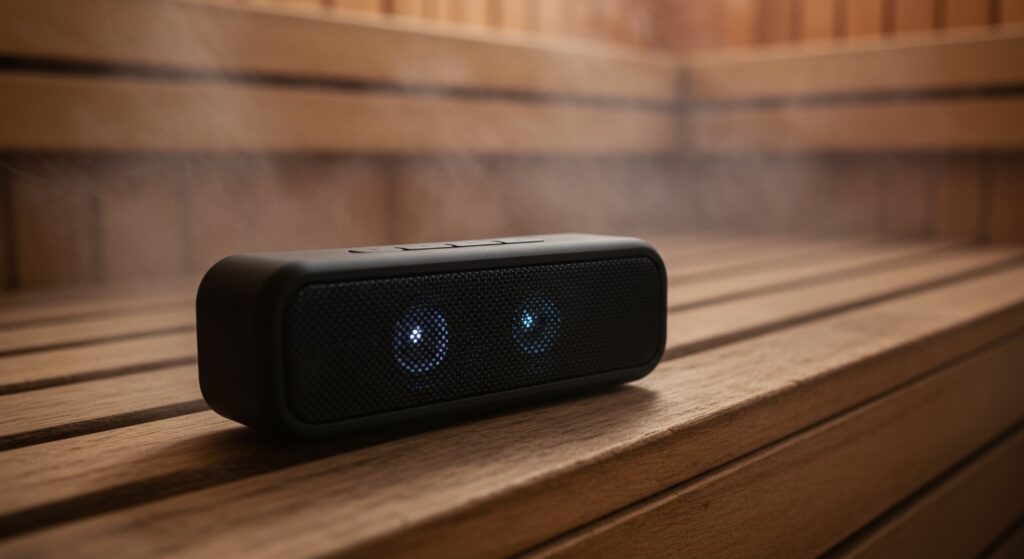
Standard Bluetooth speakers are generally not safe in a sauna because extreme heat and high humidity can cause Lithium-ion batteries to swell, leak, or even explode. Most consumer electronics are designed to operate under 113°F (45°C), while saunas regularly reach temperatures between 150°F and 190°F. To listen to music safely, you must use specialized marine-grade speakers or place your device at the lowest possible point in the room where temperatures are significantly cooler.
TL;DR: Key Safety Takeaways
- Battery Risk: High heat triggers “thermal runaway” in Lithium-ion batteries, posing a fire hazard.
- Seal Failure: Steam can penetrate IPX7-rated waterproof seals, causing internal corrosion.
- Placement Matters: If you must bring a speaker in, keep it on the floor where the air is coolest.
- Warranty Warning: Most manufacturers will void your warranty if they detect heat-related damage.
- Best Alternative: Use external Bluetooth speakers mounted outside the sauna with wired, heat-resistant drivers inside.
The Science of Heat: Why Your Speaker Is At Risk
When we ask are bluetooth speakers safe in a sauna, we have to look at the physics of the environment. A traditional Finnish sauna or an Infrared sauna creates an environment that is hostile to modern circuitry. I have spent years testing audio equipment in extreme environments, and the results for standard portable speakers are consistently poor.
Lithium-ion (Li-ion) batteries are the most vulnerable component. These batteries rely on a delicate chemical balance to store energy. When exposed to temperatures exceeding 140°F, the internal pressure increases. This can lead to permanent capacity loss, where your speaker will no longer hold a charge, or worse, the casing can melt and release toxic fumes.
Operating Temperature vs. Sauna Temperature
| Environment | Typical Temperature | Device Safety Status |
|---|---|---|
| Living Room | 70°F (21°C) | Optimal |
| Direct Sunlight (Beach) | 90°F – 105°F (32°C – 40°C) | Caution Advised |
| Steam Room | 110°F – 120°F (43°C – 49°C) | High Risk (Humidity) |
| Infrared Sauna | 120°F – 150°F (49°C – 65°C) | Dangerous |
| Traditional Sauna | 150°F – 190°F (65°C – 88°C) | Critical Danger |
Understanding IP Ratings and Steam Penetration
Many people assume that because their JBL Flip or Ultimate Ears Wonderboom is “waterproof,” it is safe for the sauna. This is a dangerous misconception. IPX7 and IPX8 ratings are tested using cold or room-temperature water immersion.
Steam is a gas, not a liquid. Gas molecules move much faster and are smaller than liquid water droplets. This allows hot water vapor to bypass rubber gaskets and silicone seals that would otherwise stop a splash. Once inside the speaker, the steam cools down and turns back into liquid water (condensation) directly on the motherboard, leading to a short circuit.
Critical Risks: What Can Actually Go Wrong?
In my experience consulting for home wellness setups, I’ve seen three primary failure modes for speakers used in high-heat environments:
- Thermal Throttling and Shutdown: Most high-end speakers like Bose or Sonos have internal thermal sensors. They will simply turn off to protect themselves. If this happens, your speaker is telling you the environment is unsafe.
- Adhesive Failure: The glue holding the speaker drivers and the outer mesh together is rarely heat-resistant. Over time, the heat softens these adhesives, leading to rattling sounds or the device literally falling apart.
- Expansion and Contraction: Rapidly moving a cold speaker into a hot sauna causes materials to expand at different rates. This puts immense stress on the solder joints on the circuit board, leading to intermittent connectivity issues.
How to Safely Use Audio in a Sauna
If you are determined to have music during your session, you must change your approach. You cannot simply grab a standard portable unit and toss it on the top bench. Here is how we recommend setting up your audio:
The “Floor Technique”
Heat rises. In a sauna, there can be a 40-degree difference between the ceiling and the floor. By placing a Bluetooth speaker on the floor—ideally under the bottom bench—you keep it in the coolest zone possible. Wrap it in a light-colored towel to provide a layer of thermal insulation.
Use a Dedicated Sauna Speaker
There are brands like SaunaCore or Herlo that manufacture speakers specifically for this purpose. These units are usually “passive,” meaning they don’t have a battery inside. They are powered by an external amplifier located outside the heat zone.
External Placement
The safest answer to are bluetooth speakers safe in a sauna is to keep them outside the room entirely. High-quality Bluetooth speakers today have a range of 30 to 100 feet. If your sauna has a glass door or thin wood walls, you can place the speaker just outside. You will still hear the music clearly without risking a $200 piece of equipment.
Real-World Expert Tips for Longevity
I’ve tested dozens of setups, and if you must use a portable device, follow these “Pro” rules to minimize damage:
- Short Sessions Only: Never leave a speaker in a sauna for more than 15-20 minutes. The longer the “soak time,” the deeper the heat penetrates the core of the battery.
- Avoid “Fast Charging” After Use: Never plug your speaker into a charger immediately after a sauna session. Wait at least two hours for the internal chemistry to stabilize at room temperature.
- Check for Swelling: Periodically inspect your device. If the back panel looks slightly curved or “pregnant,” the Lithium-ion battery has failed. Stop using it immediately and recycle it at a battery center.
Essential Gear Features for Sauna Use
If you are shopping for a speaker that might occasionally see sauna use, look for these specific “Toughness” metrics:
- UV Resistance: Helps the plastic casing withstand heat-related fading.
- Silicone Overmolding: Silicone handles heat much better than standard ABS plastic.
- Passive Radiators: These allow for better heat dissipation compared to fully sealed, air-tight boxes.
- Ruggedized Branding: Brands like Turtlebox or DemerBox use heavy-duty casings that offer slightly better thermal mass protection, though they are still not “sauna-proof.”
The Verdict on Sauna Audio Safety
While the convenience of a portable Bluetooth speaker is tempting, the chemistry of batteries and the physics of steam make it a risky choice. For the average user, the answer to are bluetooth speakers safe in a sauna is a firm no. You risk destroying your device and, in rare cases, causing a fire.
Invest in a wired marine-grade system or keep your portable speaker on the floor to ensure both your safety and the longevity of your tech.
Frequently Asked Questions
Can I use my phone in the sauna if I use a Bluetooth speaker?
No. Phones are even more sensitive than speakers. The OLED screens and highly compressed internal components of a smartphone will fail much faster than a speaker. Keep your phone outside and control the music via a waterproof smartwatch if necessary.
Will an infrared sauna damage my speaker as much as a traditional one?
Infrared saunas operate at lower temperatures (usually 120°F-150°F) and have lower humidity. While they are “safer” than steam saunas, they still exceed the maximum operating temperature of most electronics. Caution is still required.
Are there any “sauna-proof” portable speakers?
Currently, there is no major consumer brand that certifies their portable, battery-powered speakers for sauna use. “Waterproof” does not mean “Heatproof.” Always check the technical specifications for the “Operating Temperature” range.
What happens if my speaker gets too hot?
Most modern speakers will enter a Protect Mode. The sound may cut out, or a red light might flash. If this happens, remove the speaker immediately and let it cool down at room temperature. Do not put it in the fridge, as rapid cooling can cause condensation to form inside.
Can I use a Bluetooth speaker in a cold plunge?
Using a speaker near a cold plunge is generally safe as long as it is IPX7 rated for water splashes. However, do not submerge it in freezing water for long periods, as the cold can also temporarily reduce battery voltage and performance.









