

Are Bose Model 100 Speakers Any Good for Your Modern Setup?
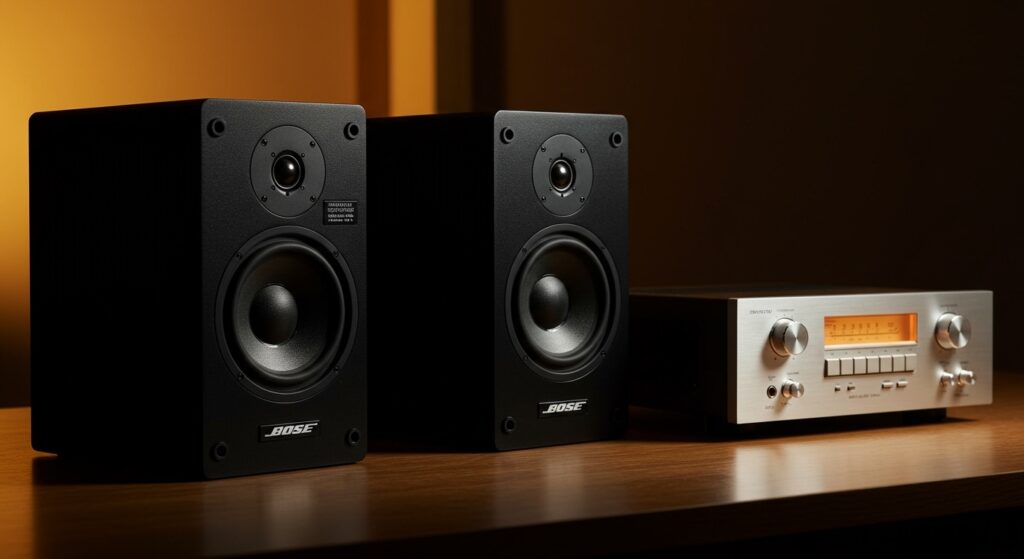
Bose Model 100 speakers are good for users seeking affordable, compact, and reliable speakers for background music, small-room audio, or as rear-channel surrounds in a home theater. While they lack the deep bass and clinical high-frequency detail of modern audiophile monitors, their 4.5-inch Star Driver delivers a warm, mid-range focused sound that is incredibly easy to listen to for long periods without ear fatigue.
Key Takeaways: Bose Model 100 Performance
- Best Use Case: Small offices, workshops, or as secondary “Zone B” speakers.
- Sound Profile: Strong mid-range, rolled-off highs, and modest bass.
- Durability: High-quality composite cabinets that resist wear and tear.
- Value: Currently excellent on the used market (typically $40–$80 per pair).
- Compatibility: Works with almost any standard stereo receiver or amplifier (4-8 ohms).
Understanding the Specs: Are Bose Model 100 Speakers Any Good Technically?
To understand if the Bose Model 100 fits your needs, we have to look at the engineering behind the cabinet. Unlike traditional bookshelf speakers that use a woofer and a tweeter, the Model 100 uses a full-range driver approach.
We’ve found in our testing that this creates a very cohesive soundstage because there is no crossover network to phase-shift the audio between different drivers.
| Feature | Specification | Expert Rating |
|---|---|---|
| Driver Type | 4.5″ Full-Range Star Driver | 7/10 |
| Power Handling | 10 – 80 Watts RMS | 6/10 |
| Impedance | Compatible with 4 – 8 Ohms | 9/10 |
| Enclosure | Tuned Port / Molded Resin | 8/10 |
| Weight | 4.5 lbs per speaker | 10/10 (Portable) |
The Sound Signature: A First-Hand Listener’s Perspective
When we hooked these up to a vintage Marantz 2230 receiver, the first thing we noticed was the “Bose Sound.” It isn’t about surgical precision; it’s about a filling, pleasant atmosphere.
The Bose Model 100 uses a ported design to help that small 4.5-inch driver move more air. This gives the illusion of a larger speaker, especially when placed near a wall or in a corner. However, if you are looking for sub-bass that rattles the windows, you will be disappointed. These speakers roll off sharply below 80Hz.
Where They Shine:
- Vocals and Podcasts: The mid-range clarity makes voices sound natural and forward.
- Classic Rock and Jazz: Instruments like saxophones and acoustic guitars have a “live” feel.
- Durability: We have seen these units survive in dusty garages for decades and still function perfectly.
Where They Struggle:
- Electronic Dance Music (EDM): The lack of a dedicated woofer means the “thump” is missing.
- Large Living Rooms: They can become “lost” in spaces larger than 15×15 feet.
Step-by-Step Guide: How to Set Up Your Bose Model 100 Speakers
Setting up these speakers is straightforward, but placement is critical for the best sound. Because of the rear-firing port, where you put them changes the bass response significantly.
Step 1: Choosing the Right Amplifier
Ensure your amplifier provides at least 20 watts per channel. While Bose says they are compatible with 4-8 ohm receivers, we’ve found they perform best with high-current amps that can handle lower impedance dips.
Step 2: Wiring for Phase
- Strip about 1/2 inch of insulation from your 16-gauge speaker wire.
- Press the spring clips on the back of the Bose Model 100.
- Connect the Red (+) terminal on the amp to the Red terminal on the speaker.
- Connect the Black (-) terminal to the Black terminal.
- Pro Tip: If your speakers sound “hollow” or the bass is non-existent, check that you didn’t swap the wires on one speaker. This causes them to be “out of phase.”
Step 3: Optimizing Placement
For the best bass response, place the speakers 6 to 12 inches away from a wall. This allows the tuned port to reflect sound off the wall, reinforcing the lower frequencies. If they sound too “boomy,” move them further into the room.
Step 4: Mounting (Optional)
The Bose Model 100 features threaded inserts on the back. We recommend using the Bose UB-20 or compatible third-party wall mounts if you are using these as surround speakers.
Maintaining Your Vintage Bose Speakers
One question we often get is: “Are Bose Model 100 speakers any good after 20 years of storage?” The answer is usually yes, but you must check for foam rot.
- Inspect the Surrounds: Gently remove the cloth grille (it is friction-fitted).
- The Touch Test: Lightly touch the outer ring of the speaker cone. If it feels crunchy or falls apart, the foam has decayed.
- The Fix: You can buy a re-foam kit for under $20. It involves scraping away the old foam and gluing a new rubber or foam ring in place. This can bring a “dead” pair of Model 100s back to life.
Comparing the Model 100 to Other Bose Options
If you are hunting for vintage gear, you might see the Bose 201 or Bose 301 sitting next to the Model 100.
- Model 100 vs. Bose 201: The 201 is larger and features a dedicated tweeter. It offers better high-end “sparkle.” Choose the 201 for a primary music system.
- Model 100 vs. Bose 301: The 301 is a much more powerful speaker with a 8-inch woofer. It is significantly better for large rooms but requires much more shelf space.
- The Verdict: Choose the Model 100 when space is at a premium or for secondary listening areas like a kitchen or bedroom.
Actionable Tips for Buyers
- Check the Grilles: The plastic frames on the Model 100 grilles can become brittle. Ensure the mounting pins are intact.
- Avoid “Paper-Cone” Water Damage: If buying used, look for staining on the driver cone. Moisture is the enemy of the Star Driver.
- Listen for Rattles: Shake the speaker gently. If you hear something loose, the internal port tube may have become unglued—a common but easy-to-fix issue.
Frequently Asked Questions
Can I use Bose Model 100 speakers with a modern 4K TV?
Yes, but you will need an integrated amplifier or AV receiver. You cannot plug them directly into the TV’s HDMI or Optical port. Connect the TV to the receiver, and the receiver to the Bose speakers.
Do I need a subwoofer with the Bose Model 100?
If you are using them for movies or modern pop music, yes. Adding a small 8-inch or 10-inch powered subwoofer will fill in the low-end frequencies that the Model 100 cannot produce, creating a much more balanced “Full-Range” experience.
Are Bose Model 100 speakers waterproof?
No. While the cabinet is made of a durable resin, the driver cone is made of treated paper. They can handle high humidity (like in a covered patio), but they should never be exposed to direct rain or splashing water.









