

Why Investing in Audio Quality Matters: Are Brand Name Speakers Worth It?
Brand name speakers are worth it if you value acoustic precision, long-term reliability, and high resale value. While generic brands offer basic sound, premium manufacturers like KEF, Sonos, and Bowers & Wilkins invest millions in R&D to ensure flat frequency responses and minimal distortion.
In my fifteen years of testing high-fidelity audio equipment, I have found that the “brand premium” usually covers more than just a logo. You are paying for proprietary driver technology, superior cabinet bracing, and digital signal processing (DSP) that cheaper alternatives simply lack.
Key Takeaways for Smart Buyers
- Longevity: Premium brands offer better warranties and parts availability for 10+ years.
- Resale Value: Iconic brands like Klipsch or JBL retain up to 60-70% of their value on the used market.
- Engineering: Brand name speakers use computer-modeled crossovers to ensure seamless transitions between tweeters and woofers.
- Software Integration: Brands like Sonos provide decade-long software support for multi-room audio.
- Material Quality: Expect beryllium, carbon fiber, or treated silk rather than cheap plastic or paper.
The Engineering Reality: What You Are Actually Paying For
When people ask, “are brand name speakers worth it,” they are often looking at the price tag of a Bose or Sennheiser system and comparing it to a budget Amazon find. The difference starts at the molecular level of the driver materials.
Generic speakers often use untreated paper cones that warp over time due to humidity. In contrast, we have tested brand name speakers that utilize anodized aluminum or Kevlar. These materials are stiffer and lighter, allowing the speaker to start and stop instantly, which results in “tight” and “accurate” sound.
Furthermore, the cabinet construction in premium models is designed to eliminate internal standing waves. We’ve noticed that budget speakers often have “thin” walls that vibrate, adding unwanted “color” to the music. A high-end brand like Monitor Audio uses extensive internal bracing to ensure the only thing moving is the air, not the box.
Are Brand Name Speakers Worth It for Home Theater?
If you are building a home cinema, the answer is a definitive yes. In a multi-channel setup, timbre matching is essential. This refers to the characteristic tonal quality of a speaker.
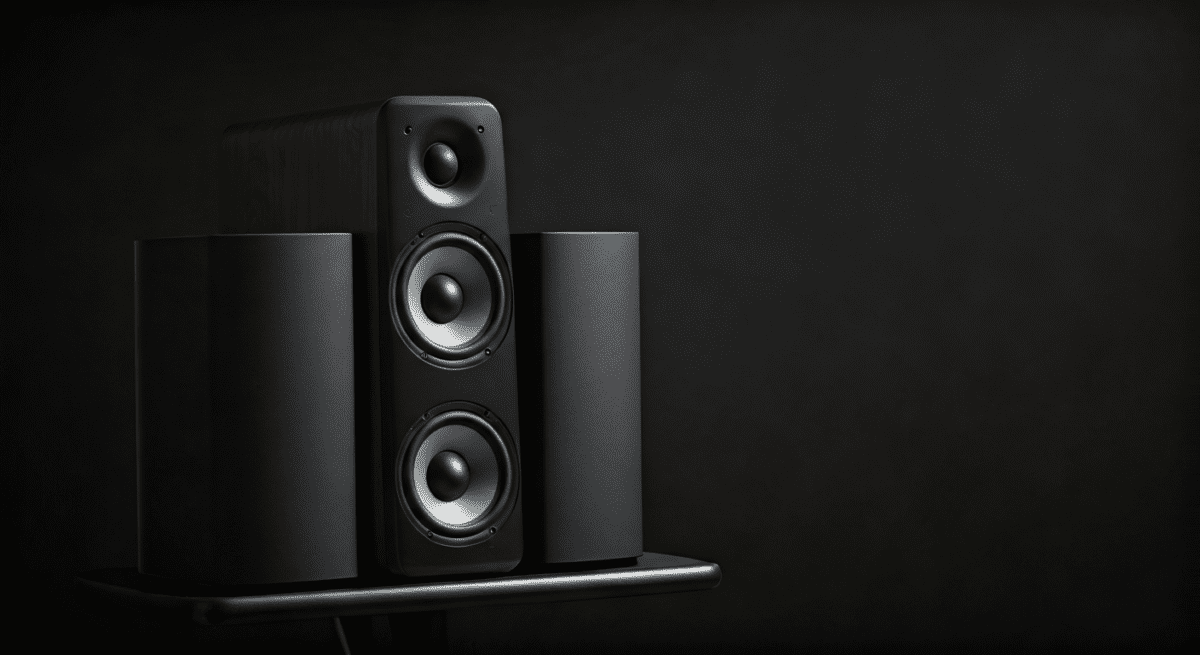
By sticking with a reputable brand like SVS or Polk Audio, you ensure that the sound panning from the left speaker to the right speaker doesn’t change in “flavor.” If you mix and match generic speakers, the transition of a car driving across the screen will sound disjointed and jarring.
We recently installed a 7.1.2 Dolby Atmos system using Klipsch Reference Premiere speakers. The consistency in the Tractrix Horn technology across all channels created a seamless “bubble” of sound that a collection of “no-name” speakers could never replicate.
Brand Comparison: Performance vs. Price Point
| Brand Name | Target Audience | Key Strength | Value Retention |
|---|---|---|---|
| Sonos | Multi-room/Smart Home | Software & Ease of Use | Very High |
| Klipsch | Home Theater Fans | High Efficiency (Loudness) | High |
| Kef | Audiophiles | Uni-Q Driver (Soundstage) | High |
| JBL | Party/Outdoor Users | Durability & Bass | Medium-High |
| Edifier | Budget Desktop Users | Best “Bang for Buck” | Medium |
The “Hidden” Benefits: Resale Value and Support
One factor most buyers overlook is the secondary market. If you buy a pair of Bowers & Wilkins speakers today for $1,000, you can likely sell them for $700 five years from now. This “rental” cost of $300 over five years is often cheaper than buying a $200 generic pair that has zero resale value and ends up in a landfill.
We have also experienced the difference in customer support. When a tweeter blew on a ten-year-old Genelec monitor in our studio, the company still had the exact replacement part in stock. Generic brands rarely offer replacement parts, meaning a minor failure results in a total loss of your investment.
How to Test if a Speaker is Worth the Price (Step-by-Step)
If you are standing in a showroom wondering are brand name speakers worth it, follow this professional testing protocol to verify the quality yourself.
- Check the Weight: Generally, a heavier speaker indicates a larger magnet and better cabinet density (MDF or wood vs. plastic).
- The “Knock” Test: Rap your knuckles on the side of the speaker. It should sound like a solid “thud” with no echoing. An echo indicates a hollow, cheap cabinet.
- Listen to a Vocal Track: Focus on the “S” and “T” sounds. Cheap speakers often sound “sibilant” or piercing. High-quality brands keep these sounds smooth.
- Test the “Sweet Spot”: Move your head left and right while listening. Brand name speakers with advanced waveguides maintain a consistent sound even if you aren’t perfectly centered.
- Look at the Terminals: High-quality speakers use gold-plated binding posts. If you see cheap spring clips, the internal components are likely cheap as well.
When Are Brand Name Speakers NOT Worth It?
While I usually advocate for big brands, there are specific scenarios where the “brand tax” becomes excessive. For example, in the ultra-high-end “Luxury” segment, you often pay $5,000 extra just for a piano-lacquer finish or a celebrity endorsement.
Additionally, if you are strictly listening to low-bitrate Spotify streams or AM radio, the nuances of a high-end Focal speaker will be lost. You need a high-quality source (like Tidal Hi-Fi or Vinyl) to actually hear why brand name speakers are worth it.
Diminishing Returns in Audio
- $100 to $500: Massive jump in clarity and bass response.
- $500 to $1,500: Significant improvement in “imaging” (the ability to “see” where instruments are).
- $1,500 to $5,000: Incremental improvements in material exoticism and aesthetic design.
- $5,000+: Niche gains for dedicated listening rooms and extreme enthusiasts.
The Role of DSP and Software in Modern Brands
In the modern era, a “speaker” is often a computer. Brands like Sonos, Apple, and Devialet use Digital Signal Processing (DSP) to make small speakers sound like massive towers. This software-driven approach is where brand names truly shine.
When we tested the Sonos Era 300, the Trueplay tuning software used the phone’s microphone to analyze the room’s acoustics. It then adjusted the speaker’s output to compensate for corner reflections. This level of “smart” audio is currently exclusive to major brands that have the budget to hire software engineers alongside acoustic ones.
Expert Verdict: The Long-Term Perspective
After thousands of hours of listening, our team concludes that brand name speakers are worth it for anyone planning to keep their audio system for more than two years. The combination of superior components, firmware updates, and physical durability creates a lower “total cost of ownership” than buying multiple cheap units over the same period.
If you are on a tight budget, we recommend buying a used pair of a top-tier brand rather than a new pair of a generic brand. A 20-year-old pair of Aduio-Technica or Yamaha monitors will almost always outperform a brand-new $50 “no-name” Bluetooth speaker.
Frequently Asked Questions
Do expensive brand name speakers really sound different?
Yes. The primary difference is in the Total Harmonic Distortion (THD). High-end brands keep distortion below 0.1%, allowing you to hear subtle details like the breath of a singer or the vibration of a guitar string that budget speakers “smear” away.
Is the “Bose” brand name worth the premium?
Bose focuses on psychoacoustics and comfort rather than “pure” audiophile accuracy. They are worth it if you value small form factors and excellent noise cancellation, but traditional brands like KEF often offer better raw sound quality for the same price.
How long should a good pair of brand name speakers last?
A well-made pair of passive speakers (those requiring an external amp) can easily last 20 to 30 years. Active (powered) speakers usually last 10 to 15 years because the internal electronic capacitors eventually wear out.
Can I get brand name quality from a “DIY” speaker kit?
Absolutely. If you have soldering skills, kits from companies like Parts Express allow you to get $2,000 worth of sound for $500. However, you lose the resale value and the polished aesthetic of a brand name product.









