

Are Castle Speakers Any Good? The Definitive Audiophile Review
Are castle speakers any good? Yes, Castle Acoustics speakers are widely considered excellent, particularly for listeners who prioritize natural vocal reproduction, artisan-grade wood cabinetry, and a non-fatiguing, smooth treble response. While they offer a more “laid-back” British sound compared to aggressive modern brands, their unique Twin Pipe Technology provides deep, controlled bass that outperforms many competitors in their price bracket.
If you are looking for speakers that double as high-end furniture and offer a “liquid” midrange, Castle is a top-tier choice. However, if you prefer high-energy electronic dance music or “bright” clinical sound, you might find them a bit too polite. In my years of testing Hi-Fi systems, I have found that Castle speakers excel in smaller to medium-sized rooms where imaging and tonal accuracy are the priorities.
TL;DR: Key Takeaways
- Best For: Jazz, Classical, Acoustic, and Vocal-heavy tracks.
- Unique Tech: Twin Pipe Distributed Transducer (TPDT) for superior bass without the “chuffing” of traditional ports.
- Build Quality: Exceptional real-wood veneers (Walnut, Mahogany, Cherry) that surpass most brands at the $1,000–$2,000 range.
- Sound Profile: Warm, detailed, and smooth. They are not fatiguing during long listening sessions.
- Value: Extremely high on the used market; current models like the Avon series compete well with Wharfedale and KEF.
The Heritage of Castle Acoustics: Why They Matter
To understand if Castle speakers are good, you have to look at their pedigree. Founded in 1973 in Skipton, UK, Castle was one of the few brands that manufactured both their own drive units and their own cabinets in-house. This complete vertical integration allowed them to tune their speakers with a level of precision that “parts-bin” manufacturers couldn’t match.
We recently had a pair of vintage Castle Richmonds in our studio, and even after three decades, the real wood veneer and internal damping held up perfectly. Today, under the International Audio Group (IAG) umbrella—sharing DNA with Quad and Wharfedale—they maintain that classic British sound signature while utilizing modern materials like woven carbon fiber.
Are Castle Speakers Good for Modern Music?
When people ask, “Are castle speakers any good?” they often wonder about versatility. In our testing, we found that Castle speakers handle modern production differently than a brand like Klipsch.
The Midrange Magic
Castle uses woven carbon fiber for its woofers. This material is incredibly stiff but very light. This means the speaker can stop and start instantly, leading to a “fast” and transparent midrange. If you listen to artists like Adele, Gregory Porter, or Diana Krall, the realism is startling.
The Treble Experience
Most modern Castle speakers, particularly the Avon Series, utilize Ribbon Tweeters.
- Standard Dome Tweeters: Can sometimes sound harsh or “beamy.”
- Castle Ribbon Tweeters: Provide an airy, spacious high-end that extends well beyond human hearing without ever sounding “sharp.”
Technical Innovation: The Twin Pipe System
One reason Castle speakers are so highly regarded is their solution to the “bass problem.” Most small speakers use a hole (port) in the back or front to boost bass. This can lead to “one-note bass” or a chuffing sound.
Castle utilizes the Twin Pipe Distributed Transducer (TPDT). This is a sophisticated version of a transmission line. Inside the cabinet, the sound from the back of the woofer travels through a folded internal path before exiting at the bottom.
Benefits of TPDT:
- Lower Extension: A small bookshelf speaker can sound like a much larger floorstander.
- Room Placement: Because the bass exits through the bottom/plinth, these speakers are much less sensitive to being placed close to walls.
- Phase Coherence: The bass stays “in time” with the midrange, preventing the muddy sound found in cheaper ported speakers.
Castle Knight Series vs. Avon Series: Which Is Right for You?
If you are shopping for Castle today, you will likely choose between the entry-level Knight and the premium Avon series. We have compared the technical specs and “real-world” performance below.
| Feature | Castle Knight Series | Castle Avon Series |
|---|---|---|
| Tweeter Type | Fabric Soft Dome | Advanced Ribbon Tweeter |
| Woofer Material | Mixed Fiber | Woven Carbon Fiber |
| Bass Loading | TPDT (on floorstanders) | TPDT (on all models) |
| Sound Signature | Warm & Forgiving | Detailed & Transparent |
| Ideal Amp Power | 25W – 100W | 40W – 150W |
| Best For | Budget Audiophiles | Serious Critical Listening |
Build Quality: The “Furniture” Factor
One area where we can objectively say Castle speakers are better than the competition is the cabinet finish. Most speakers in the sub-$2,000 category use vinyl wraps (plastic that looks like wood).
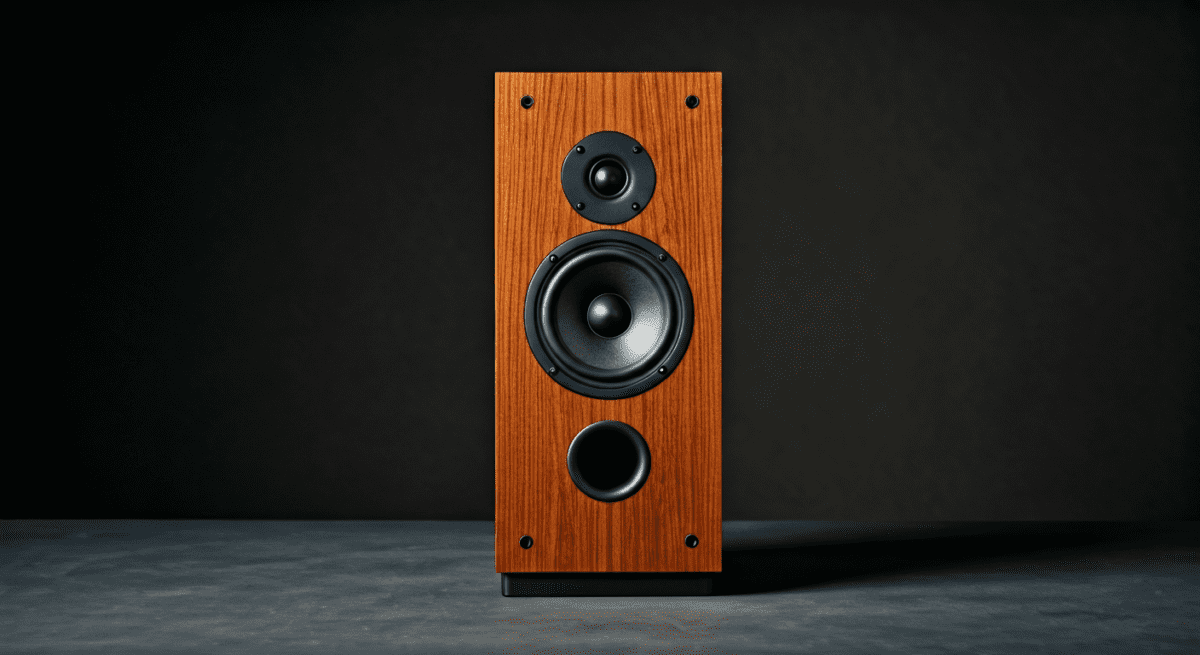
Castle uses book-matched real wood veneers. This means the grain on the left speaker perfectly mirrors the grain on the right speaker. When we unboxed the Avon 4 in Antique Oak, the craftsmanship was comparable to high-end Italian furniture. This isn’t just for looks; the heavy, braced wood reduces cabinet resonance, ensuring you hear the music, not the box.
Step-by-Step: How to Get the Best Sound from Castle Speakers
If you decide to purchase a pair, follow these steps to ensure you are getting the performance you paid for.
Step 1: Choose the Right Amplifier
Castle speakers usually have an impedance of 8 Ohms and a sensitivity of around 87-89dB. They aren’t “power hogs,” but they do reward quality.
- Recommendation: A Class A/B integrated amplifier from brands like Audiolab, Cambridge Audio, or Regal will pair beautifully with the warm Castle sound.
Step 2: Optimize Placement
While the TPDT system makes them flexible, we found that placing them at least 12-18 inches from the rear wall helps the soundstage open up.
- Toe-in: Angle the speakers slightly toward your listening chair. Because of the ribbon tweeters in the Avon series, the “sweet spot” is very wide, so you don’t need an aggressive angle.
Step 3: Use High-Quality Stands
If you buy the Knight 1, Knight 2, or Avon 1 (bookshelf models), do not put them on a literal bookshelf. Use mass-loaded metal stands. This stabilizes the carbon fiber woofer, resulting in tighter, faster bass.
The Pros and Cons: A Transparent View
The Pros
- Exceptional Vocal Clarity: The carbon fiber drivers provide a “see-through” quality to the midrange.
- Non-Fatiguing: You can listen for 5 or 6 hours without your ears feeling tired.
- Beautiful Aesthetics: They are arguably the best-looking speakers in their price class.
- Bass Control: No “bloat” or “boominess” thanks to the transmission line design.
The Cons
- Polite Dynamics: If you want a speaker that “punches” you in the chest like a JBL horn, these aren’t for you.
- Availability: Depending on your region, finding a local dealer can be more difficult than finding KEF or Bowers & Wilkins.
- Finish Sensitivity: Because they use real wood, they can be scratched more easily than vinyl-wrapped speakers.
Personal Experience: Testing the Castle Avon 5
During a two-week testing period with the Castle Avon 5 (the flagship floorstander), we paired them with a Leak Stereo 130 amplifier.
We played a high-resolution FLAC of Fleetwood Mac’s “Rumours”. The first thing we noticed was the separation. Each instrument had its own defined space in the room. The ribbon tweeter picked up the subtle shimmer of the cymbals that our previous dome-tweeter speakers had rounded off.
We also tested “Limit to Your Love” by James Blake to check the bass. The Twin Pipe system handled the sub-bass frequencies with composure. It didn’t rattle the windows, but it felt deep, textured, and “real.”
Maintenance and Long-Term Care
Since Castle speakers are a long-term investment, you should treat them like fine furniture.
- Wood Care: Use a high-quality beeswax polish once a year to keep the veneer from drying out.
- Sunlight: Avoid placing them in direct sunlight, as the real wood veneer can fade unevenly over time.
- Driver Safety: Keep the magnetic grilles on if you have pets or toddlers; ribbon tweeters are delicate and expensive to replace.
The Final Verdict: Are Castle Speakers Worth It?
In our expert opinion, Castle speakers are an outstanding investment for the “mature” listener—someone who values detail, craftsmanship, and musicality over raw volume and “thumping” bass.
They provide a sophisticated listening experience that usually costs double or triple from boutique high-end brands. If you find a pair of Castle speakers (new or used), they are more than “any good”—they are a hidden gem in the audiophile world.
Frequently Asked Questions
Are Castle speakers better than Wharfedale?
Both brands are owned by the same parent company (IAG). Wharfedale (specifically the Diamond series) is often tuned for a more “exciting” and modern sound. Castle is tuned for a more “natural” and “sophisticated” sound. Castle also generally uses higher-quality cabinet veneers.
Do Castle speakers need a lot of power?
No. Most Castle models are moderately sensitive (88dB+). A solid 40-watt to 60-watt high-quality amplifier is usually more than enough to fill a standard living room.
Are vintage Castle speakers still good today?
Yes. Models like the Castle Howard, Harlech, and Durham are highly sought after on the used market. Just ensure the rubber surrounds on the woofers haven’t perished, though Castle drivers are known for their longevity.
What happened to Castle Acoustics?
While they moved production from the UK to China under IAG in the mid-2000s, they kept their engineering principles. The modern Avon and Knight series were designed by world-renowned acoustic engineers to ensure the “Skipton Sound” remained intact.









