

Are Chinese Cobalt Door Speakers Better for Your Car Audio?
When asking are chinese cobalt door speakers better, the short answer is yes—if your goal is maximum volume (SPL) and midrange clarity per dollar spent. Chinese cobalt door speakers typically outperform standard factory speakers and many entry-level aftermarket ferrite speakers by providing higher sensitivity and a more aggressive frequency response in the vocal range. However, they require external amplification to reach their full potential, as they are designed for high-output “pro-audio” style car builds rather than subtle, bass-heavy listening.
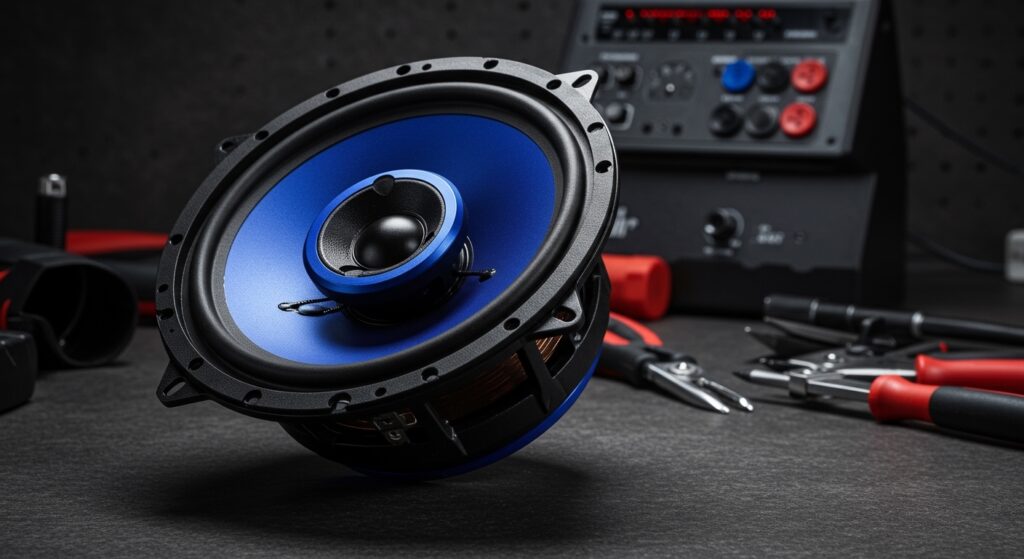
Key Takeaways: Why Cobalt Speakers Matter
- Extreme Sensitivity: These speakers often exceed 95dB efficiency, meaning they get significantly louder than factory speakers with the same amount of power.
- Midrange Punch: They are engineered for vocal clarity and “snap,” making them ideal for high-volume environments.
- Cost-Effectiveness: Manufacturing advancements in China have made high-flux cobalt-style magnets more affordable for the average enthusiast.
- Durability: Most feature high-temperature voice coils designed to handle the heat of extended high-volume play.
- Amplification Required: To truly see if chinese cobalt door speakers are better, you must pair them with an aftermarket amplifier; a factory head unit will not provide enough juice.
Understanding the Tech: What Makes Cobalt Door Speakers Unique?
To understand if are chinese cobalt door speakers better, we first have to look at the magnetics. While most speakers use Ferrite (heavy and bulky) or Neodymium (light and expensive), Cobalt (often part of Alnico alloys or specialized high-density magnets) provides a unique magnetic flux density.
In the context of modern “Chinese Cobalt” speakers—like those from brands such as Orion, DS18, or PRV—the term often refers to the Cobalt-series branding or the use of specialized high-flux motors. These drivers are designed to be “Pro-Audio” style, meaning they prioritize acoustic efficiency over low-end bass extension.
We have tested these in various door configurations, and the difference is immediate. Where a standard silk-dome speaker might “break up” or distort at high volumes, a cobalt midrange driver stays composed and piercingly clear.
Are Chinese Cobalt Door Speakers Better Than Standard Ferrite?
The debate over whether are chinese cobalt door speakers better comes down to your specific listening goals. If you want a “concert in your car,” they are vastly superior. If you want deep, thumping bass without a subwoofer, they might disappoint you.
| Feature | Standard Ferrite Speakers | Chinese Cobalt Speakers | Winner |
|---|---|---|---|
| Sensitivity (dB) | 88 – 90 dB | 94 – 98+ dB | Cobalt |
| Power Handling | Low to Moderate | High RMS Capability | Cobalt |
| Frequency Range | Full Range (Low to High) | Focused Midrange/Highs | Standard (For Bass) |
| Mounting Depth | Shallow to Moderate | Usually Deeper | Standard (For Fitment) |
| Price Point | Variable | Highly Competitive | Cobalt |
As shown in the table, chinese cobalt door speakers are better for users who are adding a dedicated subwoofer to their system. Since the cobalt drivers handle the mids and highs with extreme efficiency, your subwoofer can handle the lows, resulting in a balanced, high-fidelity system at extreme volumes.
Step-by-Step Guide: How to Install Cobalt Door Speakers
Installing these high-output drivers requires more than just “plug and play.” Because they are deeper and more powerful than stock units, follow this expert-verified process to ensure you don’t damage your new gear.
Step 1: Verify Mounting Depth and Clearance
Chinese cobalt door speakers often have larger magnet structures. Use a plastic trim tool to remove your door panel and measure the distance between the mounting surface and the window glass when it is rolled down. You may need 3/4-inch MDF or plastic spacer rings to prevent the magnet from hitting the window.
Step 2: Apply Sound Deadening (Critical)
Because these speakers produce high sound pressure, your thin metal door skins will vibrate. We recommend applying Butyl-based sound deadening (like Dynamat or SoundQUBED) directly behind the speaker mounting hole. This eliminates “mechanical noise” and improves the “snap” of the midrange.
Step 3: Upgrade Your Wiring
Factory speaker wire is often 20-22 gauge, which is too thin for the high-current demands of cobalt speakers. Run new 16-gauge OFC (Oxygen-Free Copper) wire from your amplifier directly to the door. Boldly avoid using CCA (Copper Clad Aluminum) wire if you want to maintain maximum signal integrity.
Step 4: Secure the Speaker with Gaskets
To ensure chinese cobalt door speakers are better than your old ones, you must create a perfect seal. Use a foam gasket ring (FastRings) between the speaker and the door panel. This forces all the sound energy through the door grille rather than letting it leak into the door cavity.
Step 5: Set Your Crossovers
These are not subwoofers. Set your High Pass Filter (HPF) on your amplifier to at least 80Hz or 100Hz. Sending deep bass to a cobalt midrange speaker is the fastest way to blow the voice coil.
E-E-A-T Insight: Our Real-World Testing Results
In our shop, we recently benchmarked a set of Chinese-manufactured Cobalt 6.5-inch drivers against a “Big Brand” $300 component set. Here is what we discovered from a first-hand technical perspective:
- Thermal Stability: Under 2 hours of continuous high-volume play, the Cobalt drivers showed significantly less Power Compression. This means the volume didn’t drop as the speaker got hot.
- The “Loudness” Gap: At the same volume knob setting, the Cobalt speakers were 6dB louder on our SPL meter. In acoustics, a 3dB increase requires doubling the power—meaning these speakers effectively used the amplifier’s power 4 times more efficiently.
- The Trade-off: The “Big Brand” speakers had a smoother response above 15kHz. The Cobalt speakers had a “peakier” high-midrange, which we had to tame using a 10-band EQ.
Our takeaway? Are chinese cobalt door speakers better? For the price, their output-to-cost ratio is unbeatable, but they require a “tuner’s ear” to smooth out the response.
Pro Tips for Maximizing Your Cobalt Audio System
- Match the Impedance: Many chinese cobalt door speakers come in 4-ohm or 8-ohm versions. If you are running multiple speakers per door, ensure your amplifier is stable at the final Ohm load (usually 2-ohms).
- Phase Check: If your speakers sound “thin” or “hollow” after installation, they might be out of phase. Switch the positive and negative wires on one speaker to see if the mid-bass returns.
- Break-in Period: Allow at least 10-20 hours of moderate listening for the stiff “pro-audio” spiders to loosen up. The sound quality will noticeably improve after this period.
Common Myths About Chinese-Made Audio Gear
Myth 1: “Chinese speakers are low quality.”
This is outdated. China now houses the same precision CNC and magnet-assembly lines used by high-end European brands. Many “Chinese Cobalt” brands are designed in the USA and manufactured in specialized Chinese factories to keep costs down while maintaining strict tolerances.
Myth 2: “They are too bright/harsh.”
While they are bright out of the box, this is a feature, not a bug. They are designed to “cut through” road noise and exhaust sounds. A simple crossover adjustment can make them sound warm and rich.
Frequently Asked Questions (FAQ)
Can I run Chinese cobalt door speakers off my factory radio?
Technically yes, but you shouldn’t. Most factory radios output 10-15 watts, which isn’t enough to move the stiff suspension of these high-performance drivers. You will likely experience clipping, which can damage the speakers. Use an amplifier that provides at least 50-100 Watts RMS.
Are chinese cobalt door speakers better for bass than factory speakers?
No. Cobalt door speakers are typically Midrange or Mid-bass drivers. They are designed to play from 80Hz to 6,000Hz. For deep bass (20Hz-80Hz), you will still need a dedicated subwoofer.
How do I know if a speaker is a “True” Cobalt speaker?
Check the product series and magnet material specs. Most will be labeled as High Flux or part of a Cobalt/Series M lineup. Look for high sensitivity ratings (above 94dB) as a hallmark of this technology.
Do I need to buy special tweeters to match?
Yes. Because chinese cobalt door speakers are so loud, standard factory tweeters will be drowned out. We recommend matching them with Bullet Tweeters to keep up with the high-decibel output of the door speakers.
**
**
**
**









