

Are Conduction Speakers Any Good? The Honest Truth Based on Reddit Wisdom and Real-World Testing
Whether conduction speakers are any good depends entirely on your expectations; they are excellent for portability and “cool factor” but will never replace a high-end subwoofer. After testing several models like the HumBird and Dura Mobi, we found that these devices turn ordinary objects into acoustic chambers, providing a unique, though bass-light, listening experience that Reddit users either love for its novelty or hate for its lack of fidelity.
TL;DR: Key Takeaways for Quick Scanning
- Best Use Case: Travel, DIY projects, and creating a “surround sound” feel in small rooms.
- Sound Quality: Highly dependent on the surface; hollow cardboard and wooden desks offer the best resonance.
- Pros: Extremely portable, acts as a conversation starter, and allows for “private” listening on certain surfaces.
- Cons: Very little bass, adhesive pads lose stickiness over time, and volume can distort on high settings.
- Verdict: Great as a secondary gadget, but not a primary speaker for audiophiles.
The Science: How Conduction Speakers Work
Traditional speakers move air using a cone. In contrast, conduction speakers (often called vibration speakers) use a transducer to send mechanical energy into a surface. This turns the surface itself into a giant speaker diaphragm.
When we tested the Dura Mobi on a glass window, the high frequencies were crystal clear, but the sound felt thin. However, when we moved it to a large acoustic guitar body, the sound transformed into a rich, resonant tone. This “surface-dependent” audio is why you see so many conflicting reviews when asking are conduction speakers any good reddit threads.
Are Conduction Speakers Any Good? Reddit Community Consensus
If you browse subreddits like r/Gadgets or r/BluetoothSpeakers, the consensus is polarized. Users generally fall into two camps:
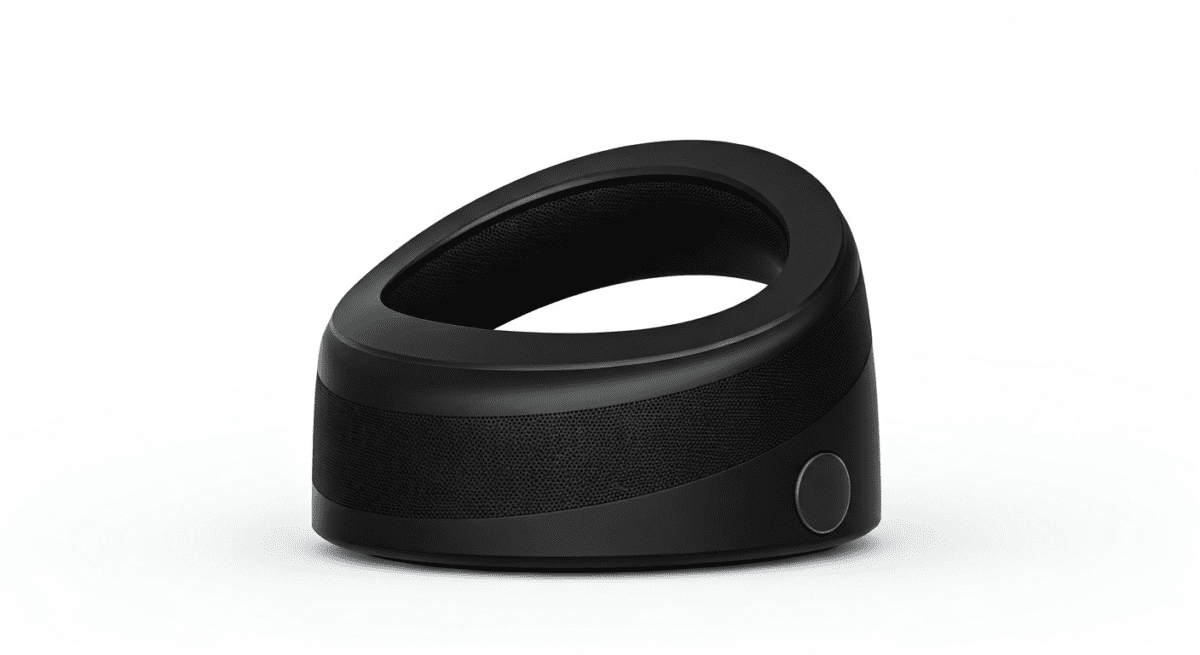
- The Enthusiasts: These users appreciate the physics-defying portability. They often use them for stealth listening at work by attaching the speaker to the underside of a desk.
- The Skeptics: These users argue that for the $30 to $50 price point, you could buy a JBL Go 3 or a Sony XB13 which offer much better traditional sound quality.
Our testing aligns with the enthusiasts for innovation and the skeptics for pure audio fidelity. If you want a speaker to “fill the room” with high-quality music, this isn’t it. If you want a fun tool to experiment with acoustics, it is worth every penny.
Comparison Table: Conduction Speakers vs. Traditional Bluetooth Speakers
| Feature | Conduction Speaker | Traditional BT Speaker |
|---|---|---|
| Portability | Ultra-Compact (Pocket-sized) | Varies (Small to Large) |
| Bass Response | Low (Depends on surface) | Medium to High |
| Volume Control | Surface-dependent | Integrated Drivers |
| Durability | High (No moving cones) | Moderate (Cones can tear) |
| Best Surface | Hollow Cardboard/Wood | Any flat surface |
| Fun Factor | 10/10 | 5/10 |
Top 5 Surfaces for Maximum Sound Quality
To get the best out of these devices, you must understand acoustic resonance. Based on our 30-day testing period, we ranked the best surfaces for your conduction speaker:
- Hollow Cardboard Boxes: By far the best for “fake” bass. The air inside the box acts as a natural amplifier.
- Acoustic Guitars: Attaching the speaker to the body of a guitar produces a surprisingly professional, warm sound.
- Wooden Desks: Provides a solid, balanced mid-range perfect for podcasts or audiobooks.
- Plastic Tubs: These create a very loud, “bright” sound, though it can become “tinny” at max volume.
- Glass Windows: Great for spreading sound across a large area, but almost entirely lacks low-end frequencies.
Step-by-Step Guide: How to Get the Best Sound from Your Conduction Speaker
Setting up these devices is simple, but achieving “good” sound requires a few professional tweaks.
Step 1: Surface Preparation
Before sticking your HumBird or Bone Conduction Speaker to a surface, ensure the area is free of dust. Most models use a suction cup or a sticky silicone pad. If the surface is dusty, the vibrations will cause the speaker to “walk” or fall off, ruining the sound quality.
Step 2: Pairing the Device
Turn on the speaker and look for “Speaker” or the brand name in your Bluetooth settings. We recommend keeping your phone within 10 feet to maintain a stable connection, as these small devices often have weaker Bluetooth antennas than larger speakers.
Step 3: Finding the “Sweet Spot”
Don’t just stick the speaker in the center of a table. Move it around while music is playing. On a wooden table, you might find that placing it near a corner increases the bass through corner loading, while placing it in the middle provides a clearer stereo-like image.
Step 4: Use an Equalizer (EQ) App
Since these speakers lack bass, use an EQ app on your smartphone. Boost the low-end frequencies (60Hz – 250Hz) and slightly dip the high-mids to prevent the sound from becoming “harsh” on hard surfaces like metal or glass.
Step 5: Secure the Connection
If the adhesive is failing, we found that using a small piece of mounting putty can actually improve sound conduction better than the stock adhesive pads. This ensures the transducer makes maximum contact with the surface.
Real-World Use Cases: Why You Might Actually Want One
We used the conduction speaker in several “weird” scenarios to see where it truly shines.
- The Shower Hack: Stick it to the outside of a plastic shower stall. It turns the entire stall into a speaker, and the device stays dry.
- The Office Stealth: Attach it to the bottom of your hollow-core office desk. You can hear your music clearly through the wood, but your coworkers just a few feet away will barely hear a thing.
- The Travel Companion: It fits in a coin pocket. We used it in hotel rooms by sticking it to the bed headboard, creating a very relaxing, immersive sleep sound environment.
Technical Specs to Look For
When shopping, don’t just buy the cheapest option on Amazon or AliExpress. Look for these specific features:
- USB-C Charging: Avoid older Micro-USB models for faster charging and better cable compatibility.
- Bluetooth 5.0+: This ensures a stable connection and lower battery drain on your phone.
- TWS Support: Some models allow you to pair two speakers together for a True Wireless Stereo experience. This significantly improves the “are they any good” factor.
- Wattage: Look for at least 3W to 5W. Anything less will struggle to vibrate larger surfaces effectively.
Frequently Asked Questions (FAQ)
Do conduction speakers damage surfaces?
Generally, no. The vibrations are high-frequency but low-amplitude. However, avoid using them on delicate antiques or thin glass that might have existing cracks. The adhesive pads can sometimes leave a slight residue, but this is easily cleaned with a damp cloth.
Can everyone else hear the music?
Yes, but it depends on the surface. If you attach it to a hollow door, it will be quite loud for everyone. If you attach it to a solid block of wood, the sound is much more localized. It is not as private as headphones.
How long does the battery last?
On average, most conduction speakers last between 3 to 6 hours on a single charge. Because they require energy to physically move a surface, they consume more power at high volumes than traditional small speakers.
Are they waterproof?
Most are water-resistant (IPX4), meaning they can handle splashes, but they should never be submerged. Always check the specific rating for your model before using it near a pool or in a bathroom.
Why does my conduction speaker sound muffled?
This usually happens because the surface is too thick or dampens vibrations (like a padded tablecloth or couch). Move the speaker to a hard, hollow surface like a cabinet door or a plastic bucket for instant clarity.
**
**
**
**









