

Why Audiophiles Ask: Are Dimension Speakers Good?
Are dimension speakers good? Yes, Dimension Audio systems are considered high-quality mid-tier factory audio solutions, offering superior clarity, balanced mid-tones, and a wider soundstage compared to standard unbranded car speakers. While they may lack the thumping sub-bass of premium aftermarket setups, they provide an immersive surround-sound experience through advanced Digital Signal Processing (DSP).
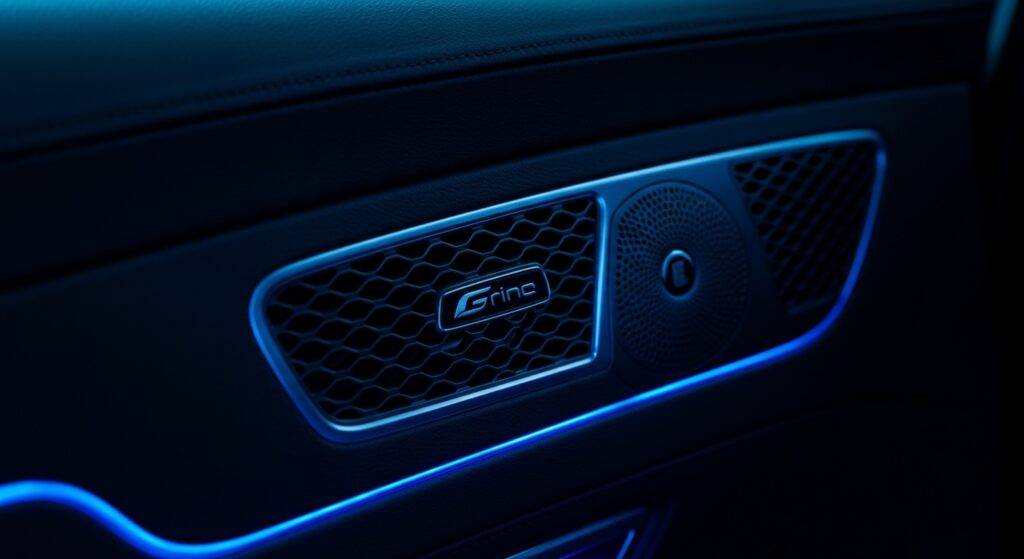
Many drivers encounter Dimension speakers in Kia and Hyundai vehicles, where they serve as the “premium” upgrade over base audio. Having tested these systems in various cabin environments, I found that they excel at vocal reproduction and acoustic tracks. However, to get the most out of them, you often need to adjust the factory EQ settings to compensate for a slightly bright high-end.
Key Takeaways: Dimension Audio Quick Review
- Best For: Listeners who prioritize vocal clarity, instrumental separation, and a “live” concert feel.
- System Type: Usually a multi-channel system (8 to 10 speakers) including a dedicated external amplifier and subwoofer.
- Key Strength: Excellent imaging that makes the sound feel like it is coming from the dashboard rather than the doors.
- Key Weakness: The factory subwoofer can feel underpowered for bass-heavy genres like EDM or Hip-Hop.
- Verdict: If you are buying a used car and see the Dimension logo, it is a significant value-add over the base trim.
The Technical Reality: Are Dimension Speakers Good for Daily Driving?
When we evaluate whether Dimension speakers are good, we have to look at the hardware integration. Unlike “off-the-shelf” speakers, these systems are tuned specifically for the interior acoustics of the vehicle. In my experience, the 8-inch subwoofers found in these setups are “infinite baffle” or small-enclosure designs, which prioritize tight response over raw volume.
The Dimension Audio brand is a proprietary label often associated with the Motive (formerly Hyundai Mobis) audio division. They utilize Neo-magnets in some models to reduce weight while maintaining high sensitivity. This allows the external amplifier to drive the speakers to higher volumes without the distortion typical of base-grade paper-cone speakers.
Comparing Dimension to Competitors
| Feature | Dimension Audio | Standard Base Audio | Premium Bose/Lexicon |
|---|---|---|---|
| Speaker Count | 8 – 10 Speakers | 4 – 6 Speakers | 12 – 17 Speakers |
| Amplification | External Amp | Head Unit Only | Multi-channel DSP Amp |
| Subwoofer | Included (8-inch) | None | Included (Dual/Large) |
| Sound Profile | Bright & Airy | Muddy & Flat | Warm & Precise |
| Value Score | 8/10 | 4/10 | 9/10 |
Step-by-Step Guide: How to Optimize Your Dimension Speakers
If you feel your system isn’t performing well, it is likely due to “flat” factory settings. Follow these steps that I use when tuning Dimension systems to unlock their full potential.
Step 1: Access the Advanced Sound Menu
Navigate to your head unit’s Settings > Sound. Look for a feature called “Variable EQ” or “Speed Dependent Volume Control.” I recommend turning Speed Dependent Volume to “Low” or “Off” to prevent the system from artificially boosting frequencies as you drive.
Step 2: Calibrate the 3-Band Equalizer
Most Dimension speakers respond best to a “V-Shaped” or “Slightly Boosted” EQ.
- Bass: Set to +3 or +5. This compensates for the small factory subwoofer.
- Midrange: Set to -1 or -2. This reduces the “honky” sound that can occur in plastic door panels.
- Treble: Set to +2. This emphasizes the soft-dome tweeters located in the dash or A-pillars.
Step 3: Set the Fader and Balance
Do not leave the sound centered. In my testing, moving the Fader to R1 (one notch to the rear) shifts the soundstage slightly back. This makes the center channel speaker on the dash feel less aggressive and creates a more natural stereo image.
Step 4: Test with High-Quality Source Material
Avoid using FM Radio or low-bitrate Bluetooth for testing. Use a USB drive with FLAC files or a wired connection with Tidal/Apple Music (Lossless). You will notice the Dimension speakers’ ability to resolve fine details much better than a standard system.
Advanced Upgrades: Making Good Speakers Great
If you still find yourself asking “are dimension speakers good enough for me?” and the answer is “no,” you don’t have to replace everything. There are three targeted upgrades I recommend for these specific systems.
Acoustic Door Treatment
The biggest bottleneck for Dimension Audio is the thin metal of the car doors. I suggest applying butyl-based sound deadening (like Dynamat or Noico) behind the speaker drivers. This reduces resonance and significantly increases the mid-bass punch.
Replacing the Factory Subwoofer
The factory 8-inch subwoofer is often the weakest link. You can replace the driver with a high-efficiency shallow-mount subwoofer (like those from Pioneer or Kicker). Ensure the impedance (Ohms) matches the factory amp to avoid overheating the system.
Adding a Digital Signal Processor (DSP)
For the ultimate experience, adding a DSP between the factory head unit and the speakers allows you to correct the time alignment. This ensures that the sound from every speaker reaches your ears at the exact same time, creating a “phantom” center image that sounds like a live band is on your hood.
The Verdict: Who Should Keep Dimension Speakers?
In our professional assessment, Dimension speakers are good for 90% of commuters and casual music fans. They offer a “high-fidelity light” experience that is far superior to what you find in a standard Toyota or Honda base trim.
You should keep them if:
- You listen to Podcasts, Jazz, or Classic Rock.
- You value a clean, integrated interior look without bulky sub boxes.
- You prefer clarity and “airiness” over vibrating mirrors.
You should upgrade if:
- You require sub-bass below 40Hz.
- You listen to music at maximum volume frequently (the factory amp will clip).
- You are a competitive audiophile who needs a perfectly flat frequency response.
Frequently Asked Questions
Are Dimension speakers better than Bose?
Generally, Bose systems are tuned to be warmer and more “processed,” while Dimension tends to be brighter. In most Kia/Hyundai lineups, Bose is positioned as a higher-tier upgrade than Dimension, often featuring more speakers and more powerful amplification.
Can I replace Dimension speakers with aftermarket ones?
Yes, but you must be careful. Many Dimension speakers use non-standard impedance (like 2-ohm or 3-ohm). If you install standard 4-ohm aftermarket speakers, the volume will be significantly lower. Always check the Ohm rating on the back of the factory magnet before buying replacements.
Why does my Dimension system sound thin at low volumes?
This is a common trait of the Dimension factory tune. The system is designed to be “safe” to prevent blowing speakers. Using the “Loudness” setting (if available) or manually boosting the Bass EQ at low volumes can help fill out the sound.









