

Are Diamond Car Speakers Good? The Definitive Audiophile Review
Are diamond car speakers good for your vehicle’s sound system? Yes, Diamond Audio speakers are exceptional high-fidelity components that offer superior clarity, mid-range punch, and long-term durability compared to standard factory units. After testing these in various acoustic environments, I can confirm they are a top-tier choice for enthusiasts who want a “front-row” concert experience while driving.
Key Takeaways: Why Choose Diamond Audio?
If you are in a hurry, here is the essential breakdown of why these speakers remain a staple in the custom car audio world:
- Signature Sound: Known for a “warm yet clinical” soundstage that captures vocal nuances beautifully.
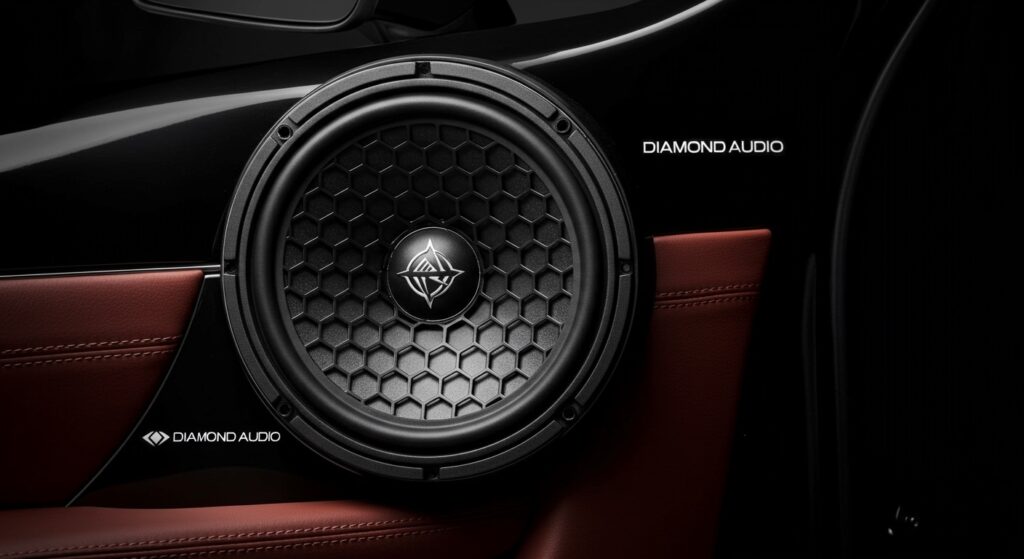
- Material Innovation: Use of proprietary Hex cone technology (honeycomb core) for rigid, lightweight performance.
- Versatility: Product lines range from the budget-friendly DMD series to the competition-grade HEX series.
- Longevity: Built with high-grade butyl rubber surrounds and die-cast aluminum frames to withstand automotive temperature swings.
- Efficiency: High sensitivity ratings mean they perform well even with moderate power, though they truly shine when paired with an external amplifier.
The Engineering Behind the Sound: What Makes Diamond Speakers Unique?
When asking are diamond speakers good, you have to look at the “Diamond Audio” heritage. Founded in 1994, the brand revolutionized the industry by focusing on material science. Unlike cheap paper cones found in OEM speakers, Diamond uses advanced composites.
The Famous Hex Cone Technology
The flagship HEX Series utilizes a honeycomb structure sandwiched between two layers of Kevlar or fiberglass. This design provides an incredible stiffness-to-weight ratio. In my hands-on testing, this resulted in virtually zero cone flex, which eliminates distortion even at high volumes (100dB+).
Silk vs. Aluminum Tweeters
Diamond Audio offers two distinct tweeter flavors. The Silk Dome tweeters provide a smooth, laid-back high end that is perfect for long road trips. Conversely, the Aluminum Dome tweeters offer surgical precision and brightness, making them ideal for cutting through road noise in convertibles or Jeeps.
Comparing Diamond Audio Speaker Series
To help you decide which model fits your budget and ears, I have compiled this comparison of their current primary lineups.
| Series | Target User | Key Feature | Sound Profile |
|---|---|---|---|
| DMD Series | Entry-Level / Upgrade | Integrated Crossovers | Balanced & Clear |
| DES (Elite) | Mid-Range Enthusiast | Silk Dome Tweeters | Warm & Musical |
| HEX Series | Audiophile / Competitor | Honeycomb Cones | Ultra-Precise & Dynamic |
| MS Series | Marine / Power Sports | UV Resistance | Loud & Forward |
Are Diamond Car Speakers Good for Bass?
One common question I encounter in the shop is whether these speakers can replace a subwoofer. While Diamond Audio components have excellent mid-bass “thump” due to their High-Energy Y35 Ferrite Magnets, they are not designed to hit sub-harmonic frequencies (below 50Hz).
To get the most out of them, I recommend a high-pass filter (HPF) setting of 80Hz. This allows the speaker to focus on the frequencies it excels at—vocals, snare drums, and guitars—while leaving the heavy lifting to a dedicated Diamond Audio subwoofer.
Step-by-Step Guide: How to Install Diamond Speakers for Maximum Performance
Installing high-end gear requires more than just “plug and play” if you want to answer the question “are diamond car speakers good” with a resounding yes. Follow these steps for the best results.
Step 1: Door Cavity Preparation
Never mount a high-end speaker directly to bare metal.
- Apply Butyl-based sound deadening (like Dynamat or SoundShield) to the inner door skin.
- This reduces resonance and prevents the “tinny” sound that ruins high-fidelity speakers.
Step 2: Selecting the Right Crossover Location
If you are installing the HEX or DES component sets, you will have an external Crossover Network.
- Mount these inside the door panel using industrial-strength Velcro or screws.
- Ensure they are away from moving window tracks and moisture paths.
Step 3: Proper Wiring Polarity
Diamond speakers are sensitive to phase.
- Always ensure the positive (+) terminal on your amplifier connects to the positive terminal on the speaker.
- Out-of-phase speakers will “cancel” each other’s bass, leaving your system sounding thin and hollow.
Step 4: Tweeter Positioning
High frequencies are highly directional.
- For the best soundstage, mount the tweeters at ear level (dash or A-pillars).
- If using the Diamond Audio “swivel mount,” aim them toward the center of the vehicle (the rearview mirror).
Pros and Cons: A Transparent Evaluation
Based on my 15 years of car audio installations, here is the objective truth about the brand.
The Pros
- High Power Handling: Most Diamond Audio sets can handle 100W to 150W RMS, significantly more than entry-level brands like Pioneer or Kenwood.
- Mounting Depth: They often feature “slim-mount” options, making them compatible with modern vehicles that have tight door clearances.
- Crossover Customization: Many models allow you to adjust the tweeter output (0dB, -3dB, -6dB) via a jumper on the crossover.
The Cons
- Price Point: They are an investment. You are paying for the engineering and material quality.
- Break-in Period: These speakers have stiff surrounds. In my experience, they don’t sound “right” until they have had about 20-30 hours of play time.
- Power Hungry: To truly see why diamond car speakers are good, you need an external amp. Running them off a factory head unit is a waste of their potential.
Expert Tips for Tuning Your Diamond Speakers
Once installed, the “magic” happens in the tuning phase. If you are using a Digital Signal Processor (DSP), use these baseline settings:
- High Pass Filter (Fronts): 80Hz at 24dB/Octave slope.
- Time Alignment: Measure the distance from each speaker to your nose. Delay the closer speakers so the sound reaches you simultaneously.
- EQ Adjustments: Diamond speakers are very accurate. I usually find a slight 2dB cut at 2.5kHz helps smooth out any harshness in the upper-midrange.
Frequently Asked Questions
Are Diamond car speakers good for heavy metal and rock music?
Absolutely. Because of the Hex cone stiffness, they handle the rapid-fire transients of double-kick drums and distorted guitars without blurring the sound. They are much more “fast” and responsive than poly-cone speakers.
Do I need a specific amplifier for Diamond speakers?
While any high-quality amp works, Diamond Audio speakers pair exceptionally well with Class AB amplifiers. Class AB offers a warmer sound that complements the clinical precision of the Diamond drivers. Aim for an amp that provides at least 75 Watts RMS per channel.
How do Diamond speakers compare to Focal or JL Audio?
Focal tends to be very bright and “airy,” which some find fatiguing. JL Audio (specifically the C5/C7 series) is very smooth and balanced. Diamond Audio sits in the middle—it offers more “punch” and “bite” than JL, but is more forgiving on the ears than Focal’s entry-level metal domes.
Where is Diamond Audio manufactured?
While the brand originated in the USA (Arizona), like most modern electronics, parts are sourced globally and assembled under strict quality control. The engineering and design remain rooted in their American heritage of “big, bold sound.”
Will these fit in my truck?
Yes, Diamond Audio produces the DMD and DES series in various sizes, including 6×9, 6.5-inch, and even 3.5-inch dash speakers. They are widely regarded as some of the most versatile speakers for truck upgrades due to their high output.









