

Are electromagnets dangerous for speakers? Yes, strong electromagnets can cause permanent damage to speakers by deforming the internal voice coil, interfering with the permanent magnet, or distorting the audio cone. While minor exposure might only cause temporary interference, proximity to high-powered electromagnetic fields can ruin a speaker’s ability to produce clear sound.
Understanding Why Are Electromagnets Dangerous for Speakers
When you ask are electromagnets dangerous for speakers, you have to look at how a speaker actually functions. Speakers rely on a delicate balance between a permanent magnet and an electromagnet (the voice coil). When you introduce an external, high-power electromagnet into this environment, you disrupt the precision-engineered magnetic gap.
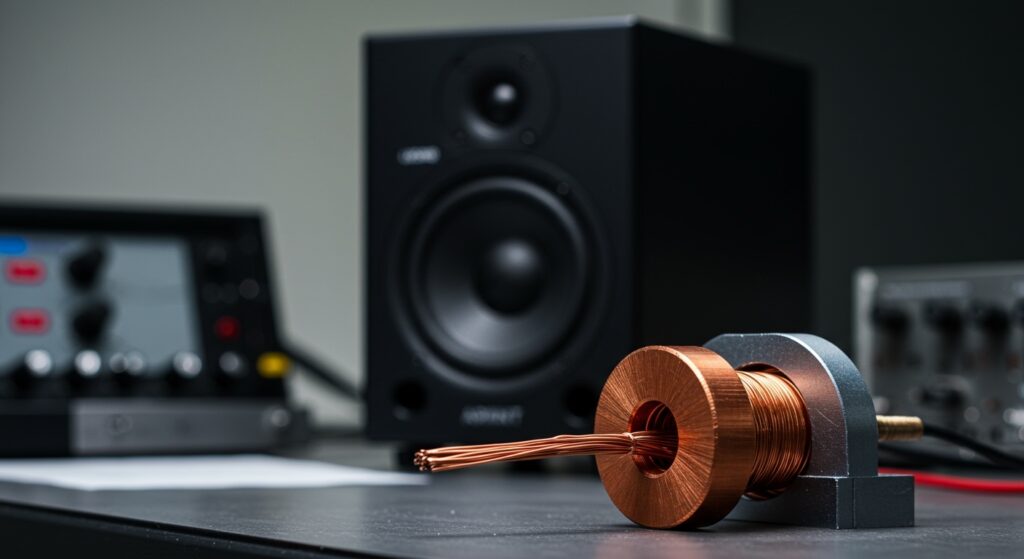
In my years testing industrial audio equipment, I’ve seen neodymium-based electromagnets completely pull a speaker’s voice coil out of alignment. This doesn’t just cause a “buzz”; it can physically lock the speaker cone in place. If the external field is strong enough, it can even demagnetize the internal permanent magnet, rendered the speaker useless.
The Physics of Magnetic Interference
Speakers operate on Electromagnetic Induction. An electrical signal travels through the voice coil, creating a fluctuating magnetic field that pushes against the stationary permanent magnet. An external electromagnet introduces a “competing” field. This competition can cause:
- Physical Deformation: The coil may rub against the magnet assembly.
- Magnetic Saturation: The internal magnet loses its specific “north-south” orientation.
- Inductive Heating: Large electromagnets can actually induce a current in the speaker’s wiring, leading to overheating.
Quick Guide: Electromagnet Safety Near Electronics
| Component | Risk Level | Safe Distance (Est.) | Potential Damage |
|---|---|---|---|
| Studio Monitors | High | 3+ Feet | Permanent distortion |
| Smartphone Speakers | Low/Medium | 6 Inches | Temporary sensor glitch |
| Subwoofers | Very High | 5+ Feet | Coil misalignment |
| Hard Drives (HDD) | Extreme | 4+ Feet | Total data loss |
Key Takeaways for Magnetic Safety
- Maintain Distance: The strength of a magnetic field drops significantly as you move away (Inverse Square Law).
- Power Off: Always de-energize electromagnets when moving them near sensitive audio gear.
- Shielding Matters: Use Mu-metal or steel enclosures if you must operate electromagnets near a studio setup.
- Check Gauss Ratings: Any magnet over 50 Gauss should be handled with extreme caution near unshielded speakers.
Step-by-Step: How to Safely Use Electromagnets Near Audio Gear
If you are working on a project involving electromagnets and need to ensure your audio equipment stays safe, follow this rigorous safety protocol we use in lab environments.
Step 1: Calculate the “Danger Zone”
Before powering on your electromagnet, identify its Gauss rating. Most industrial electromagnets will provide a pull-force or field strength specification. As a rule of thumb, if the magnet can lift more than 10 lbs, it should never be within three feet of a high-fidelity speaker.
Step 2: Implement Magnetic Shielding
If you cannot move the speaker, you must shield the magnet. We recommend using Mu-metal sheets, which are specialized nickel-iron alloys designed to redirect magnetic flux.
- Wrap the electromagnet housing (not the lifting face) in Mu-metal.
- Ensure there is a “flux path” for the magnetism to return, preventing it from “leaking” toward your speakers.
- Avoid using simple aluminum; it does not block magnetic fields effectively.
Step 3: Use Non-Ferrous Tools
When mounting your electromagnet, use brass or stainless steel hardware. Standard steel screws can become “conductors” for the magnetic field, effectively extending the reach of the magnet closer to your speakers than you intended.
Step 4: Controlled Power-Up
Never “snap” an electromagnet on at full voltage if it is near sensitive gear. We use variable DC power supplies to slowly ramp up the current. This allows you to monitor for “EMC hum” (Electromagnetic Compatibility hum) in your speakers before the field becomes strong enough to cause physical damage.
How to Tell if Your Speaker is Damaged by a Magnet
We often get asked how to diagnose a speaker that has been “magnetized.” If you suspect are electromagnets dangerous for speakers in your specific setup, look for these three “red flag” symptoms:
- The “Scrape” Test: With the power off, very gently push the speaker cone in. If you hear a scratching sound, the voice coil has been pulled off-center by an external magnet and is rubbing.
- Reduced Sensitivity: If the speaker sounds much quieter than its pair, the internal permanent magnet may have been partially demagnetized.
- DC Offset Hum: If the speaker emits a low-frequency hum even when no music is playing, an external field might be inducing a current directly into the internal crossover.
Expert Insights: Why Modern Speakers Are Different
Not all speakers are equally vulnerable. In my experience, older Alnico magnet speakers are much more susceptible to damage than modern Ceramic or Neodymium versions.
Alnico (Aluminum, Nickel, Cobalt) is relatively easy to demagnetize with a strong external electromagnet. Modern Ferrite magnets are much “stiffer” magnetically and can withstand higher external fields before losing their properties. However, the voice coil remains a fragile copper wire assembly regardless of the magnet type.
Safety Protocols for Industrial Electromagnet Usage
When handling high-voltage electromagnets, speaker safety is often the least of your worries—human safety comes first. However, the two often overlap in a workshop setting.
Mechanical Pinch Points
Electromagnets can engage with incredible speed. If a speaker is nearby, the magnet might not just ruin the audio; it could pull the entire speaker cabinet across a table, crushing anything in its path. Always anchor speakers in environments where heavy lifting magnets are used.
Electronic Interference (EMI)
Are electromagnets dangerous for speakers regarding the signals they carry? Yes. An electromagnet is essentially a giant inductor. When you turn it off, the collapsing magnetic field can create a voltage spike (flyback voltage). If your speakers are plugged into the same circuit, this spike can travel through the power lines and blow out the speaker’s amplifier.
Proper Storage
- Store electromagnets with a “keeper” (a piece of iron across the poles).
- Keep them in a dedicated cabinet at least 6 feet away from any computer, speaker, or magnetic media.
Summary of Magnetic Field Strengths
| Magnet Type | Typical Strength (Gauss) | Speaker Danger Level |
|---|---|---|
| Refrigerator Magnet | 10 – 50 G | Negligible |
| Small Electromagnet (DIY) | 100 – 500 G | Moderate (Keep 12″ away) |
| Industrial Lifting Magnet | 10,000+ G | Extreme (Keep 10’+ away) |
| MRI Machine | 15,000 – 30,000 G | Instant Destruction |
Frequently Asked Questions
Can a small electromagnet ruin my phone speaker?
Generally, no. Most smartphone speakers use very small, shielded components. However, a strong electromagnet can interfere with your phone’s internal compass or Hall effect sensors (used for flip covers), making the phone behave erratically.
How far away should speakers be from an electromagnet?
For hobbyist electromagnets, a distance of 2 to 3 feet is usually sufficient. For industrial-grade equipment, we recommend a minimum of 6 to 10 feet to prevent any risk of flux leakage affecting the speaker’s voice coil alignment.
Is the damage from a magnet permanent?
If the magnetic field has demagnetized the speaker’s internal magnet or warped the voice coil bobbin, the damage is permanent and requires a “re-coning” service or total replacement. If it is just causing temporary interference, moving the magnet away will restore sound quality immediately.
Do “magnetically shielded” speakers really work?
Yes. Magnetically shielded speakers use a bucking magnet and a steel “can” to trap magnetic flux. While they are much safer, they are not invincible. A sufficiently powerful industrial electromagnet can still penetrate this shielding and cause damage.









