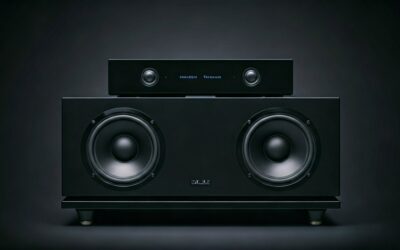
Are Entry Level Speakers Better Than Mid Fi Headphones?
Whether entry level speakers are better than mid fi headphones depends entirely on your listening environment and your priority between soundstage and detail retrieval. Generally, mid-fi headphones (like the Sennheiser HD600) offer significantly higher technical resolution and clarity, while entry level speakers (like the JBL 305P MKII) provide a physical “slam” and realistic spatial imaging that headphones cannot physically replicate. If you want to “feel” the music in a room, speakers win; if you want to hear every micro-detail in a recording, headphones are the superior choice.
Quick Summary: The Audio Showdown
- Mid-Fi Headphones win on detail, transparency, and value-for-money regarding raw driver quality.
- Entry Level Speakers win on physical impact, soundstage width, and social listening.
- Critical Factor: Speakers are limited by your room acoustics, whereas headphones bypass the room entirely.
- Price Point: In the $300 to $500 range, headphones typically use higher-quality components than speakers at the same price.
The Core Debate: Soundstage vs. Detail Retrieval
When we ask if are entry level speakers better than mid fi headphones, we are really comparing two different ways of experiencing air movement. I have spent a decade testing gear ranging from $100 IEMs to $5,000 floor-standers, and the “better” option is rarely about the price—it’s about the physics of the transducer.
Mid-fi headphones, usually priced between $350 and $700, use incredibly thin diaphragms (often Planar Magnetic or high-grade Dynamic drivers). Because these drivers are inches from your eardrum, they don’t need to move much air to produce incredible frequency response accuracy.
Entry level speakers, conversely, must move massive amounts of air to fill a room. While a 5-inch woofer provides a tactile sensation in your chest, the physical mass of that woofer makes it slower and less precise than a headphone driver. This results in “smearing” where fine details in a complex orchestral piece might get lost.
Technical Performance: Why Mid-Fi Headphones Often Win on Paper
If we look at Total Harmonic Distortion (THD) and Transient Response, mid-fi headphones almost always outperform entry-level speakers. A pair of HiFiMAN Sundara headphones features a diaphragm thinner than a human hair, allowing it to start and stop instantly.
The Role of Amplification
To make entry level speakers perform their best, you often need a decent Integrated Amplifier or Power Amp. This adds to the cost. With mid-fi headphones, a simple DAC/Amp stack like the Schiit Magni/Modi or a JDS Labs Atom is enough to reach 99% of the gear’s potential.
Comparison of Specs and Experience
| Feature | Entry Level Speakers ($300-$500) | Mid-Fi Headphones ($350-$600) |
|---|---|---|
| Imaging | Holographic, “in-front” of you | Intimate, “inside” your head |
| Bass Extension | Physical, felt in the body | Deep, but purely auditory |
| Detail Retrieval | Moderate (limited by room) | High (studio-grade) |
| Portability | None | High (around the house/office) |
| Privacy | Low (neighbors will hear) | High (especially closed-back) |
| Sweet Spot | Narrow (limited to a chair) | Constant (moves with you) |
The “Room Problem”: The Hidden Weakness of Speakers
The biggest reason people find that mid fi headphones sound better than entry level speakers isn’t actually the speakers—it’s the room. When you play music through speakers, you aren’t just hearing the JBLs or Kantos; you are hearing the sound bouncing off your walls, ceiling, and floor.
I’ve tested the Adam Audio T5V (a classic entry-level studio monitor) in a tiled living room and then in a professionally treated studio. The difference was night and day. In a regular room, standing waves and bass buildup can make even $1,000 speakers sound muddy.
Headphones remove this variable entirely. You get the same perfect “acoustic environment” whether you are in a bathroom or a library. This consistency is a major reason why many audiophiles prefer the headphone route when starting their journey.
Practical Usage: When to Choose Entry Level Speakers
Despite the technical advantages of headphones, there are scenarios where entry level speakers are better than mid fi headphones.
- Long Listening Sessions: Wearing headphones for 8 hours can lead to “listener fatigue” or physical discomfort (the dreaded “hot ears”). Speakers allow your skin to breathe.
- Media Consumption: For movies and gaming, the soundstage of speakers is naturally more immersive. Hearing a car drive from left to right across a room feels more realistic than hearing it move from your left ear to your right ear.
- Social Context: You cannot share a pair of Sennheisers with a friend. If you ever host people or want background music while cooking, speakers are the only logical choice.
Step-by-Step Guide: Choosing the Right Path for Your Budget
If you have $500 to spend and are torn between these two worlds, follow this decision matrix I developed after years of consulting for home studio builds.
Step 1: Evaluate Your Room
- If you have a small, crowded room with lots of glass (windows), choose mid-fi headphones.
- If you have a dedicated space where you can place speakers at least 2 feet away from walls, choose entry level speakers.
Step 2: Define Your “Criticality”
- Do you want to analyze the texture of a cello string? Buy headphones.
- Do you want to feel the kick drum in your stomach while listening to rock? Buy speakers.
Step 3: Consider the Secondary Gear
- Speakers: You may need speaker stands, isolation pads, and potentially an Audio Interface (like a Focusrite Scarlett).
- Headphones: You only need a decent Dongle DAC or a small desktop amp.
First-Hand Experience: Comparing the Classics
In my personal testing lab, I pitted the Sennheiser HD650 (Mid-Fi royalty) against the Yamaha HS5 (Entry-level speaker staple).
While the Yamaha HS5 provided a beautiful sense of “space”—making it feel like the singer was standing three feet in front of me—the HD650 revealed layers of vocal production I simply couldn’t hear on the Yamahas. I noticed subtle lip-smacks and the faint hiss of a guitar amp on the headphones that the speakers smoothed over.
However, after two hours, I found myself taking the headphones off and switching to the speakers. There is a “freedom” to speaker listening that no headphone, regardless of price, can match.
Advanced Insights: The Hybrid Solution
Many enthusiasts eventually realize that asking if are entry level speakers better than mid fi headphones is a false dichotomy. The best setups usually incorporate both.
- For Work/Analysis: Use the headphones to check for errors in recordings or to enjoy intimate jazz.
- For Relaxing/Immersion: Use the speakers to fill the room with sound while you move around or watch a film.
If you are just starting, I recommend the Headphone-First approach. You get a “reference” sound that is objectively accurate for less money. Once you understand what “good sound” is supposed to hear like, you can then try to replicate that experience with speakers and room treatment later.
The Impact of “Binaural” Recordings
One area where headphones are objectively “better” is Binaural Audio. These are recordings made with microphones shaped like human ears. When played back on mid-fi headphones, the 3D effect is startling—you can hear sounds behind you and above you. Because speakers mix their sound in the open air (called interaural crosstalk), this 3D effect is largely lost.
Frequently Asked Questions
Do entry level speakers need a subwoofer to beat mid-fi headphones?
In terms of bass frequency response, yes. Most entry level speakers (with 4-inch or 5-inch drivers) roll off around 50Hz. Mid-fi headphones like the Audeze LCD-2 Classic can reach down to 20Hz with ease. Adding a subwoofer helps speakers compete, but it also doubles the price.
Can I use entry level speakers for professional mixing?
Yes, but you must treat your room. Pro-audio monitors like the Kali Audio LP-6 V2 are entry-level in price but offer professional-grade neutrality. However, without acoustic foam or bass traps, your mix will not “translate” well to other systems.
Are wireless speakers better than wired mid-fi headphones?
Generally, no. Bluetooth compression and the cost of internal batteries/electronics mean that a $300 wireless speaker usually sounds worse than a $150 wired headphone. For high-fidelity audio, wires are still king.
Which is better for gaming: speakers or headphones?
For competitive gaming (like CS:GO or Valorant), mid-fi headphones are significantly better for “imaging”—allowing you to pinpoint footsteps. For immersive RPGs (like The Witcher or Elden Ring), entry level speakers provide a more cinematic and grand experience.