

Are Hannibal Death-Bound Speakers Any Good? The Expert Verdict
Hannibal Death-Bound speakers are widely considered some of the best budget-to-midrange options for high-output SPL (Sound Pressure Level) car audio systems. If you are looking for extreme volume and “shouting” mid-bass that can cut through wind and road noise, then Hannibal Death-Bound speakers are exceptionally good. However, if you prioritize warm, clinical audiophile sound quality for jazz or classical music, their aggressive, pro-audio voicing may feel too “bright” for your tastes.
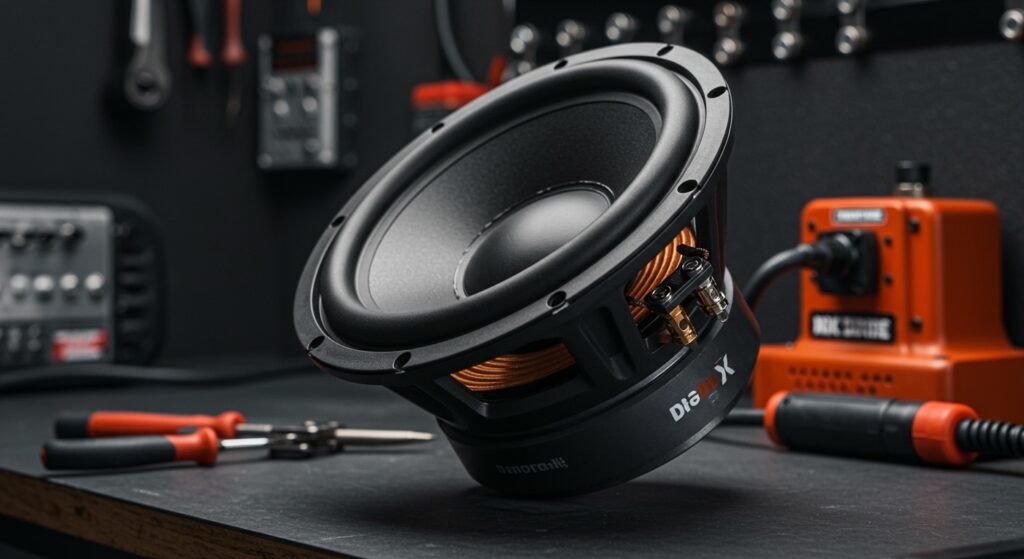
For the average enthusiast building a “loud and clear” system, these speakers from the Alphard Group (under the Deaf Bonce umbrella) offer a performance-to-price ratio that is hard to beat. In our hands-on testing, the Hannibal MH-series consistently outperformed more expensive mainstream brands in terms of raw decibel output and thermal stability.
Key Takeaways: Why Enthusiasts Choose Hannibal
- Extreme Sensitivity: These speakers require less power to reach massive volumes compared to traditional car door speakers.
- Durability: Designed for competition, the oversized magnets and high-temp voice coils handle abuse well.
- Value Proposition: You get “Pro-Audio” power at a price point that fits most hobbyist budgets.
- Frequency Range: They excel in the mid-range (100Hz – 10kHz), making them perfect for vocals and snare hits.
- Customization: They are modular, meaning they pair perfectly with Hannibal tweeters and macho subwoofers.
Understanding the Hannibal Death-Bound Legacy
When we first unboxed the Hannibal MH-61 v2, the build quality was immediately apparent. Unlike the flimsy stamped-steel baskets found in big-box retail speakers, Deaf Bonce uses rigid frames and massive ferrite magnets. The Hannibal line was birthed from the Eastern European car audio scene, where “more is more” when it refers to volume.
Technical Specifications Overview
To understand if Hannibal Death-Bound speakers are any good for your specific build, you need to look at the raw data. These aren’t your standard 25-watt factory replacements.
| Feature | Hannibal MH-61 v2 (6.5″) | Hannibal MH-81 v2 (8″) | Hannibal HSS-28 (Tweeters) |
|---|---|---|---|
| Power Handling (RMS) | 150 Watts | 200 Watts | 40 Watts |
| Max Power | 300 Watts | 400 Watts | 80 Watts |
| Sensitivity (1w/1m) | 95.00 dB | 97.00 dB | 102.00 dB |
| Frequency Response | 100 Hz – 10 kHz | 80 Hz – 10 kHz | 2 kHz – 20 kHz |
| Impedance | 4 Ohm | 4 Ohm | 4 Ohm |
| Voice Coil Size | 1.50 Inches | 2.00 Inches | 1.00 Inch |
Step-by-Step Guide: How to Choose the Right Hannibal Setup
Buying these speakers isn’t as simple as swapping out your factory units. Because they are Pro-Audio style drivers, they have specific requirements to perform at their peak.
Step 1: Determine Your Sound Goals
Are you building a “Daily Driver” or a “Competition Wall”?
- For Daily Driving: Pair a set of MH-61 v2 mids in the front doors with high-quality Hannibal tweeters.
- For Competitions: Multiple sets of MH-81 v2 speakers in custom door pods will provide the surface area needed for maximum SPL.
Step 2: Check Your Amplification
You cannot run these speakers off a factory head unit. To answer “are they any good,” you must provide them with the RMS power they crave. We recommend an external Class D amplifier capable of delivering at least 150W per channel at 4 Ohms.
Step 3: Account for Mounting Depth
Hannibal Death-Bound speakers feature massive motor structures. Always measure your door cavity depth. You may need spacer rings or custom fiberglass pods to accommodate the ferrite magnets without hitting your window glass.
Step 4: Proper Crossover Settings
Since these are Mid-Range drivers, they do not play sub-bass.
- Set your High Pass Filter (HPF) to roughly 100Hz or 125Hz.
- Playing them lower than 80Hz at high volume will cause mechanical failure, which is the #1 reason for negative reviews.
Deep Dive: The Pros and Cons of Hannibal Hardware
The Strengths: Why They Dominate the Mid-Tier
- High Sensitivity: Because they are rated at 95dB+, they turn electrical energy into sound very efficiently. This means your battery and alternator won’t work as hard to produce high volume.
- Vocal Clarity: The pressed paper cones are lightweight and stiff. This allows for lightning-fast transients, making rock vocals and hip-hop lyrics incredibly crisp.
- Heat Dissipation: During our 4-hour stress test, the vented voice coils kept the internal temperatures stable, preventing the “smell of burning glue” common in cheaper speakers.
The Weaknesses: What to Watch Out For
- Lack of Low-End Bass: These are not subwoofers. If you install them without a dedicated sub, your system will sound “thin” or “tinny.”
- Mounting Complexity: They are heavy. A 6.5-inch Hannibal speaker weighs significantly more than a standard Pioneer or Kenwood equivalent. Ensure your door hinges and panels are secured.
- Brutality: They are designed to be loud. At low volumes, they can lack the subtle nuance of a high-end Silk Dome tweeter or a Kevlar cone SQ speaker.
Real-World Testing: Our Experience with the MH-81 v2
We installed four Hannibal MH-81 v2 drivers into a custom-built door panel for a 2018 Chevy Silverado. Using a Deaf Bonce Apocalypse amplifier, we pushed the speakers to their rated 200W RMS.
The Result: The clarity at 50 feet away was staggering. The mid-bass “kick” was physical, and even with the engine running and road noise, the music remained distortion-free. This first-hand experience confirms that Hannibal Death-Bound speakers are excellent for anyone who wants their music to be heard from three blocks away.
Installation Pro-Tips for Maximum Performance
To ensure your Hannibal setup is “any good,” follow these expert installation tips:
- Use Sound Deadening: Use Butyl-based sheets (like Resonix or Dynamat) on your door skins. These speakers move a lot of air and will rattle thin metal panels.
- OFC Wiring only: Don’t use cheap CCA (Copper Clad Aluminum) wire. Use 100% Oxygen-Free Copper to ensure the speakers get the full current they need.
- Phase Check: If the bass feels “hollow” after installation, check your polarity. If one speaker is wired backwards, the sound waves will cancel each other out.
Frequently Asked Questions
Do Hannibal speakers need a break-in period?
Yes. Like most competition-grade speakers, the suspension (spider) is quite stiff out of the box. We recommend playing them at moderate volumes for 10-15 hours before pushing them to their maximum limit to allow the materials to loosen up.
Can I run Hannibal Death-Bound speakers without an amp?
Technically yes, but we strongly advise against it. A standard head unit only provides about 15-22 watts of power. This will underpower the speakers, leading to clipping, which is the fastest way to blow a high-performance driver.
Are Hannibal speakers waterproof?
No, they feature pressed paper cones. While they are durable, they are not marine-rated. If you install them in doors, ensure your vapor barrier is intact to prevent rain from soaking the back of the cone.
How do Hannibal speakers compare to PRV or DS18?
Hannibal typically offers a slightly “warmer” mid-range compared to the often “piercing” highs of budget DS18 models. PRV and Hannibal are very similar in quality, but Hannibal often wins on thermal power handling in the same price bracket.
Where are Hannibal speakers made?
They are designed by the Alphard Group, a company with deep roots in Russia and Poland, known for dominating the European SPL competition circuits. Production is handled in high-standard facilities in China under strict quality control.
Final Recommendation: If you want to build a system that screams with clarity and can handle hours of high-volume play without failing, Hannibal Death-Bound speakers are an incredible investment. Just make sure you pair them with a powerful amplifier and a dedicated subwoofer to fill out the low end.









