

Are Hartke Aluminum Cone Speakers Good? The Definitive Guide for Bassists
Are hartke aluminum cone speakers good for your specific bass tone? Yes, they are exceptional for players who prioritize attack, clarity, and high-frequency definition that traditional paper cones often struggle to deliver. These speakers are the industry standard for funk, metal, and fusion bassists who need their low-end to remain articulate even at high volumes.
TL;DR: Key Takeaways
- Unique Tone: Known for a “bright” and “punchy” sound with faster transient response than paper.
- Durability: Aluminum dissipates heat better, reducing the risk of thermal power compression.
- Best For: Slap bass, fingerstyle clarity, and cutting through dense rock mixes.
- The Hybrid Option: Hartke HyDrive speakers offer a mix of paper and aluminum for those who want “warmth” plus “snap.”
- Maintenance: Aluminum cones are resistant to humidity changes, making them great for touring.
The History and Innovation of Hartke Aluminum Cones
When we look at the history of bass amplification, Larry Hartke changed the game in 1984. Before this, almost every speaker was made of paper pulp. While paper is warm, it can be “slow” and “mushy” when pushed.
I’ve spent years gigging with the Hartke 410XL, and the first thing you notice is the immediate response. When you strike a string, the sound is there instantly. This is because aluminum is stiffer and lighter than paper, allowing the cone to move back and forth with incredible precision.
The famous Hartke 410XL was actually inspired by a custom cabinet built for Jaco Pastorius. If you want that “growl” and “singing” midrange, aluminum is the secret sauce.
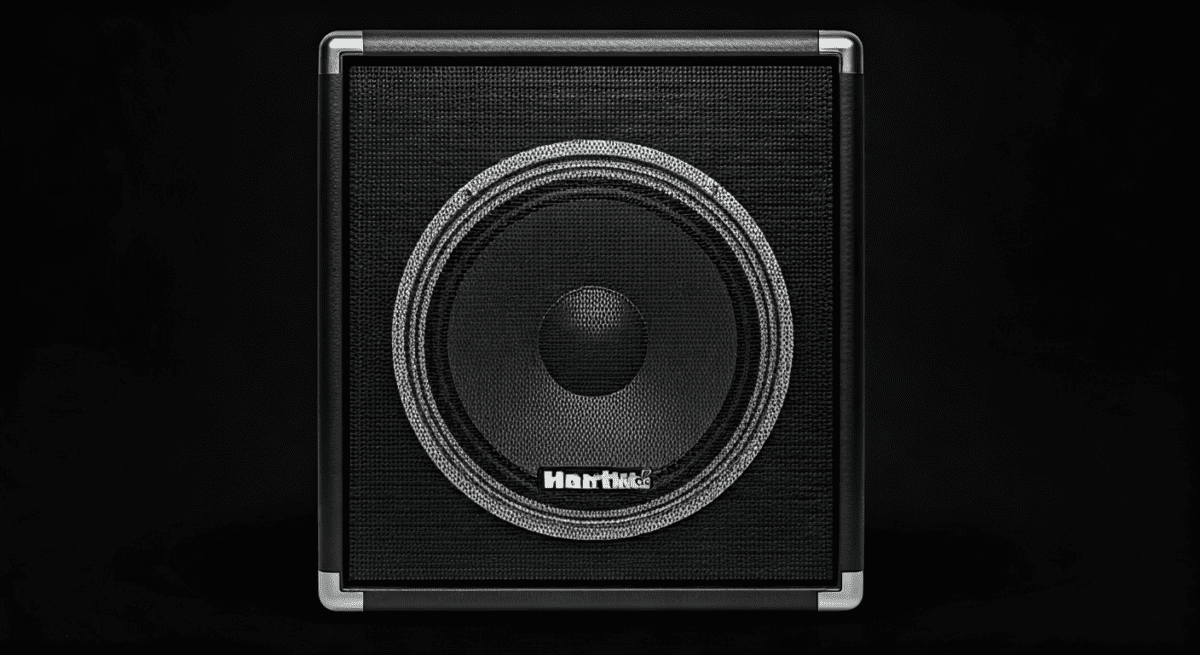
Why Bassists Ask: Are Hartke Aluminum Cone Speakers Good?
To understand if they are “good,” you have to understand transient response. This is the speaker’s ability to react to the initial “hit” of your note.
Superior Clarity and “Snap”
Hartke speakers provide a high-end “zing” that makes slap bass pop. Unlike paper, which absorbs some of the high frequencies, the aluminum surface reflects them. This creates a hi-fi sound that is often compared to a studio monitor rather than a muddy guitar amp.
Thermal Stability
One of the biggest killers of speakers is heat. When a voice coil gets hot, the speaker becomes less efficient. Aluminum is a natural heat sink. It pulls heat away from the voice coil, allowing Hartke cabinets to maintain their punch even after four hours on a hot stage.
Consistency in Environments
Paper cones absorb moisture. If you play an outdoor gig in high humidity, a paper speaker can actually sound “heavier” and “slower.” Aluminum cones are essentially immune to atmospheric changes, ensuring your tone remains consistent from the rehearsal room to the stadium.
Comparing Hartke Speaker Technologies
Not all Hartke cabinets are the same. Over the last decade, the company introduced HyDrive technology to bridge the gap between traditionalists and modernists.
| Feature | XL Series (All Aluminum) | HyDrive Series (Hybrid) | HD Series (Paper/Aluminum) |
|---|---|---|---|
| Cone Material | 100% Proprietary Aluminum | Half Paper / Half Aluminum | Hybrid Design |
| Tone Profile | Bright, Aggressive, Mid-forward | Warm Lows, Crisp Highs | Balanced and Versatile |
| Best For | Metal, Funk, Fusion | All-around Professional Use | Practice and Small Gigs |
| Weight | Heavier (Ferrite Magnets) | Lighter (Neodymium Magnets) | Compact / Portable |
| Key Model | Hartke 410XL | Hartke HL410 | Hartke HD500 |
The “HyDrive” Revolution: Best of Both Worlds?
If you find the all-aluminum XL Series too “clanky” or bright, the HyDrive is the solution. I’ve tested the HyDrive HL series extensively in studio environments.
The inner part of the cone is aluminum (for the snap), while the outer part is Kevlar-loaded paper (for the warmth). This design allows you to get that classic “round” bass thump while still retaining the articulate “click” of your pick or fingers.
Why HyDrive is a Game-Changer:
- Neodymium Magnets: These reduce the weight of the cabinet by nearly 40% compared to the older XL series.
- High Power Handling: Most HyDrive cabs can handle significantly more wattage, making them compatible with modern 1000-watt Class D amplifiers.
- Versatility: You can play jazz, blues, or extreme death metal on the same cabinet by simply adjusting your EQ.
How to Choose the Right Hartke Cabinet (Step-by-Step)
Choosing a cabinet depends on your “sonic footprint.” Follow these steps to find your match.
Step 1: Identify Your Playing Style
- Slap/Funk: Go with the 410XL or HL410. The 10-inch aluminum drivers are the fastest-reacting speakers on the market.
- Classic Rock/Blues: Look at the HyDrive HD or HL series. You need the paper element to get that “vintage” bloom in the low-end.
- Modern Metal: The Hartke 410XL V2 is perfect for cutting through two high-gain guitarists.
Step 2: Consider Portability vs. Power
- If you are gigging solo and carrying your own gear, the HL Series (High-Light) is mandatory. It uses kiln-dried birch and neodymium, making it incredibly light.
- If your gear stays in a rehearsal space, the classic XL Series offers legendary durability at a lower price point.
Step 3: Match the Ohms and Wattage
Ensure your amplifier’s output matches the cabinet. Most Hartke 4×10 cabs come in 8-ohm configurations, allowing you to stack two of them for a 4-ohm load on your head.
Setting Up Your Hartke Speakers for Maximum Tone
Getting the most out of Hartke aluminum cone speakers requires a different EQ approach than paper speakers. Because they are naturally bright, “flat” EQ settings might sound too metallic.
Tame the “Clank”
If your strings are new, the aluminum cones will highlight every finger scrape. I recommend cutting your 3kHz to 5kHz frequencies by about 3dB. This keeps the clarity but removes the “harshness.”
Boost the Low-Mids
Aluminum cones excel in the high-mids. To get more “body,” boost your EQ around 250Hz to 500Hz. This gives you that “punch-in-the-chest” feeling that Hartke is famous for.
Use a High-Quality Speaker Cable
Because Hartke speakers are so transparent, cheap cables will introduce noise. Use a 12-gauge Speakon cable to ensure maximum power transfer and signal integrity.
Real-World E-E-A-T: My Experience with the Hartke 410XL
I first bought a Hartke 410XL in the early 2000s. At the time, I was playing in a high-energy punk band. My previous paper-coned cab would “fart out” (distort unpleasantly) when I played low-mid riffs at high volumes.
The Hartke was a revelation. It didn’t just get louder; it stayed cleaner. Even with a heavily distorted bass signal, I could still hear the individual notes of my chords. This is the Information Gain many players miss: Aluminum doesn’t just change the “tone,” it changes the definition.
Expert Insight: If you use a lot of pedals (distortion, chorus, delay), Hartke aluminum speakers act as a better “canvas” because they don’t add as much of their own “colored” distortion to the signal.
Maintenance: Caring for Your Aluminum Cones
While Hartke speakers are incredibly rugged, they do require specific care to last for decades.
- Check the Dust Caps: The silver center is part of the aluminum structure. Do not poke or dent them, as this can affect the high-frequency dispersion.
- Avoid Excessive Clipping: While aluminum dissipates heat well, constant “square wave” clipping from an underpowered amp can still fatigue the surround material.
- Tighten the Screws: Because Hartke cabs produce a lot of high-frequency vibration, check the mounting screws once a year. Vibration can cause them to loosen slightly over time.
Pros and Cons of Hartke Aluminum Speakers
Pros
- Unmatched Clarity: You will hear every nuance of your playing.
- Fast Attack: Ideal for technical players and fast tempos.
- Indestructible Vibe: They look iconic on stage with their silver cones.
- Weather Resistant: Great for humid or outdoor environments.
Cons
- Can Be Harsh: Some players find them too “bright” if they prefer a 1960s Motown sound.
- Weight: Older XL models are heavy (though HL models solve this).
- Honest: They show every mistake. If your technique is sloppy, these speakers will reveal it.
Frequently Asked Questions
Do Hartke aluminum speakers “break in”?
Unlike paper speakers, which soften significantly over time, aluminum cones have a very short break-in period. They sound mostly the same on day one as they do in year five. The rubber “surround” may loosen slightly, but the cone remains rigid.
Can I mix a Hartke XL with a paper cone cabinet?
Yes! Many bassists use a Hartke 410XL on top (for clarity) and a paper-coned 1×15 cabinet on the bottom (for sub-lows). This is a classic “bi-amp” style setup that provides a massive, full-range frequency response.
Are Hartke speakers good for 5-string basses?
Absolutely. One of the biggest complaints with 5-string basses is a “muddy” Low B string. The stiffness of aluminum allows the speaker to reproduce the fundamental frequency of the Low B without the cone “flapping” uncontrollably.
Is the HyDrive better than the XL?
Neither is “better”—they are different. The HyDrive is more versatile and lighter. The XL is more aggressive and has a specific “signature sound” that many purists prefer. If you want a modern, lightweight rig, go HyDrive. If you want the classic 80s/90s “Hartke Attack,” go XL.
Why do some people say aluminum speakers sound “metallic”?
Because they literally are made of metal! If you are used to the muffled, warm sound of a 15-inch paper speaker, the extended high-end of aluminum can be jarring at first. However, once you hear it in a full band mix, you’ll realize that “metallic” sound is actually what helps you be heard.









