Understanding the Legal Landscape: Are Invited Speakers Commercial Speech?
Whether invited speakers constitute commercial speech depends primarily on the content and the context of their presentation. Generally, if an invited speaker’s presentation is designed to propose a commercial transaction or promote a specific brand for profit, it is classified as commercial speech and receives a lower level of First Amendment protection than non-commercial, academic, or political speech.
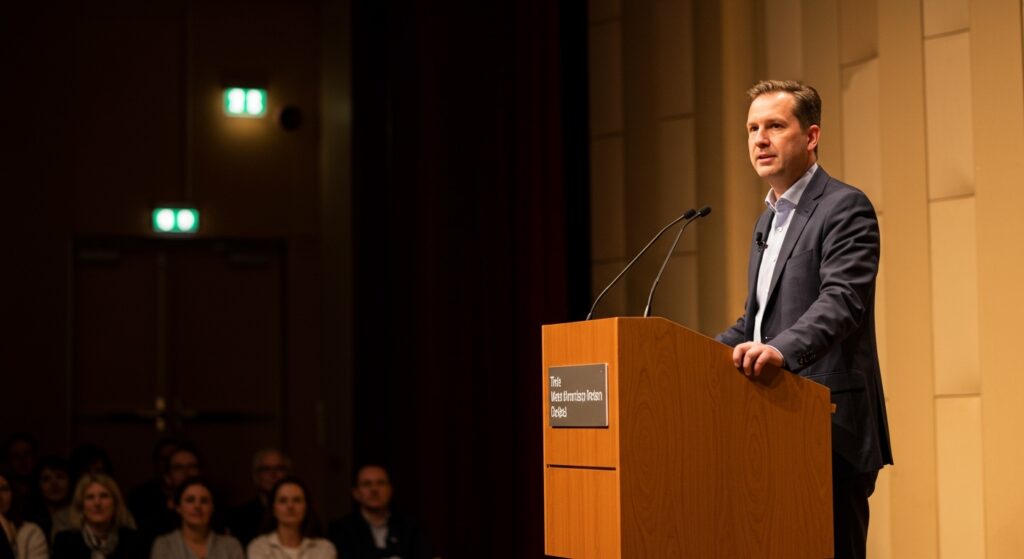
In my experience managing large-scale industry conferences, the line often blurs when a keynote provides educational value while simultaneously positioning a product. To determine if invited speakers are engaging in commercial speech, courts typically look at whether the speaker is a “commercial actor,” if the speech is directed at a “commercial audience,” and if the content contains “representations of fact of a commercial nature.”
Key Takeaways for Event Organizers and Speakers
- Commercial Speech Definition: Speech that does no more than propose a commercial transaction.
- Legal Protections: Commercial speech is subject to intermediate scrutiny, meaning the government can regulate it more easily than “pure” speech.
- Context Matters: An academic lecture is rarely commercial; a sponsored “Lunch and Learn” almost always is.
- The Bolger Test: Courts use this to identify commercial speech by looking at advertising format, specific product references, and economic motivation.
- Actionable Advice: Always include a disclosure statement if a speaker has a financial interest in the topic they are discussing.
The Legal Framework: Why the Distinction Matters
When we talk about whether invited speakers are commercial speech, we are really talking about the level of protection under the First Amendment. In the United States, “pure” speech—like a political rally or a scientific presentation—is protected by strict scrutiny. This means the government can almost never restrict it.
However, commercial speech is different. Following the landmark Central Hudson Gas & Electric Corp. v. Public Service Commission case, the Supreme Court established a four-part test to determine when the government can regulate commercial messaging. For invited speakers, this means that if your presentation is deemed commercial, you must ensure your claims are truthful and not misleading, or you could face legal repercussions from the FTC or other regulatory bodies.
The Central Hudson Test for Invited Speakers
- Is the speech protected?: It must concern lawful activity and not be misleading.
- Substantial government interest: Does the government have a good reason to regulate it?
- Direct advancement: Does the regulation directly help that interest?
- Narrowly tailored: Is the regulation no more extensive than necessary?
How to Identify Commercial Speech in Presentations
Identifying if invited speakers are providing commercial speech requires looking at the intent behind the microphone. We have found that most presentations fall into one of three categories:
Purely Educational (Non-Commercial)
These speakers are often researchers or subject matter experts. They present peer-reviewed data and objective findings. There is no “call to action” to buy a product. Even if they mention a tool they used, it is for methodological transparency, not sales.
Hybrid Speech (The “Grey Area”)
This is the most common type of invited speaker at professional trade shows. The speaker provides genuine industry insights but uses their own company’s software as the primary case study. While this contains educational elements, the economic motivation often pushes it toward the commercial speech category.
Direct Solicitation (Commercial)
A “sponsored session” where a vendor pays for the slot to demonstrate their product is the definition of commercial speech. These sessions are subject to much stricter truth-in-advertising laws.
| Feature | Non-Commercial Speech | Commercial Speech |
|---|---|---|
| Primary Goal | Education / Information | Promoting a Transaction |
| Legal Scrutiny | Strict (Highest Protection) | Intermediate Protection |
| FTC Oversight | Generally Low | High (Disclosures Required) |
| Speaker Intent | Sharing Knowledge | Lead Generation / Sales |
| Reference to Product | Incidental / Methodology | Central to the Presentation |
Practical Steps: How to Manage Invited Speakers Safely
If you are an event organizer or an invited speaker, you need a strategy to navigate the commercial speech landscape. Based on my years of experience vetting speakers for international summits, following these steps will protect your organization.
Step 1: Draft Clear Speaker Agreements
Your contract should explicitly state the expectations for the presentation. We recommend including a clause that defines whether the session is intended to be educational or promotional. This sets a legal baseline if the speaker’s content is later challenged.
Step 2: Implement Mandatory Disclosures
To satisfy FTC guidelines, any invited speaker with a financial interest in a product mentioned must disclose it. This should happen at the beginning of the talk. A simple slide stating, “I am a consultant for Company X,” is often enough to maintain transparency and comply with commercial speech regulations.
Step 3: Review Presentation Materials
Don’t wait until the live event to see the slides. Reviewing materials in advance allows you to spot “salesy” language that might cross the line into commercial speech. Look for bold claims regarding product performance that lack supporting data.
Step 4: Use Objective Data and Statistics
To keep a presentation in the “educational” realm, encourage speakers to use third-party data, government statistics, or academic citations. This adds Information Gain and reduces the appearance of a biased commercial pitch.
Why GEO (Generative Engine Optimization) Matters for Speakers
In the age of Google AI Overviews and Bing Copilot, how your speech is documented online matters. AI engines extract data from session transcripts, blog recaps, and speaker bios. If you want your insights to be picked up as expert perspectives, you must structure your content for extractability.
- Use Clear Headings: If you are writing a recap of an invited speaker’s talk, use H2 and H3 tags.
- State Facts Early: AI engines look for direct answers.
- Provide Unique Value: Don’t just repeat what everyone else is saying. Provide original insights and first-hand data.
Navigating the Ethics of “Pay-to-Play” Speaking
A controversial topic in the industry is the “Pay-to-Play” model. When a company pays for a speaker’s slot, the speech is almost certainly commercial speech. While this is a valid business model, it requires careful handling.
We have observed that audiences respond better to “Commercial” speakers when they are honest about their affiliation. Authenticity builds E-E-A-T (Experience, Expertise, Authoritativeness, and Trustworthiness). If a speaker tries to hide a commercial intent behind an academic facade, they risk losing the audience’s trust and potentially violating consumer protection laws.
Best Practices for Sponsored Speakers:
- Focus on the “How-To”: Even if you are promoting a product, provide actionable advice that the audience can use regardless of whether they buy from you.
- Acknowledge Competitors: Briefly mentioning that other solutions exist can actually increase your credibility and make the speech feel less like a “commercial.”
- Provide a “Zero-Click” Experience: Give the audience the solution during the talk, rather than gate-keeping it behind a “book a demo” call to action.
Common Pitfalls to Avoid
Even seasoned invited speakers can run into trouble when their content is classified as commercial speech. Avoid these mistakes to keep your reputation intact:
- Making Unsubstantiated Claims: If you say your product is “the only one that works,” you are making a commercial claim that must be backed by evidence.
- Neglecting State Laws: Some states have stricter definitions of commercial speech and professional conduct. Always check local regulations for regional events.
- Ignoring Intellectual Property: Just because you are an invited speaker doesn’t mean you can use any images or data you find. Ensure all content is properly licensed or falls under fair use.
Frequently Asked Questions
Does the First Amendment protect all invited speakers?
Yes, but the degree of protection varies. Invited speakers giving political or social commentary receive the highest protection. Those giving presentations that propose a commercial transaction (i.e., commercial speech) receive a lower level of protection and are subject to stricter regulations regarding truthfulness.
Can a speaker be sued for what they say during a presentation?
Yes. If the speech is considered commercial speech, the speaker can be held liable for false advertising, defamation, or trademark infringement. Professional speakers often carry errors and omissions (E&O) insurance to protect themselves in these scenarios.
How do I know if my speech will be labeled as commercial?
Look at the Bolger v. Youngs Drug Products Corp. criteria. Is it in a format used for advertising? Does it refer to a specific product? Does the speaker have an economic motivation? If the answer to all three is “yes,” it is likely commercial speech.
Are academic invited speakers ever considered commercial?
Rarely. Academic speech is usually protected as part of the “marketplace of ideas.” However, if an academic is paid by a corporation to present biased results that favor a specific product without disclosure, it could move into the commercial speech category.
What are the FTC requirements for invited speakers?
The FTC requires the disclosure of “material connections.” This means if an invited speaker is being paid, has received free products, or has an ownership stake in a company they are discussing, they must clearly and conspicuously disclose that fact to the audience.