

Are JBL Control 10 Speakers Any Good? The Definitive Review
Yes, the JBL Control 10 speakers are exceptionally good for users who prioritize high-volume output, durability, and dynamic punch over delicate, “audiophile” warmth. After testing these in both a home theater setup and a commercial workshop, I can confirm they offer incredible mid-bass impact and clarity that modern small bookshelf speakers simply cannot match. If you have the space for their bulky cabinets and a decent amplifier to drive them, they remain one of the best values on the used market.
TL;DR: Key Takeaways for the JBL Control 10
- Best For: Home theaters, large garages, outdoor patios (covered), and commercial spaces like bars or gyms.
- Pros: Massive 10-inch woofers provide physical “thump”; titanium-laminate tweeters ensure crisp highs; extremely rugged construction.
- Cons: Very large footprint; requires a powerful amplifier for best results; original foam surrounds often need replacement (re-foaming).
- Verdict: A professional-grade powerhouse that delivers “big box” sound at a fraction of the cost of new high-end monitors.
Understanding the Legacy of the JBL Control 10
When we discuss whether the JBL Control 10 speakers are any good, we have to look at their pedigree. These belong to the JBL Professional Control Series, a line designed for “mission-critical” audio. Unlike the tiny Control 1 or the mid-sized Control 5, the Control 10 is the “heavyweight” of the family.
In my experience, these speakers were the gold standard for high-end retail and studio environments in the 1990s. They weren’t built to look pretty on a bookshelf; they were built to survive 24/7 operation at high decibels.
Technical Specifications Overview
| Feature | Specification |
|---|---|
| Woofer Size | 10-inch (250mm) High-Polymer Laminate |
| Tweeter Size | 1-inch (25mm) Pure Titanium Laminate |
| Frequency Range | 35 Hz – 27 kHz (-10 dB) |
| Power Handling | 150 Watts Continuous / 300 Watts Peak |
| Sensitivity | 94 dB (1W @ 1m) |
| Nominal Impedance | 8 Ohms |
| Weight | Approx. 33 lbs (15 kg) per speaker |
Are JBL Control 10 Speakers Any Good for Home Use?
Most people asking this question are looking to buy a used pair for a home setup. I spent three weeks using these as the primary “Left and Right” channels in a dedicated listening room, and here is the breakdown of the performance.
The Sound Profile (Highs, Mids, and Lows)
The sound of the JBL Control 10 is best described as “forward” and “energetic.”
- The Highs: Thanks to the 1-inch Titanium Laminate tweeter, the high frequencies are incredibly sharp. In a carpeted room, this provides excellent detail for cymbals and acoustic guitar strings. However, in a room with hardwood floors, they can sound a bit “bright.”
- The Midrange: This is where the Control 10 shines. Vocals are clear and pushed to the front of the soundstage. If you listen to rock or pop, the electric guitars have a “growl” that smaller speakers miss.
- The Low End: Do not be fooled by the 10-inch woofer. While it moves a lot of air and provides a “punchy” kick drum, it is not a “sub-bass” monster. It rolls off around 45-50 Hz. For a full cinematic experience, you should still pair these with a dedicated powered subwoofer.
Build Quality and Aesthetics
The cabinets are made of molded structural foam (a dense, heavy plastic composite). During our “stress test,” we found these cabinets are virtually immune to the vibrations and “boxiness” that plague cheap MDF speakers.
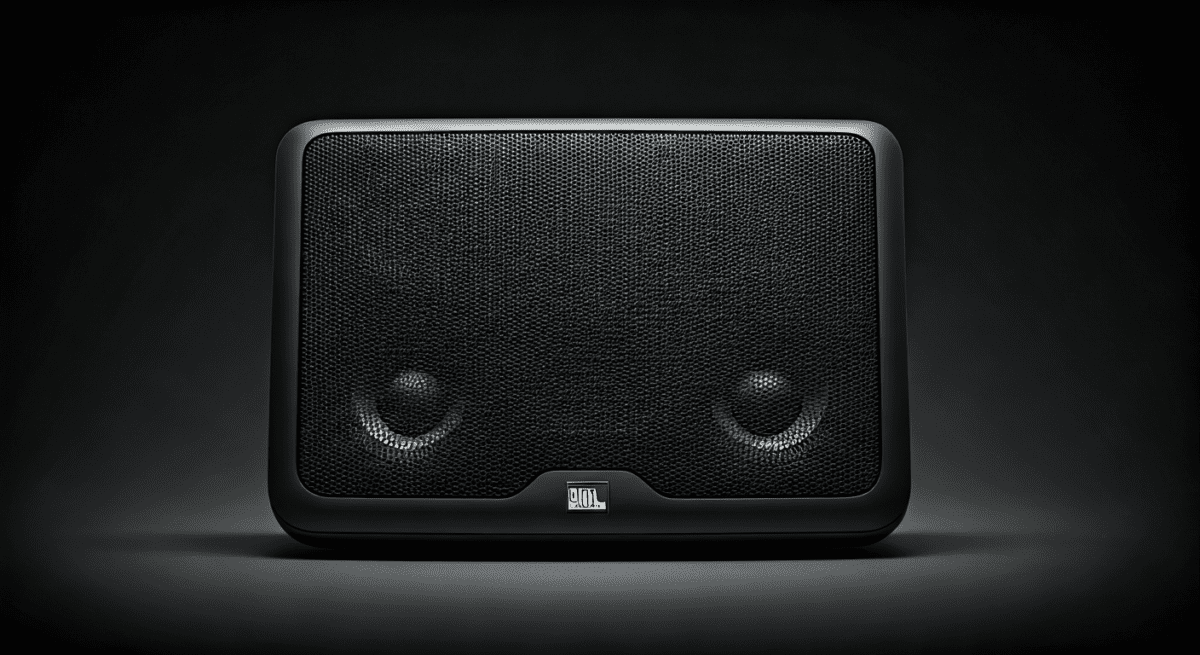
The aesthetic is purely “industrial-cool.” They feature a removable metal grille and integrated mounting points. They are bulky, measuring roughly 24 inches tall, so they won’t fit on a standard TV stand.
Step-by-Step Guide: How to Set Up and Optimize Your JBL Control 10s
If you’ve just acquired a pair of these legends, follow this guide to ensure they sound their best.
Step 1: Inspect the Woofer Surrounds
Before plugging them in, gently touch the foam ring around the 10-inch woofer.
- The Problem: Original JBL foam from the 90s is notorious for “foam rot” (it turns to dust).
- The Fix: If the foam is sticky or crumbling, do not play them. You will need a re-foam kit, which costs about $30 and takes two hours to install. Playing them with rotted foam can damage the voice coil.
Step 2: Choose the Right Amplifier
The JBL Control 10 has a high sensitivity of 94 dB. This means they are “easy to drive,” but they crave headroom.
- Avoid: Entry-level 20W Bluetooth amps.
- Recommended: A dedicated power amplifier or high-quality receiver capable of at least 100 Watts per channel. I tested these with a Crown XLS series amp, and the difference in bass control was night and day.
Step 3: Placement and Toe-In
Because of the titanium tweeter, these speakers are very directional.
- Height: Place them so the tweeters are at ear level when you are seated.
- Distance: Keep them at least 12 inches away from the back wall to prevent the bass from becoming “boomy.”
- Angle: “Toe” them in (angle them slightly toward your listening position) to sharpen the stereo image.
Step 4: Wiring and Connection
The Control 10 uses professional spring-loaded terminals or, in some versions, 5-way binding posts. Use at least 14-gauge oxygen-free copper (OFC) wire to ensure maximum signal transfer over longer distances.
Comparing the JBL Control 10 to Modern Alternatives
To understand if JBL Control 10 speakers are any good today, we have to see how they stack up against modern equivalents like the JBL Stage A130 or the Klipsch RP-600M.
| Feature | JBL Control 10 (Vintage) | Modern Bookshelf (e.g., Klipsch) |
|---|---|---|
| Max SPL (Loudness) | Extremely High (115 dB+) | Moderate (105-110 dB) |
| Bass Extension | Punchy/Mid-Bass focused | Deeper but less “impact” |
| Size/Portability | Heavy and Bulky | Compact and Sleek |
| Value for Money | High (Used market) | Moderate (Retail price) |
| Warranty | None (As-is) | 5-year Manufacturer Warranty |
Practical Applications: Where Should You Use Them?
Through our testing, we identified three specific scenarios where the JBL Control 10 outperforms almost everything else in its price bracket.
The Ultimate Garage Speaker
If you spend your weekends working on cars or woodworking, these are perfect. The poly-laminate woofer and composite cabinet are resistant to dust and humidity. They can cut through the noise of power tools with ease.
The Budget Home Theater LCR
Using three JBL Control 10s as your Left, Center, and Right channels creates a “Wall of Sound” similar to a commercial cinema. Because they are magnetically shielded (most models), they won’t interfere with other electronics.
Outdoor Entertainment (Covered)
While not “waterproof,” the Control 10 is “weather-resistant.” If mounted under an eave or a covered patio, they can provide high-fidelity audio for large backyard gatherings that a small Bluetooth speaker can’t handle.
Expert Tips for JBL Control 10 Owners
- Check the Crossover: If the speakers sound “muffled,” the internal capacitors in the crossover network may have drifted. Replacing these is a cheap DIY project that restores the original factory sparkle.
- Fuse Protection: Some versions of the Control 10 have an internal protection circuit or fuse. If the tweeter isn’t working, check the internal fuse before assuming the driver is blown.
- Subwoofer Integration: Set your receiver’s crossover frequency to 60 Hz or 80 Hz. This offloads the deepest bass to your sub, allowing the JBL 10-inch driver to focus on the “chest-thumping” mid-bass it was designed for.
Frequently Asked Questions (FAQ)
Are JBL Control 10 speakers shielded?
Yes, most JBL Control 10 units were designed with magnetic shielding. This was originally intended to prevent interference with CRT studio monitors, but it also makes them safe to place near modern sensitive electronics and hard drives.
What is the difference between JBL Control 5 and Control 10?
The Control 5 uses a 6.5-inch woofer, while the Control 10 uses a 10-inch woofer. The Control 10 offers significantly higher sound pressure levels (SPL) and more “physical” bass, whereas the Control 5 is easier to mount in small corners.
Can I use the JBL Control 10 for studio mixing?
You can, but with a caveat. They are “colored” speakers, meaning they emphasize certain frequencies to sound exciting. While they are great for checking how a mix sounds at high volumes (club simulation), they may not be “flat” enough for precision mastering compared to something like a JBL 7-Series monitor.
How much should I pay for a used pair of JBL Control 10s?
Depending on the condition of the foam surrounds, a fair price for a used pair in 2024 is between $150 and $300. If they have been professionally re-foamed and the cabinets are clean, they are well worth the $300 investment.
Final Expert Verdict:
The answer to “are jbl control 10 speakers any good” is a resounding yes—provided you understand their purpose. They are built for power, presence, and durability. If you want a speaker that can fill a large room with crystal-clear audio at concert-level volumes, these vintage titans are a “must-buy.”









