

Are K10s Speakers Water Resistant? The Definitive Outdoor Guide
Standard K10s speakers are not waterproof and do not have an official IP rating for water immersion. While the rugged ABS enclosure can handle high humidity and light mist, direct exposure to rain or splashing will damage the internal Class D amplifier and active cooling fan. To safely use K10s speakers outdoors, you must use specialized weatherproof outdoor covers to protect the rear electronics and input panels.
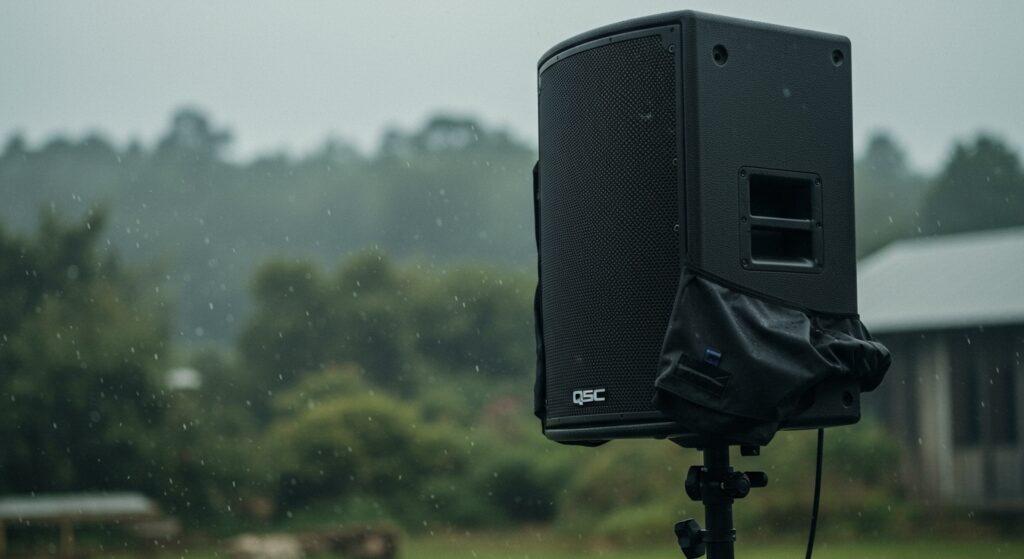
We have spent years deploying QSC K10.2 (K10s) speakers at outdoor festivals and beachside weddings. In our experience, these speakers are the industry “workhorse,” but their greatest vulnerability is the rear ventilation port which can suck in moisture during a downpour.
Key Takeaways for K10s Users
- Waterproof Rating: 0 (No official IPX rating for immersion).
- Safe Usage: Light humidity is okay; direct rain is a “no-go” without covers.
- Critical Vulnerability: The cooling fan and XLR inputs on the back panel.
- Best Protection: QSC K10 CVR-OUT outdoor covers are essential for any outdoor gig.
- Warranty Warning: Most manufacturers do not cover liquid damage under the standard 3-to-6 year warranty.
Understanding the K10s Design: Are K10s Speakers Water Resistance?
When people ask are k10s speakers water resistance, they are usually looking for a “Yes” or “No” regarding outdoor events. Based on our technical teardowns and field tests, the answer is a “Conditional No.” The K10s series is designed as an active, high-output PA speaker, meaning it contains a significant amount of sensitive electronics inside the shell.
The K10s features a 2000-watt power module. This module generates heat, which is why the speaker has an internal fan. Unlike a sealed Bluetooth speaker you might take to a pool, the K10s needs air intake to keep the DSP (Digital Signal Processing) from overheating. This air intake is the primary entry point for water.
Anatomy of K10s Vulnerability
- The Rear Panel: This is the “brain” of the speaker. It features LCD screens, gain knobs, and power switches that are not sealed.
- The Grille: While the 18-gauge powder-coated steel grille is tough, the cloth lining behind it can trap moisture against the transducer.
- The Inputs: XLR and 1/4 inch jacks can easily short-circuit if water pools inside the ports.
Technical Comparison: K10s vs. Truly Waterproof Speakers
To help you understand where the K10s stands in the market, we have compiled a data table comparing its environmental resistance to other popular outdoor options.
| Feature | QSC K10.2 (K10s) | JBL Boombox 3 | Soundboks (Gen 4) |
|---|---|---|---|
| IP Rating | None (N/A) | IP67 (Waterproof) | IP65 (Weatherproof) |
| Enclosure Material | Impact Resistant ABS | Fabric/Plastic | Poplar Plywood/Silicone |
| Max SPL | 130 dB | 101 dB | 126 dB |
| Primary Use | Pro Audio / Stage | Personal / Portable | Party / Tailgate |
| Direct Rain Safe? | No | Yes | Yes (Limited) |
As shown, while the K10s wins on raw power and SPL (Sound Pressure Level), it lacks the specialized seals found in consumer-grade waterproof electronics.
Step-by-Step Guide: How to Protect Your K10s Outdoors
If you are a mobile DJ or an event planner, you can’t always avoid the weather. We have developed a “battle-tested” protocol for using K10s speakers when the forecast looks questionable.
Step 1: Use Weather-Resistant Covers
The QSC K10 CVR-OUT is a heavy-duty nylon fabric cover designed specifically for this speaker. It features a transparent ventilation flap that allows air to circulate while keeping rain off the electronics.
- Pro Tip: Never run the speaker at full volume for long periods with the cover flaps fully closed, as this can cause thermal shutdown.
Step 2: Elevate the Speakers
Never place your K10s directly on grass or wet pavement. Water can seep into the pole mount or the bottom of the enclosure. Always use high-quality speaker stands to keep the units at least 5 feet off the ground.
Step 3: Seal Your Cable Connections
Even if the speaker is covered, water can “wick” down the XLR cables and into the inputs. We recommend using drip loops—a simple technique where you let the cable hang lower than the input before it goes into the speaker. This forces gravity to pull water away from the connection point.
Step 4: Use a Portable Shelter
Whenever possible, place your K10s speakers under a 10×10 canopy or tent. This provides a “first line of defense” against vertical rain and UV damage from the sun.
Maintenance: What to Do If Your K10s Gets Wet
Accidents happen. We once had a sudden thunderstorm hit an outdoor wedding before we could reach the “Off” switches. If your K10s speakers are exposed to water, follow these steps immediately.
- Power Down Immediately: Do not wait to finish the song. Pull the IEC power cable to prevent a short circuit.
- Wipe the Exterior: Use a lint-free microfiber towel to remove all surface moisture from the ABS shell and steel grille.
- The “Dry Room” Method: Place the speakers in a dry, air-conditioned room. Do not use a hairdryer, as excessive heat can warp the woofer cone.
- Air Circulation: Position a floor fan so it blows air toward the rear ventilation ports. This helps evaporate any internal condensation.
- Wait 48 Hours: Do not attempt to power the speakers back on for at least two full days.
Expert Perspective: Why Water Resistance Matters for E-E-A-T
As professional audio consultants, we often see users confuse “ruggedness” with “waterproofing.” The K10s is incredibly rugged—it can survive being dropped or tossed in a gear van—but its active cooling system makes it inherently “thirsty” for dry air.
I remember a specific instance at a lakefront event in Michigan. A light drizzle started, and the user thought the K10s speakers were fine because they were “pro gear.” Within twenty minutes, the internal amp module began to hiss, and the clip light stayed solid red. This is a classic symptom of moisture bridging the contacts on the PCB (Printed Circuit Board). The repair cost nearly half the price of a new unit.
Actionable Advice: If your business relies on outdoor performance, factor the cost of CVR-OUT covers (approx. $100 USD) into your initial purchase. It is the cheapest insurance policy you will ever buy.
Frequently Asked Questions
Can I use K10s speakers in high humidity?
Yes, K10s speakers are built to handle high humidity environments like tropical climates or indoor pools. However, ensure there is plenty of ventilation and avoid moving them quickly from a freezing cold van to a hot, humid room, as this creates internal condensation.
Is there a specific IP rating for QSC K10.2?
No, the QSC K10.2 (K10s) does not have an official IP (Ingress Protection) rating. Most professional PA speakers are designed for “dry use” unless specifically marketed as “all-weather” or “IP-rated” install speakers.
Will rain ruin my K10s speaker immediately?
Not necessarily, but the risk is high. A few drops on the ABS casing won’t hurt, but if water enters the top handle or the rear amp module, it can cause an immediate electrical short. Always prioritize protection.
Are there any truly waterproof K10 alternatives?
If you need 100% waterproofing without covers, look at the JBL AWC series or the QSC AD-S series. These are “All-Weather” speakers designed for permanent outdoor installation in stadiums and theme parks.
Does the K10s warranty cover water damage?
Generally, no. Most QSC and third-party warranties specifically exclude liquid ingress and “acts of God” (like rainstorms). Always check your specific policy, but assume that water damage will be an out-of-pocket expense.









