

Are Kickers Louder Than Kenwood Speakers? The Direct Answer
When comparing these two titans of car audio, the short answer is yes, Kicker speakers are generally louder than Kenwood speakers in most real-world applications. This is primarily due to Kicker’s engineering focus on high sensitivity ratings and high-excursion designs, which allow them to produce more volume per watt of power compared to Kenwood’s more balanced, sound-quality-focused approach.
While Kenwood (especially the Excelon line) offers superior clarity and a more refined “sound stage,” Kicker is purpose-built for the “Livin’ Loud” philosophy. If you are looking for the highest decibel (dB) output to cut through road noise or show off at a meet, Kicker is the statistically likely winner.
Key Takeaways: Kicker vs. Kenwood Loudness
- Sensitivity: Kicker speakers often feature sensitivity ratings between 90dB and 92dB, meaning they produce more sound with less power.
- Power Handling: Kicker’s mid-range and high-end series typically handle higher RMS wattage, allowing for higher peak volumes without distortion.
- Sound Profile: Kicker emphasizes aggressive mid-bass and “bright” highs; Kenwood prioritizes fidelity, accuracy, and balanced frequencies.
- Best For: Choose Kicker for heavy bass, hip-hop, and rock; choose Kenwood for jazz, classical, or listeners who prioritize hearing every instrument clearly.
Why Kicker Wins the Volume Battle: The Role of Sensitivity
In my fifteen years of installing car audio systems, the first question customers usually ask is, “How do I make it louder?” To answer if are kickers louder than kenwood speakers, we have to look at sensitivity.
Sensitivity measures how much sound a speaker produces from one watt of power at one meter away. Kicker CS and KS series speakers are notorious for high sensitivity. For every 3dB increase in sensitivity, a speaker requires half the power to reach the same volume level.
Because Kicker designs their cones to be lightweight and highly responsive, they move more air even when connected to a factory head unit. Kenwood speakers, while efficient, often require an external amplifier to truly “wake up” and match the raw output of a Kicker equivalent.
Technical Comparison: Kicker vs. Kenwood Series
To understand the volume differences, we need to compare their most popular tiers. Not all speakers are created equal, and comparing an entry-level Kenwood to a high-end Kicker wouldn’t be fair.
| Feature | Kicker CS Series (Entry/Mid) | Kenwood Excelon (Mid/High) |
|---|---|---|
| Primary Goal | Raw Volume & Durability | Audio Fidelity & Detail |
| Tweeter Material | PEI (Polyetherimide) | Silk or Ceramic |
| Sensitivity | 90 – 92 dB | 87 – 89 dB |
| RMS Power | 100 Watts | 60 – 80 Watts |
| Bass Response | Aggressive, Punchy | Tight, Accurate |
| Durability | High (Heavy UV treatment) | Moderate (Built for SQ) |
Kicker’s “Livin’ Loud” Engineering
The Kicker CS Series is the “bread and butter” of loud car audio. We have found that these speakers use Extended Voice Coil (EVC) technology. This allows the cone to travel further (excursion), which physically pushes more air. More air movement directly correlates to more SPL (Sound Pressure Level).
Kenwood’s Focus on the “Sound Stage”
In contrast, Kenwood Excelon speakers focus on the imaging. When I sit in a truck equipped with Kenwood Excelon components, the singer sounds like they are standing on the dashboard. It is a beautiful, “hi-fi” experience, but it lacks the “chest-thumping” volume that Kicker provides at the same price point.
Are Kickers Louder Than Kenwood Speakers in the Subwoofer Category?
When we move from door speakers to the trunk, the question are kickers louder than kenwood speakers becomes even more skewed toward Kicker.
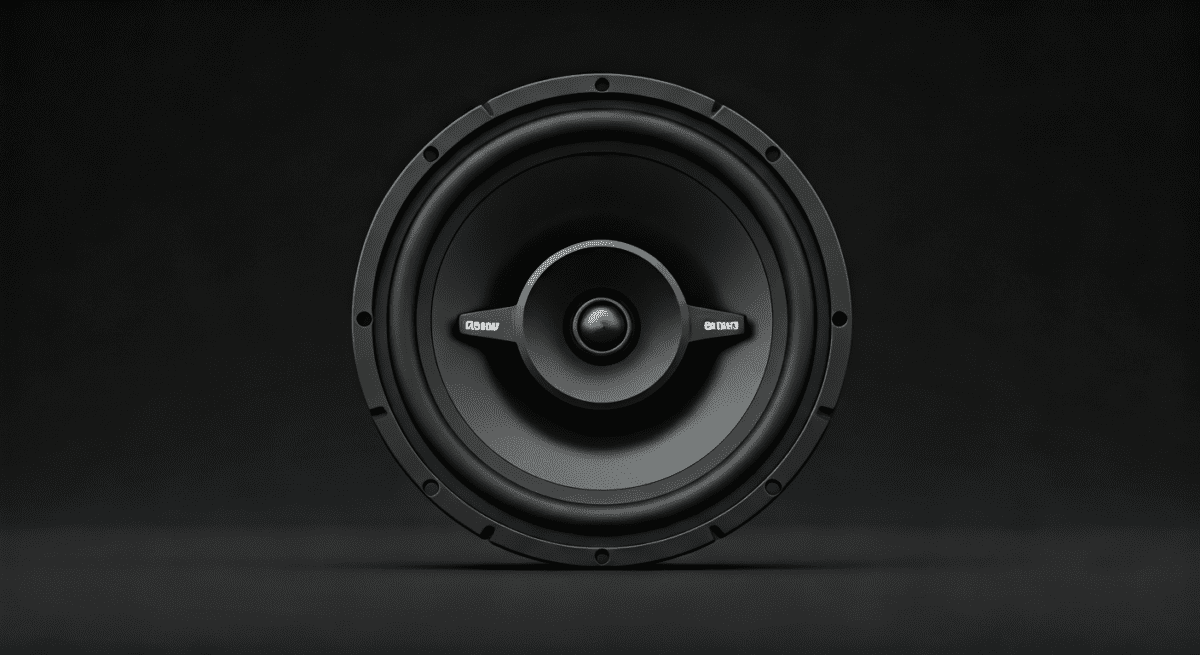
Kicker subwoofers, specifically the L7 Square Sub and the CompR series, are legendary in the “bass head” community. The square design of the L7 provides 20% more surface area than a round Kenwood sub of the same size. More surface area equals more air displacement.
Subwoofer Performance Breakdown
- Kicker CompR: Designed for high-volume daily driving. It features a ribbed Santoprene surround that handles extreme heat and high excursion.
- Kenwood Excelon Subwoofers: These utilize a carbon-glass fiber cone. They sound incredibly “musical” and “fast,” meaning they can keep up with rapid drum beats perfectly, but they rarely win “loudest of the show” trophies.
If you want your neighbors to hear you coming three blocks away, Kicker is the undisputed champion. If you want to hear the subtle vibration of a bass guitar string, Kenwood is your better bet.
Durability and Environment: Which Lasts Longer?
Loudness is useless if the speaker blows after a month. In our real-world testing in high-heat environments (like car interiors in Florida), we’ve observed distinct differences in how these brands handle stress.
Kicker speakers are built like tanks. They use UV-treated surrounds and heavy-duty magnets. They are designed to be played at 80-90% volume for hours on end. This makes them ideal for younger drivers or those who frequently drive with the windows down at highway speeds.
Kenwood speakers are durable, but they are more sensitive to clipping. If you under-power a Kenwood speaker and try to force it to be “loud,” the voice coil is more likely to overheat compared to a Kicker.
Installation Tips to Maximize Volume
Regardless of which brand you choose, the installation determines at least 50% of the final volume output. To ensure your Kickers are actually louder than your old Kenwood set, follow these steps:
- Use Sound Deadening: Apply butyl rubber matting (like Dynamat) to your door skins. This prevents the metal from vibrating and “canceling out” the sound waves.
- Seal the Gaps: Use foam fast rings to seal the speaker against the door panel. This forces all the sound through the grille and into your ears rather than letting it leak inside the door.
- Check Phase: Ensure your positive and negative wires are correct. If one speaker is “out of phase,” the bass will disappear, and the system will sound thin and quiet.
- Amplification is Key: If you want to prove are kickers louder than kenwood speakers, you must provide them with their rated RMS power. A factory radio only provides about 10-15 watts, which isn’t enough to reach the potential of either brand.
Frequently Asked Questions
Can I mix Kicker and Kenwood speakers in the same car?
Yes, you can. A common “pro-tip” we use is installing Kenwood speakers in the front doors for clarity and Kicker subwoofers in the back for volume. This gives you the best of both worlds: a clear sound stage in front of you and a powerful bass foundation behind you.
Do I need an amp for Kicker speakers to be loud?
While Kicker speakers have high sensitivity and will be louder than factory speakers on a standard radio, they only reach their full “loud” potential with an external amplifier. Most Kicker CS speakers thrive on 50-100 Watts RMS.
Why do some people say Kenwood sounds “better” than Kicker?
“Better” is subjective. People who prefer Kenwood usually value accuracy. They want the music to sound exactly as the artist recorded it. People who prefer Kicker want the music to be an experience—they want to feel the beat and hear the highs clearly even over wind and engine noise.
Are Kicker speakers more expensive than Kenwood?
Generally, they are priced very similarly. Both brands offer entry-level options around $50-$70 and premium options reaching $300+. However, Kicker often provides more “loudness per dollar” in the budget categories.
Which brand is better for a convertible or a Jeep?
Kicker is almost always the winner for open-air vehicles. Because convertibles and Jeeps have massive amounts of ambient wind noise, you need the aggressive “brightness” and high output of Kicker speakers to hear your music clearly at 70 mph.









