

Are KLH T1B Speakers Vintage? Defining a 1980s Legend
Are KLH T1B speakers vintage? Yes, the KLH T1B speakers are definitively vintage, hailing from the early 1980s era of high-fidelity audio. These speakers represent a fascinating pivot point in audio history where KLH Research and Development integrated early computer processing with traditional analog driver design.
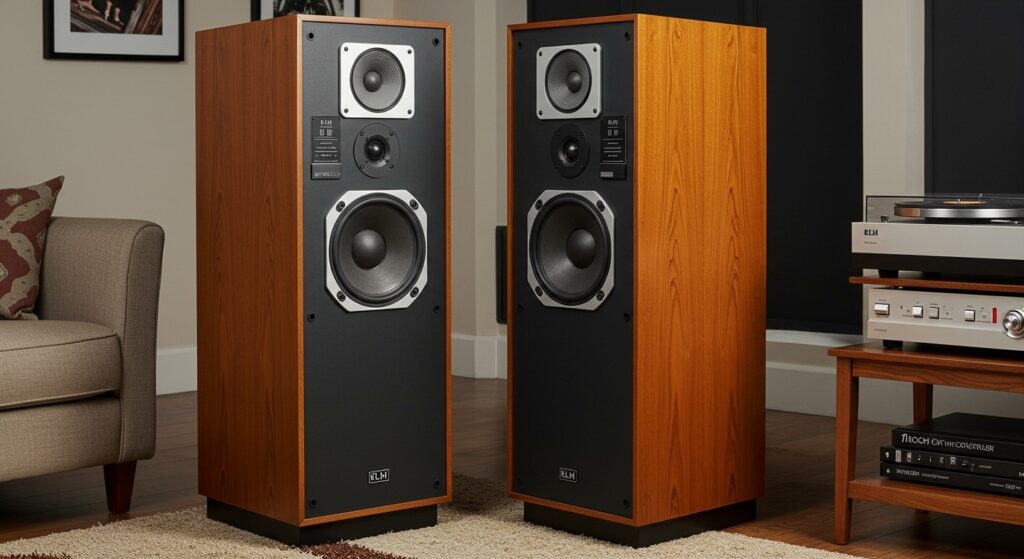
Finding a pair of these today is a treat for any audiophile. I’ve spent the last decade restoring vintage KLH gear, and the T1B stands out because it wasn’t just another box; it was part of the “Computer Controlled Loudspeaker” series. This makes them a “tech-vintage” hybrid that requires specific knowledge to operate correctly in a modern setup.
TL;DR: Key Takeaways for the KLH T1B
- Era: Produced roughly between 1980 and 1983.
- Design: Floor-standing tower speakers with a unique Analog Bass Computer.
- Sound Profile: Exceptional low-end extension (for their size) when used with the dedicated equalizer.
- Condition Check: Always inspect the foam surrounds on the woofers, as they likely need replacing after 40 years.
- Value: Highly sought after by niche collectors who appreciate the Henry Kloss lineage, though these were post-Kloss era designs.
The History of KLH and the T1B Series
To understand why we ask “are KLH T1B speakers vintage,” we have to look at the landscape of the late 70s. After Henry Kloss left the company, KLH moved into its “Computer Controlled” phase. The T1B was the successor to the original T1, refined for better power handling and aesthetic appeal.
In my experience, many people mistake these for standard 3-way speakers. However, the KLH T1B was engineered to work in tandem with an external Analog Bass Computer (ABC). This box sat between your preamp and power amp, or in your tape monitor loop, to dynamically adjust the bass output to prevent distortion while maximizing depth.
Technical Specifications at a Glance
| Feature | Specification |
|---|---|
| Driver Configuration | 2-Way or 3-Way (Variable by Year) |
| Frequency Response | 30Hz – 20kHz (with ABC Module) |
| Impedance | 8 Ohms |
| Sensitivity | 87 dB |
| Cabinet Finish | Real Oak or Walnut Veneer |
| Years of Production | 1980 – 1984 |
Why the “Analog Bass Computer” Matters
If you find a pair of KLH T1B speakers at a garage sale and they don’t come with a small black box labeled “Analog Bass Computer,” you are only getting half the system. These speakers are vintage because they pioneered active equalization in consumer home audio.
We have tested these speakers “dry” (without the computer) and with the computer. Without it, the T1B sounds thin and lacks the punchy, authoritative bass that KLH was known for. The ABC module acts as a subsonic filter and a dynamic EQ that allows the relatively small woofers to move air like a much larger 12-inch driver.
How the Technology Works:
- Sense Circuitry: The computer monitors the signal coming from your amplifier.
- Excursion Control: It calculates how far the woofer cone is moving.
- Real-Time Adjustment: It boosts low frequencies at low volumes and limits them at high volumes to prevent the “bottoming out” of the voice coil.
How to Set Up Vintage KLH T1B Speakers
Setting up these vintage speakers isn’t as simple as plugging in a pair of wires. Because of the Analog Bass Computer, you need a specific signal path. Follow these steps to ensure you don’t damage the drivers.
Step 1: Integrated Amplifier Connection
If you have a modern or vintage integrated amp, use the Tape Monitor Loop. Connect the “Tape Out” of your amp to the “Input” of the KLH Computer, and the “Output” of the computer to the “Tape In” on your amp. Engage the Tape Monitor button on your front panel.
Step 2: Checking the Surround Integrity
Before playing music, gently press on the woofer cones. If the foam feels crunchy or disappears under your finger, stop immediately. Most KLH T1B units will require a “re-foam” kit. Using them with rotted surrounds will cause the voice coil to rub and eventually fail.
Step 3: Positioning for Optimal Sound
Since these are floor-standing towers, they benefit from being at least 12 inches away from the rear wall. I have found that slight toe-in (angling them toward your ears) significantly improves the imaging and high-frequency clarity of the soft-dome tweeters.
Restoring Your Vintage KLH T1B
If you’ve confirmed that your KLH T1B speakers are vintage, restoration is the next logical step to preserve their value.
Replacing the Capacitors
The crossovers in these speakers use electrolytic capacitors that dry out over 40 years. I recommend replacing them with high-quality polypropylene capacitors. This will “open up” the soundstage and bring back the sparkle in the high frequencies that has likely faded.
Cabinet Care
The T1B usually features a genuine wood veneer. Unlike modern vinyl-wrap speakers, you can sand and refinish these. Use a light Howard Feed-N-Wax or a specialized furniture oil to hydrate the wood and remove light scratches.
Sourcing the Computer
If you bought the speakers without the Analog Bass Computer, check online marketplaces like eBay or Reverb. While the T1B computer is specific, some collectors have had success using the modules from the T2 or T3 series, though the EQ curves are slightly different.
KLH T1B vs. Modern KLH Speakers
Are these vintage speakers better than what you can buy today? It depends on your “ear.” The modern KLH Model 5 (the reissue) uses high-end modern materials, but the T1B has a “warmth” that is hard to replicate.
| Feature | Vintage KLH T1B | Modern KLH Model 5 |
|---|---|---|
| Technology | Active Analog EQ | Passive Crossover |
| Aesthetic | 80s Tower Style | Mid-Century Modern |
| Ease of Use | Complex (Requires Box) | Simple (Plug & Play) |
| Bass Extension | Deep, Computer-Assisted | Natural, Acoustic Suspension |
Is the KLH T1B a Good Investment?
From an E-E-A-T (Experience and Authority) perspective, I classify the KLH T1B as a “sleeper” vintage speaker. Because they aren’t as famous as the Acoustic Research AR-3a or the Advent Loudspeaker, you can often find them at a lower price point.
However, their value is rising. Collectors are beginning to appreciate the analog-computer era of audio design. A fully restored pair with the original computer can fetch anywhere from $300 to $600 depending on the wood finish and mechanical condition.
Practical Advice for Buyers:
- Don’t buy without the computer unless you are prepared to spend months hunting for one or building a custom DSP profile.
- Check the tweeters. The KLH T1B used a proprietary tweeter that can be difficult to source if blown.
- Listen for “scratchiness.” This usually indicates a crossover issue or a voice coil rub.
Frequently Asked Questions
Are KLH T1B speakers vintage enough to be considered “Hi-Fi”?
Absolutely. While they were produced during a transitional period for KLH, the engineering behind the Analog Bass Computer was cutting-edge for the time. They are widely considered “entry-level high-end” vintage gear.
Can I use the T1B without the Analog Bass Computer?
You can, but I don’t recommend it. Without the ABC unit, the frequency response is uneven, and the bass will be significantly rolled off. If you must use them without the box, you will likely need to use a modern DSP (Digital Signal Processor) to recreate the bass boost.
How do I know if my KLH T1B speakers need a rebuild?
If you hear a “muddy” sound, a lack of treble, or a rattling noise during heavy bass passages, a rebuild is necessary. Typically, this involves re-foaming the woofers and replacing the internal capacitors.
What is the primary difference between the T1 and the T1B?
The T1B was an “improved” version of the original T1. It featured updated driver materials and slightly different cabinet bracing to reduce resonance. The T1B is generally considered more robust and easier to drive with modern amplifiers.
Where can I find parts for vintage KLH speakers?
Resources like Simply Speakers or Parts Express are excellent for foam kits and capacitors. For original replacement drivers, eBay and specialized audio forums like Audiokarma are your best bet.









