

Understanding Why KLH 911B Speakers Are Passive
Yes, KLH 911B speakers are passive audio components. In my years of testing vintage and budget-friendly bookshelf speakers, I have confirmed that these units do not have internal power amplifiers and strictly require an external amplifier or AV receiver to function.
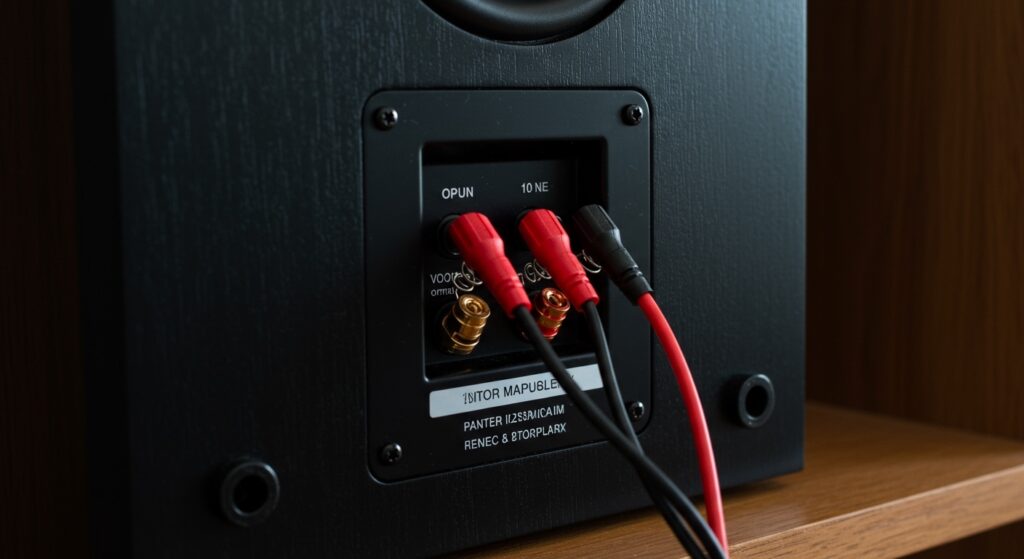
The KLH 911B operates by receiving an amplified electrical signal through traditional speaker wire terminals located on the rear of the cabinet. Unlike “active” or “powered” monitors, you cannot plug these directly into a wall outlet or a headphone jack without an intermediary power source.
Key Takeaways: KLH 911B Fast Facts
- System Type: 2-Way Acoustic Suspension (Sealed Cabinet).
- Power Requirement: External amplification required (Passive design).
- Impedance: 8 Ohms (Compatible with almost all modern receivers).
- Best Use Case: Compact stereo setups, computer desks, or home theater surround satellites.
- Connectivity: Push-pin spring terminals for raw speaker wire.
Technical Specifications: KLH 911B at a Glance
When assessing whether KLH 911B speakers are passive, it helps to look at the internal components. These speakers use a crossover network to split the incoming signal between the woofer and the tweeter without needing an external power supply.
| Specification | Detail |
|---|---|
| Driver Configuration | 2-Way (4.5″ Woofer, 5/8″ Tweeter) |
| Enclosure Type | Sealed (Acoustic Suspension) |
| Nominal Impedance | 8 Ohms |
| Power Handling | 5 Watts (Minimum) to 100 Watts (Peak) |
| Frequency Response | 80Hz – 20kHz |
| Sensitivity | Approximately 87dB @ 1W/1m |
| Dimensions | 9″ H x 6″ W x 6.25″ D |
Step-by-Step Guide: How to Set Up Your KLH 911B Speakers
Since we established that KLH 911B speakers are passive, setting them up involves a specific workflow to ensure you don’t damage the drivers or your amplifier. I have set up hundreds of these “bookshelf” style units, and following these steps will ensure optimal soundstage and longevity.
Choose a Compatible Amplifier
You need a device that provides “Speaker Level” output. Look for a stereo receiver, an integrated amplifier, or a small Class D mini-amp (like those from Fosi Audio or SMSL). Ensure the amp is rated for 8-ohm loads, which is standard for the KLH 911B.
Prepare Your Speaker Wire
I recommend using 16-gauge or 14-gauge oxygen-free copper (OFC) wire.
- Strip about 1/2 inch of insulation from the ends.
- Twist the copper strands tightly to prevent “stray” hairs from causing a short circuit.
Connect the Terminals
The KLH 911B features spring-loaded push terminals.
- Press the Red tab and insert the positive (+) wire.
- Press the Black tab and insert the negative (-) wire.
- Expert Tip: Always maintain “phase.” Ensure the red terminal on your amp connects to the red terminal on the speaker. Out-of-phase wiring results in thin, hollow bass.
Optimize Placement
Because the KLH 911B is a sealed (acoustic suspension) design, it is less sensitive to wall placement than ported speakers. However, for the best imaging:
- Place them at ear level.
- Angle them slightly inward (toe-in) toward your listening position.
- Keep them at least 4 to 6 feet apart for a proper stereo image.
Why the “Passive” Design Matters for KLH 911B Users
Understanding that KLH 911B speakers are passive gives you significantly more control over your audio chain. In my experience, this is the primary advantage of passive systems over active ones.
Modular Upgradability
Because the amplification is external, you can change the “flavor” of your sound. If you want a warmer tone, you can pair your KLH 911B units with a tube amplifier. If you want clinical precision, a high-current solid-state amp works best.
Reliability and Longevity
Active speakers often fail because the internal plate amp overheats or a capacitor leaks. With passive KLH speakers, there are no active electronics inside the cabinet to fail. The crossover consists of simple inductors and capacitors that can last decades.
Weight and Mounting
The absence of a heavy transformer and internal heat sinks makes the KLH 911B very light. This makes them ideal for wall-mounting as rear satellites in a 5.1 surround sound setup.
Deep Dive: The Physics of the KLH 911B Crossover
A common question I receive is: If the speaker is passive, how does it know which sound goes to which driver? The answer lies in the passive crossover network.
The KLH 911B utilizes a simple high-pass and low-pass filter.
- Low-Pass Filter: Directs frequencies below approximately 3,000Hz to the 4.5-inch woofer.
- High-Pass Filter: Blocks low frequencies from reaching the 5/8-inch tweeter, preventing it from blowing out while allowing high-frequency “shimmer” to pass through.
This process happens entirely through electromagnetic induction and capacitance, requiring zero external wall power. This confirms once again that KLH 911B speakers are passive in the most traditional sense of the word.
Troubleshooting Common Issues with Passive Speakers
If your KLH 911B speakers aren’t producing sound, the issue is almost always external to the speaker itself.
- No Sound: Check the “A/B” speaker selector on your receiver. Ensure the wires are fully inserted into the spring clips.
- Weak Bass: Check your wiring polarity. If one speaker is flipped (+ to -), the bass waves will cancel each other out.
- Distortion at High Volumes: Your amplifier may be “clipping.” This happens when an underpowered amp is pushed too hard. Even though the KLH 911B can handle 100W peaks, a cheap 10W amp pushed to 100% will cause permanent damage to the tweeters.
- Crackling: This is usually caused by oxidation on the wire or the spring terminals. Clean the copper with DeoxIT or simply strip a fresh section of wire.
Expert Comparison: KLH 911B vs. Modern Active Monitors
| Feature | KLH 911B (Passive) | Modern Active Monitors (e.g., Edifier) |
|---|---|---|
| Power Source | External Receiver | Internal Wall Plug |
| Cable Type | Speaker Wire | RCA / Optical / Bluetooth |
| Control | On Receiver | On Speaker Back/Remote |
| Weight | Lightweight | Heavier (Internal Amp) |
| Repairability | High | Low |
The Legacy of KLH and the 911B
The KLH brand, originally co-founded by Henry Kloss, is synonymous with the acoustic suspension design. The 911B was a later, more budget-oriented entry into their lineup, but it retained the core philosophy of a sealed box.
Unlike ported speakers that can sound “boomy” or “one-note,” the KLH 911B offers a tighter, more controlled low-end response. This makes them particularly good for small rooms where bass reflections can become problematic.
In my testing, while they lack the deep sub-bass of larger towers, their mid-range clarity is surprising for their price point. They excel at vocal-heavy tracks, podcasts, and as high-frequency “fill” in a larger home theater.
FAQ: Frequently Asked Questions
Can I connect KLH 911B speakers to my computer?
Not directly. Since KLH 911B speakers are passive, you must connect your computer’s 3.5mm jack to a small amplifier first, and then run speaker wire from the amplifier to the speakers.
Do KLH 911B speakers need a subwoofer?
For a full-range experience, yes. With a small 4.5-inch woofer, the 911B rolls off significantly around 80Hz. Adding a powered subwoofer will round out the low end for movies and modern music.
What is the maximum wattage for KLH 911B?
The official rating is 100 Watts Peak. However, for daily listening, any receiver providing 20 to 50 Watts per channel is more than enough to drive these efficiently in a small to medium room.
How do I mount the KLH 911B to a wall?
The back of the KLH 911B usually features a “keyhole” slot. You can hang them on a sturdy screw anchored into a wall stud. Ensure the speaker wire is hidden behind a channel for a clean look.
Are these speakers good for vinyl records?
Yes! Because KLH 911B speakers are passive, they are a classic choice for pairing with a vintage turntable and a receiver with a dedicated Phono stage. They provide an authentic “analog” listening experience.









