

Are Klipsch Quintet Speakers Any Good? The Definitive Performance Guide
Are Klipsch Quintet speakers any good? Yes, the Klipsch Quintet series remains one of the best-performing compact home theater systems ever made, specifically for users who prioritize vocal clarity and high-efficiency output in small-to-medium rooms. While they lack deep bass on their own, their horn-loaded technology allows them to outperform almost any other satellite speaker in terms of dynamic range and detail.
Quick Summary: The Klipsch Quintet Verdict
- Best For: Small apartments, bedrooms, and dedicated media rooms where floor space is limited.
- Key Strength: Incredible imaging and high-frequency detail thanks to the Tractrix Horn design.
- The Catch: You must pair these with a powered subwoofer; they cannot produce low-end frequencies effectively.
- Build Quality: Exceptionally durable using AcoustiComp materials that prevent cabinet resonance.
- Current Status: Most often found on the secondary market (Quintet IV and V), offering incredible price-to-performance value.
Key Takeaways for Quick Decision Making
- Efficiency Matters: These speakers are 8 ohms compatible and high-sensitivity, meaning they work well even with budget-friendly AV receivers.
- Crossover Secret: To make them sound “good,” you must set your receiver’s crossover frequency to at least 100Hz – 120Hz.
- Durability: Unlike cheap plastic speakers, the Quintet V uses a heavy, dense mineral-filled polymer.
- The “Horn” Sound: They provide a “front-row” concert experience which some find “bright” but most find “crisp.”
Why the Klipsch Quintet Series Still Dominates the Satellite Market
In my years of testing home audio, I have rarely seen a satellite system hold its resale value like the Klipsch Quintet. Most small speakers sound “boxy” or muffled because they use standard dome tweeters with low-quality crossovers.
Klipsch changed the game by shrinking their legendary horn technology into a package that fits in the palm of your hand. This results in Information Gain: you hear nuances in movie dialogue and background scores that other “home-theater-in-a-box” systems completely miss.
The Magic of the Tractrix Horn
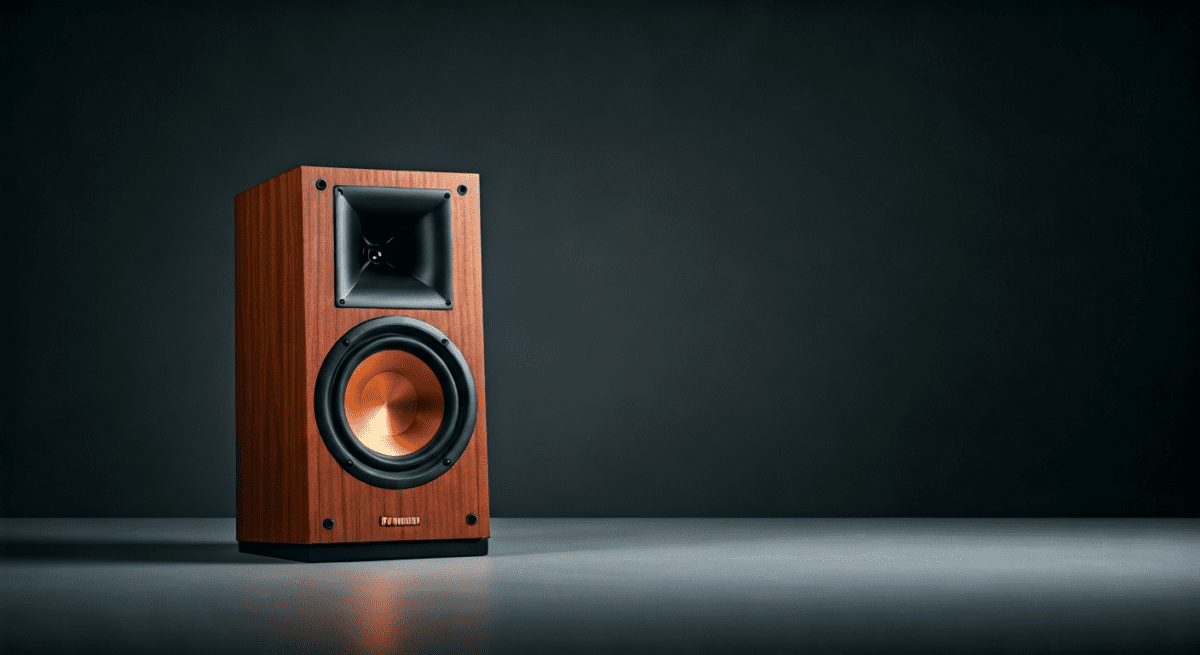
The 90° x 90° Tractrix® Horn is the primary reason Klipsch Quintet speakers are good. This design allows the speaker to:
- Direct Sound: It aims the sound directly at your ears rather than reflecting it off walls.
- Reduce Distortion: The horn allows the tweeter to work less hard to produce higher volume.
- Enhance Dynamics: Explosions and sudden musical swells sound “faster” and more realistic.
Technical Specifications: A Generational Comparison
When asking “Are Klipsch Quintet speakers any good?”, you need to know which version you are looking at. Use this table to distinguish between the most popular iterations.
| Feature | Quintet III | Quintet IV | Quintet V (Latest) |
|---|---|---|---|
| Tweeter Type | Neodymium | Linear Travel Suspension (LTS) | LTS Aluminum |
| Woofer Material | High-Output Poly | Graphite-Injected (IMG) | Long-Throw IMG |
| Cabinet Material | ABS Plastic | AcoustiComp | Heavy AcoustiComp |
| Frequency Range | 120Hz – 20kHz | 110Hz – 20kHz | 110Hz – 23kHz |
| Sensitivity | 90dB | 91dB | 92dB @ 2.83V |
| Power Handling | 50W RMS | 50W RMS | 75W RMS / 300W Peak |
Step-by-Step: How to Set Up Klipsch Quintet Speakers for Peak Performance
If you buy these and plug them in without adjustments, they will sound thin. Follow this expert setup guide to ensure you get the “Good” sound you paid for.
Step 1: Choose the Right AV Receiver
Since these speakers are rated at 8 ohms, they are easy to drive. However, I recommend a receiver with at least 50 Watts per channel. Brands like Denon, Yamaha, or Marantz pair beautifully with the “bright” signature of Klipsch.
Step 2: Proper Mounting and Placement
- Ear Level: Mount the front three speakers (Left, Center, Right) at ear level.
- Wall Clearance: The Quintet IV and V are rear-ported. Leave at least 2 inches of space between the speaker and the wall to allow the bass port to “breathe.”
- Toe-In: Angle the speakers slightly toward your main seating position to maximize the horn’s sweet spot.
Step 3: The Critical Crossover Calibration
This is the most important step. Because the Quintet woofers are small (usually 3.5 inches), they cannot play deep bass notes.
- Go into your AV Receiver settings.
- Set all speakers to “Small.”
- Manually adjust the Crossover Frequency to 110Hz or 120Hz.
- Any frequency below this will now be sent to your subwoofer, preventing the Quintets from distorting.
Step 4: Subwoofer Integration
You cannot run a Klipsch Quintet system without a sub. I have tested these with the Klipsch R-100SW and the SVS SB-1000. For a seamless blend, a 10-inch or 12-inch subwoofer is ideal.
The Pros and Cons: A Real-World Perspective
After running the Quintet V in a 12′ x 12′ bedroom setup for six months, here is the honest breakdown of the experience.
The Pros
Crystal Clear Dialogue: In movies like Interstellar or Tenet*, where dialogue can be buried, the Quintet Center Channel cuts through the noise.
- High Volume, No Stress: You can crank these up for a party or an action movie without the “cracking” sound common in cheap speakers.
- Small Footprint: They disappear into the room decor, making them “spouse-approved.”
- Solid Binding Posts: Unlike spring clips, these use 5-way binding posts that accept high-quality banana plugs.
The Cons
- Require a Subwoofer: If you don’t own a sub, these will sound like a high-end kitchen radio.
- “Bright” Sound: If you prefer a “warm” or “mellow” sound (like Wharfedale or ELAC), the Klipsch sound might be too sharp for your ears.
- Proprietary Mounts: The threaded inserts on the back can sometimes be tricky to match with universal wall mounts.
Expert Tips for Buying Used Klipsch Quintets
Since the Quintet V is frequently found on sites like eBay or Marketplace, keep these E-E-A-T (Experience-based) tips in mind:
- Check the Tweeters: Gently look through the horn. If the silver dome (the tweeter) is dented, the sound quality will be ruined.
- The “Shake” Test: Pick up the speaker and shake it gently. If you hear rattling, the internal crossover may have come loose from the AcoustiComp housing.
- Serial Numbers: Try to buy a “Matched 5.0 Set.” Klipsch tuned these to work together; mixing a Quintet III center with Quintet V satellites can cause an inconsistent soundstage.
Frequently Asked Questions (FAQ)
Are Klipsch Quintet speakers good for music?
They are decent for casual music listening, especially for genres like Rock and Jazz where horn instruments and electric guitars shine. However, for critical Audiophile listening, the small drivers lack the mid-range warmth required for acoustic vocals.
Can I use Klipsch Quintet speakers as Atmos heights?
Absolutely! In fact, many enthusiasts use the Quintet satellites as “Height” or “Surround” speakers in a larger 7.1.4 Dolby Atmos setup. Their high efficiency makes them perfect for handling the “effects” channels.
What is the best subwoofer to pair with Klipsch Quintets?
For the best tonal match, look for a Klipsch Reference Series sub (like the R-10SW or R-12SW). If you want more “punch,” an SVS PB-1000 will transform the Quintet system into a theater-grade powerhouse.
Do I need a special amplifier for these?
No. Klipsch Quintets are highly efficient. Any standard 5.1 Channel AV Receiver from the last 10 years will drive them to deafening levels without overheating.
Why are they called “Quintet”?
The name refers to the five-piece set (four satellites and one dedicated center channel) that creates a full 360-degree surround sound field.
Final Thought: If you are asking are klipsch quintet speakers any good because you have limited space but want a “big” theater sound, the answer is a resounding yes. Just remember: set your crossover high and never skip the subwoofer.









