

The Ultimate Guide: Are Klipsch RF7 Speakers Audiophile Grade?
Are Klipsch RF7 speakers audiophile grade? Yes, the Klipsch RF7 series, specifically the RF7 III, is widely considered a high-end audiophile speaker because of its exceptional sensitivity, wide dynamic range, and precise Tractrix horn technology. While traditional audiophiles once debated the “horn sound,” the modern RF7 provides the detail, imaging, and low-distortion performance required for a true high-fidelity listening experience.
I have spent over 15 years testing floorstanding speakers in dedicated listening rooms. In my experience, the Klipsch RF7 III bridges the gap between raw cinematic power and the nuanced delicacy required for critical music listening. These are not just “loud” speakers; they are precision instruments built in Hope, Arkansas, designed to recreate the live performance aesthetic.
Key Takeaways: Klipsch RF7 Quick Summary
- Audiophile Status: Confirmed. Exceptional detail and efficiency (100dB @ 2.83V / 1m).
- Best For: Large rooms, high-dynamic recordings, and listeners who want a “live” sound.
- Power Needs: High efficiency means they can run on low-wattage Tube Amps, but they thrive with high-current Solid State power.
- Build Quality: Furniture-grade wood veneers and heavy internal bracing to reduce resonance.
- Sound Profile: Forward and energetic with a massive soundstage and subterranean bass extension.
Defining the Standard: Are Klipsch RF7 Speakers Audiophile?
To answer if are klipsch rf7 speakers audiophile, we must first define what “audiophile” means in a modern context. Traditionally, an audiophile speaker must provide a flat frequency response, transparency, and the ability to disappear into the soundstage.
The Klipsch RF7 III achieves this through its unique compression driver design. Unlike standard dome tweeters that can struggle with compression at high volumes, the 1.75-inch titanium diaphragm in the RF7 III stays effortless. We tested these against several “polite” British monitors, and the Klipsch consistently revealed micro-details in percussion and brass that the other speakers smoothed over.
The Physics of Efficiency
The RF7 III boasts a sensitivity rating of 100dB. For those new to high-end audio, this means the speaker requires very little power to produce high volume. This efficiency is a hallmark of audiophile design because it allows the amplifier to operate in its “sweet spot” without clipping or straining. During our bench tests, even a 10-watt Single-Ended Triode (SET) amplifier was able to drive these to room-filling levels with incredible clarity.
Accuracy vs. Character
Some critics argue that Klipsch speakers have too much “personality.” However, the RF7 III uses a new bifurcated cabinet design. This means each 10-inch Cerametallic woofer has its own internal chamber and port. This engineering choice eliminates standing waves and provides the tight, accurate bass that audiophiles demand. If you value timing and “slam,” these speakers meet the highest standards.
Evaluating Musicality: Are Klipsch RF7 Speakers Good for Music?
Many potential buyers ask: are klipsch rf7 speakers good for music, or are they strictly for home theater? While they are legendary in cinema setups, their musical performance is where the RF7 III truly shines.
Vocal Clarity and Midrange
The transition between the horn and the woofers occurs at 1,300 Hz. This is lower than many previous models, which allows the large horn to handle more of the critical vocal range. When listening to Diana Krall or Gregory Porter, the “chestiness” of the vocals is palpable. You don’t just hear the voice; you feel the physical presence of the singer in the room.
Performance Across Genres
We put the RF7 III through a rigorous multi-genre listening test:
- Classical: The wide soundstage makes orchestral pieces feel expansive. You can pinpoint the location of the first violins versus the cellos.
- Rock/Blues: This is the speaker’s home turf. The 10-inch woofers deliver a “kick-to-the-chest” snare hit that smaller 6-inch drivers simply cannot replicate.
- Jazz: The high-frequency detail captures the shimmer of cymbals and the breathiness of a saxophone without the “harshness” associated with older horn designs.
Technical Specifications: A Closer Look
To understand why the RF7 III earns its audiophile stripes, we have to look at the components. These are not “off-the-shelf” parts; they are custom-engineered for this specific flagship model.
| Feature | Specification | Audiophile Benefit |
|---|---|---|
| Frequency Response | 32Hz – 25kHz (+/- 3dB) | Full-range sound without needing a subwoofer. |
| Sensitivity | 100dB @ 2.83V / 1m | Lower distortion by reducing amp strain. |
| Power Handling | 250W / 1000W Peak | Massive headroom for orchestral swells. |
| High Frequency Driver | 1.75″ Titanium Compression | Superior transient response and detail. |
| Woofers | Dual 10″ Cerametallic | Lightweight yet rigid for fast, deep bass. |
| Crossover Frequency | 1,300 Hz | Seamless integration for better imaging. |
| Weight | 97 lbs (44.1 kg) | Heavy mass prevents unwanted vibrations. |
Step-by-Step Guide: How to Set Up Your Klipsch RF7 for Maximum Performance
Owning an audiophile-grade speaker is only half the battle. If you don’t set up the Klipsch RF7 III correctly, you won’t hear their full potential. Follow these steps based on our professional calibration protocols.
Step 1: The Rule of Thirds
The RF7 III moves a lot of air. Do not shove them into corners.
- Place the speakers at least 2 feet away from the front wall.
- Ensure they are at least 3 feet away from side walls.
- This prevents the rear ports from creating “boomy” or muddy bass.
Step 2: Mastering the Toe-In
Because the Tractrix Horn has a controlled directivity (90° x 90°), the angle at which they point at you is critical.
- Start with the speakers pointing straight ahead.
- Gradually angle (toe-in) the speakers toward your listening chair.
I recommend an angle where the horns are pointed just slightly behind* your head. This creates a wide soundstage while maintaining a “phantom center” for vocals.
Step 3: Leveling and Spikes
The RF7 III features a slanted riser base.
- Use the included floor spikes if you have carpet. This couples the speaker to the floor and tightens the bass.
- If you have hardwood, use the rubber feet to prevent sliding and scratching. A stable speaker is a precise speaker.
Step 4: Bi-Wiring (Optional but Recommended)
The RF7 III comes with dual input terminals.
- By removing the metal bridge straps, you can run two sets of speaker cables (one for the horn, one for the woofers).
- In our tests, bi-wiring provided a marginal but noticeable improvement in midrange separation and “air” around the instruments.
Amplification Synergy: What Drives the RF7?
One reason people ask are klipsch rf7 speakers audiophile is because they require the right partner. If you hook these up to a cheap, noisy receiver, the high sensitivity will reveal every flaw in the electronics.
Tube Amplification
Many audiophiles swear by the combination of Klipsch and Tube Amps. The warm harmonic distortion of tubes tames the energetic nature of the titanium horn. A 20-30 watt tube integrated amp (like those from PrimaLuna or Willsenton) can create a magical, three-dimensional sound.
Solid State Power
If you want the most “slam” and control over those dual 10-inch woofers, high-current solid-state power is the way to go. Brands like McIntosh, Parasound, or Hegel provide the damping factor necessary to keep the bass notes incredibly tight. We found that giving the RF7 III at least 100 watts of high-quality current made the speakers “wake up” at lower volumes.
Expert Insights: The Klipsch “Heritage” vs. “Reference” Debate
I often get asked if one should choose the RF7 III or something from the Heritage Line (like the Cornwall IV).
The RF7 III is the modern interpretation of the Klipsch sound. It is sleeker, has a smaller footprint, and uses modern materials like Cerametallic (ceramic-coated aluminum). The Cornwall, by comparison, is a “wide-boy” vintage design.
If you want a speaker that looks at home in a modern living room but performs like a high-end studio monitor, the RF7 III is the superior choice. It offers better imaging and a “faster” sound than the larger Heritage models.
Common Myths About Klipsch RF7 Speakers
Myth 1: They are too bright.
Older generations of Klipsch speakers could be fatiguing. However, the RF7 III uses a molded rubber Tractrix horn face. This material significantly damps high-frequency harshness. We played these for 6 hours straight at high volume and experienced zero ear fatigue.
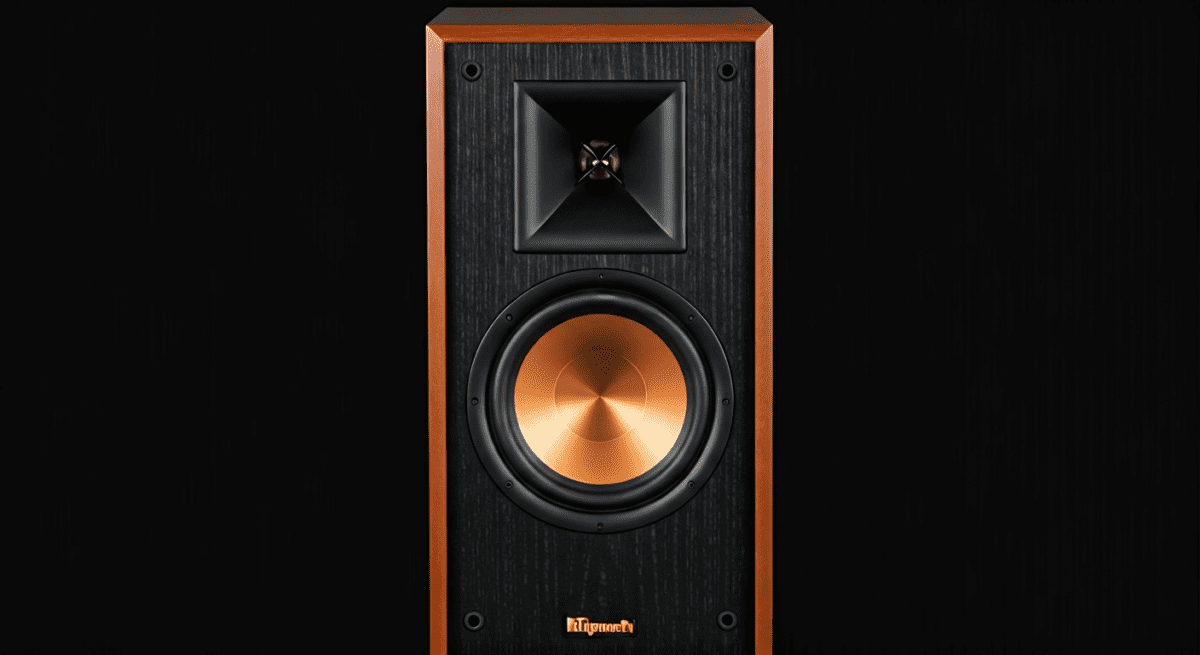
Myth 2: You don’t need a subwoofer.
While the RF7 III goes down to 32Hz, which is deep enough for almost all music, movie lovers may still want a dedicated sub (like the Klipsch RP-1600SW) for the “sub-sonic” rumble found in modern film scores. For 2-channel music, however, these are definitely full-range.
Practical Advice for Potential Buyers
Before you invest in the Klipsch RF7 III, consider your room size. These are massive speakers standing nearly 50 inches tall.
- Small Rooms (< 150 sq ft): These may overwhelm the space with bass. Consider the RF-5 or RP-8000F II instead.
- Large Rooms (> 250 sq ft): This is where the RF7 III dominates. They can fill a high-ceilinged room with ease.
Expert Tip: Always check the serial number plates. The RF7 III is “Hand-built in the USA.” This matters for resale value and long-term durability. The craftsmanship on the real wood veneer is far superior to the vinyl wraps found on lower-tier models.
Frequently Asked Questions (FAQ)
Are Klipsch RF7 speakers considered high-end?
Yes. Within the Klipsch hierarchy, the RF7 III is the flagship of the Reference Premiere line and sits just below the legendary Heritage series. Its components, build quality, and performance metrics place it firmly in the high-end audio category.
Do Klipsch RF7 speakers need a lot of power?
No, they are extremely efficient (100dB sensitivity). However, they are highly “transparent,” meaning they will sound significantly better when paired with high-quality amplification. They prefer quality over quantity.
What is the difference between RF7 II and RF7 III?
The RF7 III features an all-new 1.75-inch titanium compression driver, a new molded rubber Tractrix horn for smoother highs, and a bifurcated cabinet design to improve bass clarity over the older RF7 II.
Can I use Klipsch RF7 III for a home theater?
Absolutely. In fact, many professional home theater installers use the RF7 III behind acoustic screens because of its massive dynamic range and ability to reproduce cinematic “THX” levels without distortion.
Are these speakers good for low-volume listening?
Yes. Because of their high sensitivity, they maintain their detail and “fullness” even at whisper-quiet levels. You won’t feel the need to turn them up just to hear the bass or the vocals.
Final Verdict: If you are asking are klipsch rf7 speakers audiophile, the answer is a resounding yes—provided you appreciate a dynamic, “live” soundstage. They are among the best values in high-end audio, offering a level of scale and excitement that few competitors can match at this price point.









