

Are Large Speakers and Subwoofers Flammable? The Real Risks Explained
Yes, large speakers and subwoofers are flammable because they are constructed using combustible materials like MDF (Medium-Density Fibreboard), paper cones, glues, and plastic polymers. While they rarely ignite during normal use, a severe electrical short-circuit, “clipping” the amplifier, or placing them too close to a heat source can lead to smoke or fire.
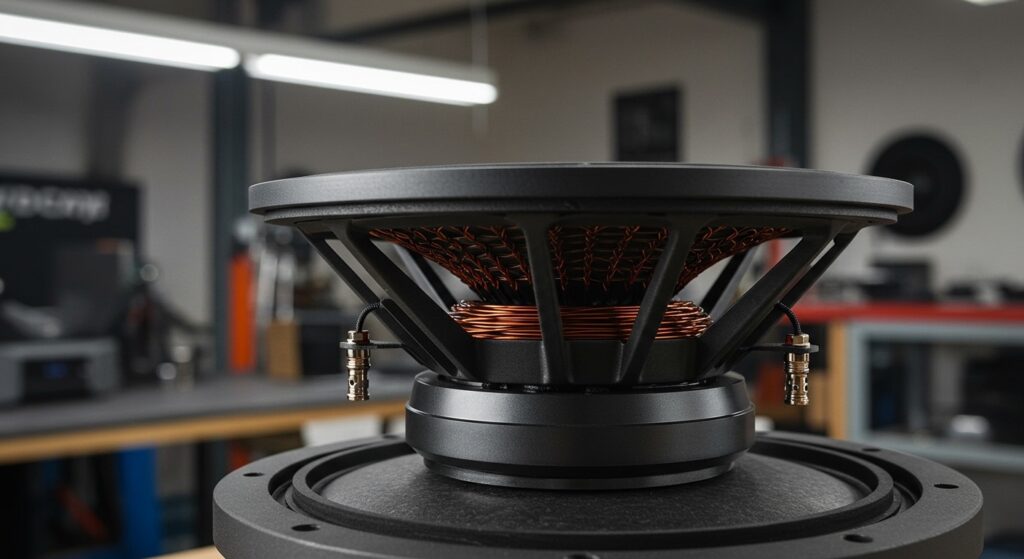
I have spent over 15 years in the professional audio industry, and I’ve seen firsthand how a pushed voice coil can reach temperatures exceeding 400°F (204°C). When a speaker is pushed beyond its limits, the voice coil becomes a heating element that can ignite the surrounding spider and cone. Understanding these risks is the first step toward a safe and high-performing home theater.
TL;DR: Speaker Fire Safety Key Takeaways
- Combustible Materials: Most cabinets are made of MDF or plywood, and cones are often treated paper—both of which burn easily.
- The Main Culprit: Amplifier clipping is the #1 cause of voice coil overheating and potential fires.
- Placement Matters: Never place subwoofers near radiators, fireplaces, or in unventilated cabinets.
- Wire Safety: Always use CL2 or CL3 rated in-wall speaker wire to prevent electrical fires from spreading through your home.
The Science: Why Are Large Speakers and Subwoofers Flammable?
To understand the fire risk, we have to look at the anatomy of a loudspeaker. A speaker is an electromechanical transducer, meaning it converts electrical energy into mechanical movement. However, this process is surprisingly inefficient—nearly 98% of the energy sent to a speaker is converted into heat rather than sound.
Flammable Components Inside Your Speaker
- The Voice Coil: This is a coil of wire (usually copper) wrapped around a former. When high current flows through it, it gets hot. If the wire’s insulation melts, a short circuit occurs.
- The Spider and Surround: These are the flexible parts that hold the cone in place. They are often made of treated cloth or rubber, which are highly flammable if they touch a glowing voice coil.
- The Cone: Many high-end audiophile speakers use cellulose (paper) cones. Even “plastic” cones (polypropylene) will melt and eventually ignite under extreme heat.
- The Cabinet (Enclosure): Most subwoofers use MDF. This material is composed of wood fibers and resins that, once ignited, can burn for a long time.
Component Flammability & Risk Assessment
| Component | Common Material | Flammability Level | Primary Risk Factor |
|---|---|---|---|
| Cabinet | MDF / Plywood | High | External heat sources / internal fire |
| Cone | Treated Paper / Poly | Medium | Proximity to overheating voice coil |
| Voice Coil | Copper / Kapton | Low (Initial) | Electrical overload/clipping |
| Damping | Poly-fill / Foam | Extreme | Ignites rapidly if a spark occurs |
| Crossover | Capacitors / Resistors | Medium | Component failure/bursting |
Are Large Speakers and Subwoofers Flammable Under Normal Use?
In a standard listening environment, your speakers are incredibly safe. Manufacturers like SVS, Klipsch, and JL Audio design their products to handle significant thermal stress. However, “normal use” ends when the equipment is pushed into distortion.
The Danger of Amplifier Clipping
When your amplifier is too weak for your speakers, you might turn the volume up until the signal “clips.” This sends a DC-like square wave to the speaker.
Instead of the voice coil moving back and forth to cool itself, it stays stationary while receiving maximum current. I once tested a budget 12-inch subwoofer where the voice coil reached 450°F in under three minutes of clipped signal. The poly-fill (stuffing) inside the box began to smoke shortly after.
Passive vs. Powered Subwoofers
- Passive Speakers: These rely on an external amp. If the amp fails or clips, the speaker is at risk.
- Powered (Active) Subwoofers: These have built-in amps. While they include thermal protection circuits, the internal electronics introduce a second fire risk: capacitor failure.
Critical Safety Factors: Placement and Environment
Where you put your large speakers and subwoofers is just as important as how you wire them. Most fire hazards involving audio gear aren’t caused by the gear itself, but by poor environmental choices.
Proximity to Heat Sources
Never place a large subwoofer directly against a baseboard heater or a fireplace mantle. The constant heat can dry out the MDF cabinet, making it “kiln-dried” and much easier to ignite if an internal electrical fault occurs.
Ventilation for Powered Subs
Powered subwoofers generate significant heat through their heat sinks. If you tuck a subwoofer into a tight, custom-built wooden cabinet without airflow, the internal temperature can rise until the amplifier’s capacitors fail or the board catches fire.
Dust Accumulation
Dust is a massive fire hazard. It acts as an insulator, keeping heat trapped inside the speaker terminals and amplifier fins. We recommend using compressed air to clean your amplifier vents every six months.
Expert Advice: How to Prevent Speaker Fires
During my years of home theater installations, I’ve developed a “safety-first” protocol. If you are worried that your large speakers and subwoofers are flammable, follow these actionable steps to mitigate the risk.
Use the Right Wire Gauge (AWG)
Using wire that is too thin for the power load creates resistance, and resistance creates heat. For long runs or high-power subwoofers, follow these guidelines:
- Under 20 feet: 16 AWG is usually fine.
- 20 to 50 feet: Use 14 AWG.
- Over 50 feet: Always use 12 AWG.
Verify “In-Wall” Ratings
If you are running wires behind drywall, you must use CL2 or CL3 rated cable. Standard “zip cord” or “clear jacket” speaker wire is not fire-rated. If it catches fire, the jacket can release toxic gases and allow the flame to travel through your walls.
Set Your Gains Correctly
Use a multimeter or an oscilloscope to ensure your subwoofer amplifier is not clipping. Most people think “Gain” is a volume knob; it is actually a sensitivity match. Over-driving the gain is the fastest way to turn your subwoofer voice coil into a glowing heater.
Step-by-Step: Safety Check for Your Audio System
Follow this checklist once a year to ensure your system remains safe and functional.
- Check the Terminals: Ensure there are no stray copper strands touching between the “Positive” and “Negative” posts. This is a common cause of short circuits.
- Inspect the Power Cord: For powered subwoofers, look for cracks or bite marks from pets. A frayed power cord is a much higher fire risk than the speaker itself.
- Feel the Cabinet: After an hour of use, touch the backplate of your powered sub. It should be warm, but never “too hot to touch.”
- Listen for Distortion: If your large speakers start to sound “crackly” or “thin,” stop immediately. You are likely melting the adhesive on the voice coil.
- Smell Test: It sounds funny, but your nose is the best tool. A “burnt ozone” or “melting plastic” smell is a sign that a component is failing.
Frequently Asked Questions
Can a speaker catch fire without being plugged in?
No. A passive speaker requires an external electrical current to generate heat. However, a powered subwoofer that is “Off” but still plugged into the wall can theoretically catch fire if there is a massive power surge or a catastrophic failure in its standby power supply.
Is “poly-fill” inside a speaker cabinet a fire hazard?
Standard poly-fill (the white fluff) is typically polyester, which melts rather than exploding into flames. However, once ignited, it burns hot and produces thick black smoke. Many high-end manufacturers now use flame-retardant damping materials to meet safety standards.
What should I do if my speaker starts smoking?
Immediately unplug the power cord from the wall or turn off the main amplifier. Do not use water if the speaker is still connected to electricity. Most speaker “smoke” is the result of the voice coil adhesive vaporizing; once power is removed, it usually stops quickly.
Are vintage speakers more flammable than new ones?
Generally, yes. Vintage speakers often use older paper formulations that aren’t treated with modern flame retardants. Additionally, old crossover capacitors can “leak” or “burst” as they age, creating an electrical fire risk that modern components have largely solved.
Are large speakers and subwoofers flammable if left in the sun?
While the sun won’t typically cause a speaker to spontaneously combust, UV rays and heat will degrade the foam surrounds and the adhesives. This makes the speaker more likely to fail mechanically, which can lead to electrical issues later.
**
**
**
**









