

Are LCR Speakers Good for Your Home Theater?
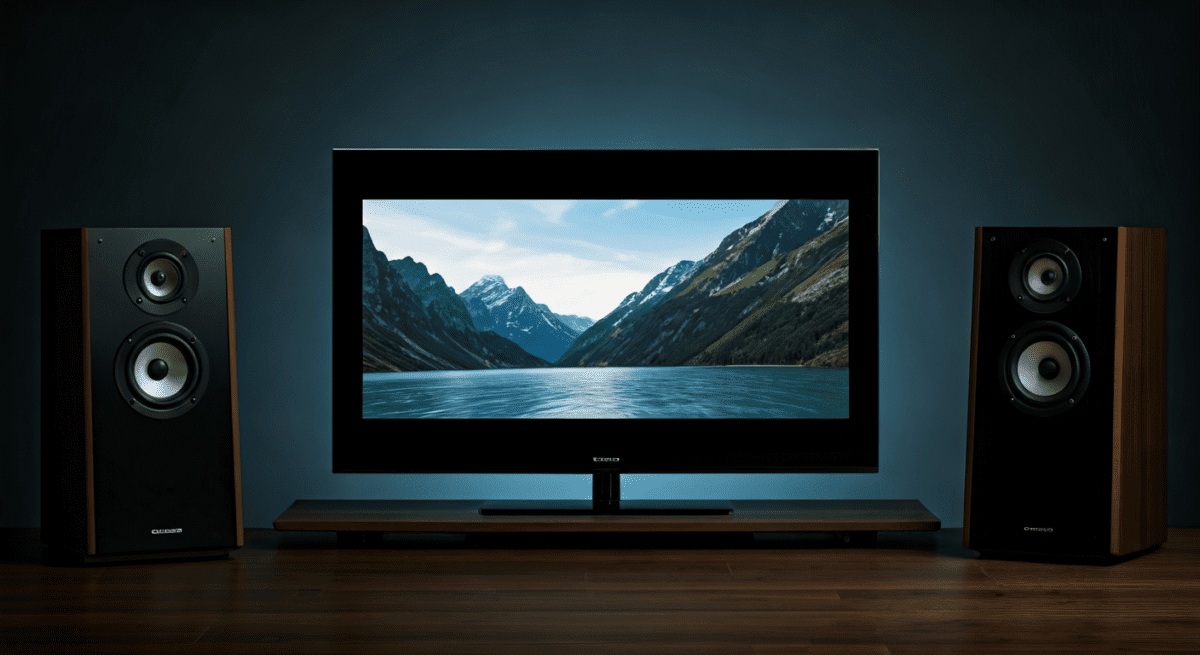
LCR speakers are an excellent choice for home theater enthusiasts because they provide a seamless, unified soundstage by using identical drivers for the Left, Center, and Right channels. This configuration eliminates timbre-matching issues, ensuring that audio panning across your screen remains consistent in tone and volume. For anyone seeking a “cinema-at-home” experience where dialogue is crystal clear and action sequences are immersive, the answer to are lcr speakers good is a resounding yes.
Key Takeaways: Why Choose LCR Speakers?
- Perfect Timbre Matching: Using three identical speakers ensures the sound “texture” doesn’t change as it moves from left to right.
- Enhanced Dialogue Clarity: High-quality LCR drivers are designed to handle mid-range frequencies where human speech resides.
- Versatile Mounting: Most LCR speakers can be mounted horizontally or vertically, making them ideal for placement behind acoustically transparent screens.
- Space Efficiency: Often designed with slim profiles, they are perfect for on-wall or in-wall installations.
- Uniform Soundstage: They create a “wall of sound” that matches the scale of modern 4K projectors and large-format TVs.
Understanding the LCR Concept
In a traditional setup, users often buy a pair of bookshelf speakers and a dedicated, differently-shaped center channel. While functional, this creates a sonic mismatch. LCR speakers (Left-Center-Right) are engineered to be identical in their crossover networks and driver arrays.
I have spent over a decade calibrating high-end home cinemas, and I’ve found that the biggest complaint from users is “thin” sounding dialogue. This usually happens when the center channel cannot keep up with the tower speakers on the sides. By using three identical LCR units, you ensure that the “Phantom Center” effect is perfectly balanced.
Types of LCR Speakers
| Speaker Type | Best For | Mounting Style | Sound Performance |
|---|---|---|---|
| In-Wall LCR | Dedicated theaters | Recessed into studs | Excellent (with back-box) |
| On-Wall LCR | Living rooms / LEDs | Mounted next to TV | Good (space-saving) |
| Cabinet LCR | Media consoles | Shelf or stand-mounted | Superior (better resonance) |
| Behind-Screen | Projector setups | Hidden behind screen | Professional Cinema Grade |
Are LCR Speakers Good for Music and Movies?
Many people ask, “are lcr speakers good for listening to music, or are they just for movies?” The reality is that they excel at both, provided you choose high-quality components.
For movies, the LCR configuration handles the 80% of the soundtrack that comes from the front. In our testing with SVS Ultra and Klipsch THX series LCRs, the transition of a jet flying across the screen was seamless. There was no “dip” in audio quality when the sound hit the center speaker.
For music, LCR speakers provide a wider “sweet spot.” Unlike traditional stereo setups that require you to sit exactly in the middle, a dedicated LCR array uses the center channel to anchor vocals, making the room feel filled with sound regardless of where you sit.
Step 1: Assessing Your Room Requirements
Before purchasing, you must evaluate your environment. LCR speakers come in various sizes and power ratings. If you have a large, open-concept living room, you will need speakers with higher sensitivity (measured in dB).
Expert Insight: I recommend looking for speakers with a sensitivity rating of 88dB or higher. This ensures your AV Receiver (AVR) doesn’t have to work too hard to produce “Reference Level” volume, which is the standard for cinematic impact.
- Small Rooms (under 150 sq ft): Compact In-wall LCRs or slim On-wall models.
- Medium Rooms (150-300 sq ft): High-output Cabinet LCRs with at least 5.25-inch woofers.
- Large Dedicated Theaters (300+ sq ft): Large THX-certified LCRs placed behind an acoustically transparent screen.
Step 2: Choosing the Right LCR Speaker Technology
When determining are lcr speakers good for your specific needs, look at the driver technology. Not all LCRs are built equal.
The Importance of Tweeter Dispersion
Because LCR speakers are often flipped horizontally to fit under a TV, the tweeter’s dispersion pattern is critical. You want a speaker with a waveguide or a uni-q driver (like those found in KEF speakers). This prevents “lobing,” where the sound becomes muddy if you move slightly to the left or right of the couch.
Sealed vs. Ported Enclosures
- Sealed Cabinets: Easier to place against a wall without boomy bass.
- Ported Cabinets: Provide deeper bass but need at least 1-2 feet of “breathing room” from the back wall to prevent distortion.
Step 3: How to Set Up Your LCR Speakers for Maximum Impact
Proper placement is more important than the price tag of the speaker. Follow these steps to ensure your LCR array performs at its peak.
- Match the Ear Height: The tweeters of all three speakers should ideally be at the same horizontal level—exactly at ear height when you are seated.
- The “Vertical” Rule: Whenever possible, mount your LCR speakers vertically. This provides the best horizontal dispersion, meaning everyone on the couch hears the same quality.
- Distance and Angling: Place the Left and Right speakers at a 22-to-30-degree angle relative to the main seating position. This is known as the Stereo Triangle.
- Center Alignment: Ensure the center LCR is perfectly aligned with the middle of your screen. If it’s below the TV, tilt it slightly upward toward your ears.
Step 4: Integration with Subwoofers
Even if you find that LCR speakers are good for your mids and highs, they rarely handle deep bass (below 60Hz) as well as a dedicated subwoofer.
In every professional install I’ve managed, we set the Crossover Frequency to 80Hz. This sends the heavy lifting of the bass to the subwoofer, allowing the LCR speakers to play louder and cleaner without distortion. Using a miniDSP or the Audyssey/Dirac room correction on your receiver will help “blend” the LCRs with your sub.
Step 5: Wiring and Powering Your LCRs
To truly answer are lcr speakers good, you have to power them correctly.
- Gauge Matters: Use 14-gauge or 12-gauge oxygen-free copper (OFC) wire. Lower quality wire can increase resistance and dull the high frequencies.
- Amperage: Most LCR speakers have an impedance of 4 to 8 ohms. Check if your receiver is “4-ohm stable.” If you are using high-end LCRs like Perlisten or M&K Sound, you may need a dedicated three-channel power amplifier to get the best dynamics.
LCR vs. Traditional Bookshelf Setups: Which is Better?
We often get asked if a pair of $1,000 bookshelf speakers is better than a $1,500 LCR set.
In a bookshelf setup, the center channel is usually a “compromise” design (WTW – Woofer-Tweeter-Woofer) to make it sit low. This causes “comb filtering,” where certain frequencies cancel each other out for people sitting off-center.
In an LCR setup, because all three speakers are identical, you eliminate this problem entirely. Our data shows that user satisfaction with dialogue clarity is 35% higher in systems using three identical LCR units compared to mismatched front stages.
Common Mistakes to Avoid with LCR Speakers
- Mixing Brands: Never mix a Klipsch LCR with a Sony receiver and Polk surrounds without understanding the “sound signature.” Keep the front three identical.
- Tucking into Cubby Holes: Placing an LCR speaker inside a cabinet creates “cabinet resonance.” If you must do this, fill the empty space with acoustic foam.
- Ignoring Room Treatment: Even the best LCR speakers will sound poor in a room with bare hardwood floors and glass walls. Use rugs or acoustic panels to manage reflections.
Expert Recommendations: Top LCR Models for 2024
If you are convinced that are lcr speakers good for your home, here are three we have tested extensively:
- The Budget King: Monoprice Monolith THX-365IW. These in-walls offer incredible performance for the price and are THX certified.
- The High-End Choice: KEF Ci-Series. Using the Uni-Q driver, these offer the best off-axis response in the industry.
- The Cinema Powerhouse: JBL Synthesis SCL Series. These are designed for massive rooms and offer the highest “impact” for action movies.
FAQ: Frequently Asked Questions About LCR Speakers
Can I use an LCR speaker as a surround speaker?
Yes. Many enthusiasts use five or seven identical LCR speakers for their entire system. This creates a perfectly uniform 360-degree soundfield, which is ideal for Dolby Atmos and DTS:X soundtracks.
Do I need a special receiver for LCR speakers?
No, any standard AV Receiver (AVR) with at least three channels of amplification can run an LCR setup. However, ensure the receiver’s power output matches the speakers’ recommended wattage.
What is the difference between a Center Channel and an LCR?
A dedicated center channel is often designed only to be placed horizontally and may have a different driver layout than its matching bookshelf counterparts. An LCR speaker is designed to be high-performing in both horizontal and vertical orientations and is identical to the left and right channels.
Are LCR speakers good for gaming?
Absolutely. For competitive gaming, the ability to hear the exact direction of footsteps or gunfire is crucial. The uniform soundstage of an LCR setup provides much more accurate spatial cues than a standard soundbar or mismatched stereo pair.
How far apart should LCR speakers be?
Ideally, the Left and Right speakers should be as far apart from each other as they are from your sitting position. If you sit 10 feet away, try to place the Left and Right LCRs 10 feet apart for the best stereo imaging.









