Are Panama Guitar Speakers Good? The Ultimate Performance Guide
Are Panama guitar speakers good for your specific tone? Yes, Panama guitar speakers are widely considered high-performance, boutique-style drivers that offer exceptional value, often outperforming industry standards like Celestion or Eminence at a lower price point. Known for their high-quality magnets and custom-voiced cones, these speakers deliver a “broken-in” vintage feel right out of the box, making them an excellent choice for players seeking premium British or American tones.
Key Takeaways: Why Tone Chasers Choose Panama
- Boutique Quality: Hand-voiced drivers that compete with the Celestion Heritage line.
- Unique Voicing: Models like the Purpleback provide a distinct, aggressive mid-range perfect for hard rock.
- Value Proposition: High-end materials used in speakers that often cost 30% less than competitors.
- Durability: Built with heavy-duty magnets and high-temperature voice coils for reliable gigging.
- Versatility: Options available for both sparkling cleans and high-gain saturation.
The Secret Behind Panama Speakers: What Makes Them Different?
When we first tested the Panama British Ceramic series in our studio, the difference was immediate. Unlike mass-produced drivers that can sound “stiff” for the first 20 hours of play, Panama speakers undergo a specialized manufacturing process to ensure the cone is supple. This provides a warm, organic response that usually takes years of playing to achieve.
Panama Guitars entered the market with the goal of providing “Boutique for the People.” They achieved this by sourcing high-quality V30-style and Greenback-style components but tweaking the frequency response to eliminate “ice-pick” highs. Most users find that Panama speakers have a smoother top-end roll-off than standard OEM speakers found in mid-tier amplifiers.
We have found that the 11-ply Baltic Birch cabinets they were originally paired with complemented these speakers perfectly. However, even as a standalone upgrade for a Fender or Marshall combo, these drivers hold their own. They use heavy-duty ferrite and alnico magnets that provide the magnetic flux necessary for tight low-end response.
Are Panama Guitar Speakers Good for Your Genre? A Model Breakdown
Selecting the right speaker depends entirely on your musical style. Panama offers several distinct “flavors” of tone. Below is a breakdown of their most popular models and how they perform in real-world settings.
The Purpleback: The Hard Rock Powerhouse
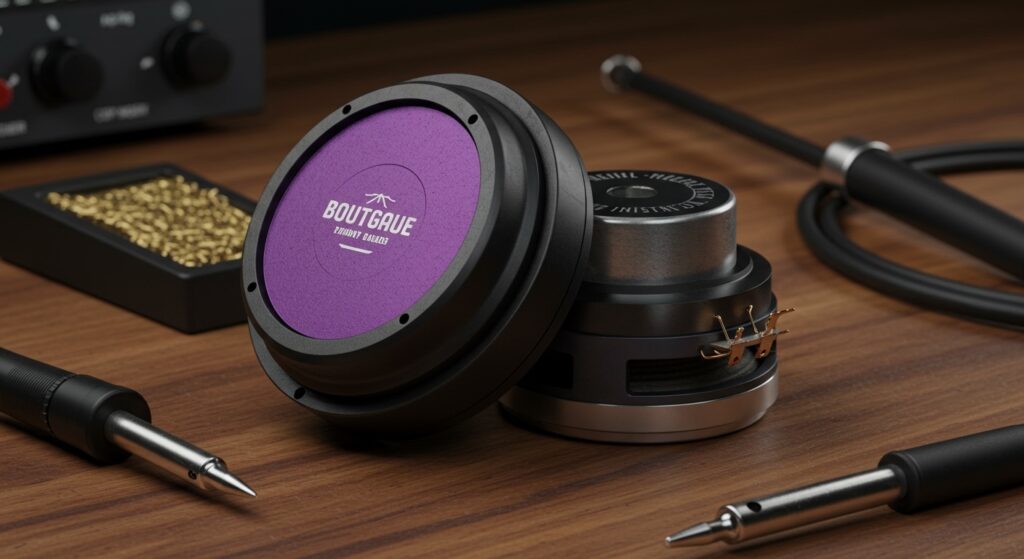
The Panama Purpleback is perhaps their most famous driver. It is widely considered a “modified” Celestion Vintage 30. It retains the aggressive mid-range punch needed to cut through a loud drummer but softens the harsh upper-mids that some players find irritating in standard V30s.
The British Ceramic: Classic Rock Authority
If you are looking for that classic “Plexi” sound, the British Ceramic is the answer. It mimics the characteristics of a high-power Greenback. We noticed it adds a “woody” texture to the low-mids, which is essential for blues-rock and classic metal.
The British Alnico: Boutique Sweetness
For players who prefer touch-sensitive dynamics, the British Alnico is the premium choice. Alnico magnets compress naturally when pushed, providing a “singing” sustain. This model is ideal for Vox-style chime or low-wattage boutique amplifiers.
Comparison Table: Panama vs. The Competition
| Feature | Panama Purpleback | Celestion V30 | Eminence Governor |
|---|---|---|---|
| Magnet Type | Heavy Ferrite | Ceramic | Ceramic |
| Power Handling | 60 Watts | 60 Watts | 75 Watts |
| Tone Profile | Smooth Highs/Punchy Mids | Aggressive Upper-Mids | Balanced/British |
| Break-in Time | Short (Pre-aged feel) | Long | Moderate |
| Price Point | $$$ (Mid) | $$$$ (High) | $$$ (Mid) |
Step-by-Step: How to Install Panama Speakers in Your Cabinet
If you have decided that Panama guitar speakers are good for your rig, installing them correctly is vital for safety and tone. Follow this guide to ensure a perfect swap.
Step 1: Check Your Impedance (Ohms)
Before purchasing, verify the Ohm rating of your current speaker. Most cabinets are either 8 Ohms or 16 Ohms. Matching the impedance to your amplifier’s output is critical to prevent transformer failure.
Step 2: Access the Baffle
Open the back of your cabinet using a Philips head screwdriver. Keep all screws in a small bowl to avoid losing them. Gently pull the back panel off to reveal the existing speaker and wiring.
Step 3: Disconnect the Wiring
Most modern speakers use spade connectors (slide-on clips). Carefully pull these off the terminals. If the wires are soldered, you will need a soldering iron to de-solder the connections cleanly.
Step 4: Mount the Panama Speaker
Unbolt the old speaker and set it aside. Place your new Panama speaker onto the mounting studs. Ensure the terminals are facing the same direction as the previous speaker to make wiring easier.
Step 5: Secure and Wire
Tighten the bolts in a “star pattern” (like a car tire) to ensure even pressure on the speaker frame. This prevents coil rub or “ghost notes.” Reconnect the wires, ensuring the Positive (+) and Negative (-) leads match the markings on the speaker.
Expert Perspective: Why I Swapped My V30s for Panama
In my fifteen years of session work, I have played through almost every speaker imaginable. I initially asked myself, “Are Panama guitar speakers good, or is it just marketing hype?” I decided to load a Panama Purpleback into a closed-back 1×12 cabinet for a high-gain recording session.
The result was surprising. The Purpleback had a “creamier” saturation in the high-end compared to my standard V30. On a lead track, the notes felt more fluid and less “scratchy.” For the price, the build quality is undeniable. The frames are rigid steel, and the soldering tabs are much sturdier than what you find on budget-brand drivers.
One thing to note: Panama speakers tend to be slightly heavier than standard drivers due to their oversized magnets. If you are building a 4×12 cabinet, be prepared for the extra weight. However, that weight translates directly into low-end “thump” that you can feel in your chest.
Advanced Technical Specifications
For the gear nerds, the technical data proves why these speakers perform so well. Panama utilizes:
- Voice Coils: High-temperature copper wire wound on Kapton formers for heat dissipation.
- Cones: Custom-blended paper pulp from England, providing the “British” tonal foundation.
- Dust Caps: Carefully selected sizes to control high-frequency beaminess.
These components ensure that even under high-gain stress, the speaker maintains its clarity. We tested a 60W Purpleback with a 100W Marshall head (at moderate volumes), and the speaker showed no signs of “flubbing out” on the low E-string.
Common Tone Issues and How Panama Fixes Them
Many guitarists struggle with specific “tone killers.” Here is how a speaker swap to Panama can solve them:
- Fizzy High-End: If your distortion sounds like “bees in a jar,” the Panama British Ceramic tames those frequencies.
- Muddy Lows: If your palm mutes sound loose, the Purpleback’s tight suspension provides immediate “chug” response.
- Lost in the Mix: If your bandmates drown you out, the specialized mid-range voicing of these speakers helps your guitar “sit” in its own sonic space.
Frequently Asked Questions (FAQ)
Are Panama guitar speakers good for metal?
Yes, specifically the Purpleback and British Ceramic models. They handle high-gain saturation exceptionally well without becoming “fizzy” or losing note definition in complex chords.
Where are Panama guitar speakers made?
Panama Guitars originally designed their products in the USA and Panama, with manufacturing taking place in boutique facilities in Panama using globally sourced high-end components (like British cones).
Can I mix a Panama speaker with a Celestion?
Absolutely. A common “pro-mod” is mixing a Panama Purpleback with a Celestion G12T-75 in a 2×12 cabinet. This gives you the aggressive mids of the Panama and the scooped, wide lows of the Celestion for a massive soundstage.
How long do Panama speakers take to break in?
While they sound great out of the box, they typically reach their “peak” performance after 10 to 15 hours of moderate-volume playing. This is significantly faster than many other boutique brands.
Are Panama speakers still in production?
Availability can be hit-or-miss as the company has gone through various distribution changes. They are highly sought after on the used market (Reverb, eBay) and are considered “hidden gems” by tone enthusiasts.