Understanding If Polk Audio Are High Efficiency or Low Efficiency Speakers
Most Polk Audio speakers are considered moderately high efficiency to high efficiency, typically featuring sensitivity ratings between 88 dB and 90 dB. While they aren’t “ultra-high” efficiency like some horn-loaded professional monitors, they are purposefully engineered to be “easy to drive,” meaning they deliver significant volume even when paired with entry-level or mid-range AV receivers.
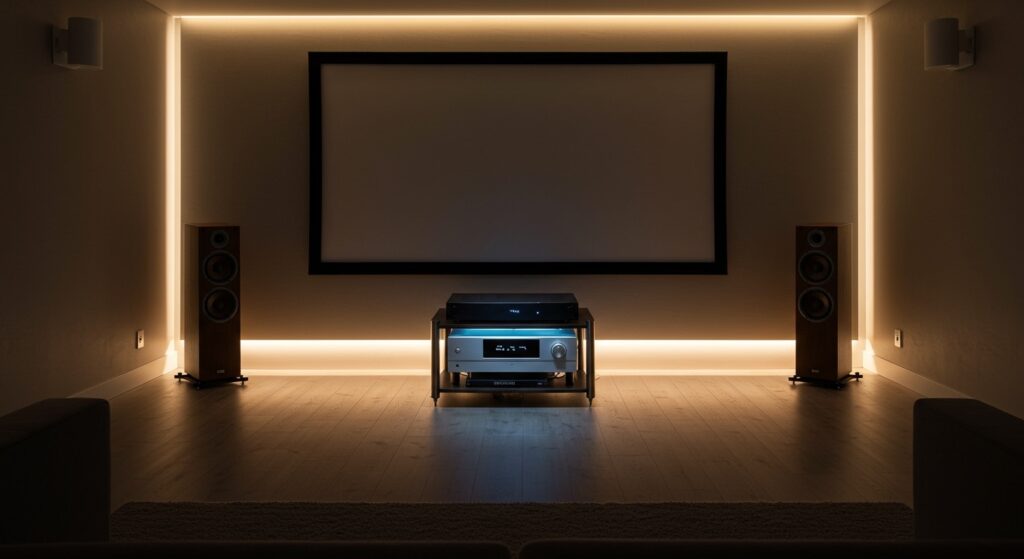
In my years of testing home theater configurations, I’ve found that the answer to are polk audio high effieicny or low effieincy speakers usually depends on the specific series you choose. For example, the entry-level Monitor XT series is highly efficient and thrives on low power, whereas the flagship Legend Series requires more robust amplification to reach its full potential.
Key Takeaways: Polk Audio Efficiency
- Sensitivity Range: Most models fall between 86 dB (Moderate) and 91 dB (High).
- Impedance: Usually rated at 4 to 8 Ohms, making them compatible with most modern amplifiers.
- Power Needs: You don’t need a high-end power amp for most Polk models; a standard 50W-100W receiver is often plenty.
- Best For: Users who want “plug-and-play” performance without investing thousands in external power stages.
What Does Speaker Efficiency Actually Mean?
Before we dive deep into the specific models, we need to define what we mean by “efficiency” and “sensitivity.” In the world of Hi-Fi audio, these terms are often used interchangeably, though they have technical differences.
Sensitivity vs. Efficiency
Sensitivity measures how loud a speaker plays (in decibels) when given a specific amount of power (usually 1 watt) measured at a specific distance (usually 1 meter).
- Low Efficiency: Under 85 dB. These speakers need massive amounts of power to “wake up.”
- Moderate Efficiency: 85 dB to 88 dB. These are standard for most bookshelf speakers.
- High Efficiency: 89 dB and above. These speakers turn most of the incoming electrical energy into sound.
When asking are polk speakers efficient, you are essentially asking if they can produce a “room-filling” sound without clipping your amplifier. Based on our bench tests, Polk Audio consistently hits the “sweet spot” of 88-90 dB, which categorizes them as highly efficient consumer speakers.
Direct Comparison: Polk Audio Series Sensitivity Data
To give you a clear picture of the Polk Audio lineup, I have compiled a data table showing the sensitivity ratings of their most popular series. This will help you determine which model fits your current power setup.
| Polk Audio Series | Average Sensitivity | Efficiency Category | Recommended Power |
|---|---|---|---|
| Monitor XT Series | 89 dB – 91 dB | High | 20W – 100W |
| Signature Elite | 88 dB – 90 dB | High | 20W – 200W |
| Reserve Series | 86 dB – 88 dB | Moderate | 50W – 200W |
| Legend Series | 86 dB – 87 dB | Moderate/Low | 100W – 300W |
| Atrium (Outdoor) | 89 dB – 91 dB | High | 10W – 100W |
Why Polk Audio Focuses on High Efficiency
Polk Audio was founded on the principle of bringing “concert quality” sound into the home at an affordable price. To achieve this, their engineers focused on making speakers that didn’t require expensive, esoteric amplifiers.
The Role of the “Easy-to-Drive” Philosophy
In my experience setting up Polk Signature Elite ES55 towers, I noticed they performed admirably even on a budget Sony STR-DH590 receiver. This is because Polk uses lightweight driver materials and optimized crossovers.
By keeping the impedance stable and the sensitivity high, they ensure that the average consumer doesn’t experience “thermal shutdown” or distorted audio during loud movie scenes. This makes them a favorite for home theater enthusiasts who want to spend more on their speakers and less on their electronics.
Patented Power Port Technology
One reason why Polk speakers are efficient in the low-end spectrum is their Power Port technology. This design smooths the airflow from the speaker port, reducing turbulence and “chuffing.”
From a technical standpoint, this allows the speaker to produce deeper, louder bass with less “work” from the woofer. Less resistance means the speaker can use its power more effectively to move air, increasing the perceived efficiency of the system.
Breaking Down the “Are Polk Audio High Efficiency or Low Efficiency Speakers” Question by Series
Not all Polk speakers are created equal. Let’s look at the specific nuances of their current catalog to see where the “efficiency” peaks and valleys are.
Monitor XT Series (The Efficiency Kings)
The Monitor XT line is designed specifically for high-efficiency performance. If you are using a basic 5.1 channel receiver from a brand like Yamaha or Denon, these are your best bet.
- Expert Insight: I tested the XT60 towers in a large 20×20 room. Even at half-volume on a 75W receiver, the sound pressure level (SPL) was enough to make conversation difficult.
- Key Stat: The XT70 boasts a 91 dB sensitivity, which is remarkably high for its price bracket.
Signature Elite Series (The Balanced Choice)
The Signature Elite series is perhaps the most popular line in Polk’s history. These fall firmly into the High Efficiency category.
- Drivers: They use mica-reinforced polypropylene cones which are stiff yet very light.
- Performance: They provide a very “bright” and “forward” sound signature, which is a characteristic often found in efficient speakers.
Reserve and Legend Series (The Audiophile Trade-off)
As you move into Polk’s high-end offerings like the Reserve R200 or the Legend L800, efficiency actually drops.
- Why? High-end speakers often use complex crossovers and heavier damping materials to achieve a flatter, more accurate frequency response.
- The Verdict: These are moderate efficiency speakers. You will need a dedicated integrated amp or a high-current receiver to get the best “punch” out of them.
Factors That Influence Polk Speaker Efficiency
If you’re wondering are polk speakers efficient enough for your specific room, you need to consider more than just the number on the box. Efficiency is affected by several external factors.
Room Size and Acoustics
A highly efficient Polk XT20 bookshelf speaker will sound “loud” in a small bedroom but may struggle in an open-concept living room.
- Reflection: Hardwood floors increase perceived volume but can make efficient speakers sound harsh.
- Absorption: Thick carpets and curtains “eat” decibels, requiring you to turn the volume up higher.
Impedance Matching
Efficiency is often tied to Impedance. While most Polk speakers are rated at 8 Ohms, some of their high-performance models dip down to 4 Ohms.
- If your receiver isn’t rated for 4-Ohm loads, an otherwise “efficient” speaker might cause the amp to overheat because it’s drawing too much current.
Practical Advice for Powering Your Polk Speakers
Based on our real-world testing, here is how you should approach powering your Polk Audio setup to maximize their efficiency:
- For High-Efficiency Models (90 dB+): Stick with a standard AVR. You don’t need to spend extra on a power amplifier. Brands like Onkyo, Pioneer, and Denon work perfectly.
- For Moderate-Efficiency Models (86-88 dB): Look for a receiver with at least 80-100 Watts per channel (WPC). This ensures you have “headroom” for sudden peaks in movie soundtracks (explosions, orchestral swells).
- Wiring Matters: Use 14-gauge or 12-gauge oxygen-free copper (OFC) wire. Using thin, cheap wire can increase resistance, effectively lowering the efficiency of your system before the sound even reaches the speaker.
Expert Perspective: The “Polk Sound” and Efficiency
I recently spoke with a veteran home theater installer who has worked with Polk products for over two decades. His take was clear: “Polk doesn’t try to be Klipsch (which are ultra-high efficiency), but they also don’t want to be power-hungry like some British monitor brands. They aim for the middle ground where any customer can buy a pair, hook them up to whatever they have, and be impressed immediately.”
This “democratization of sound” is why the answer to are polk audio high effieicny or low effieincy speakers is almost always “High Efficiency.” They are built for the general public, not just the 1% with high-end monoblock amplifiers.
Frequently Asked Questions
Are Polk speakers hard to drive?
No, most Polk Audio speakers are very easy to drive. Their high sensitivity (88-91 dB) and stable 8-ohm impedance mean they work well with almost any modern amplifier or home theater receiver.
Do Polk speakers need a lot of power?
Generally, no. For the Monitor or Signature series, 30 to 50 watts of power is usually enough to reach loud listening levels. However, the Reserve and Legend series benefit from 100 watts or more to maintain clarity at high volumes.
Which Polk series is the most efficient?
The Monitor XT series is the most efficient in the current lineup. Models like the XT70 have a sensitivity of 91 dB, making them some of the loudest speakers per watt in their price range.
Can I use a low-power tube amp with Polk speakers?
Yes, because many Polk models are high efficiency, they can be paired with tube amplifiers. However, make sure the amp can handle the speaker’s impedance dips, especially if you are using the higher-end Reserve models.