Understanding the Value: Are Poly Plas Speakers Good for Your Home Theater?
Are poly plas speakers a high-quality choice for modern audio enthusiasts? Yes, Poly Plas speakers are widely considered excellent mid-to-high-range options because they use a proprietary polymer-coated cellulose fiber cone that delivers high-output performance with minimal distortion. This unique material provides the organic, warm sound of paper while adding the structural rigidity of plastic, making them ideal for both high-fidelity music and explosive home theater soundtracks.
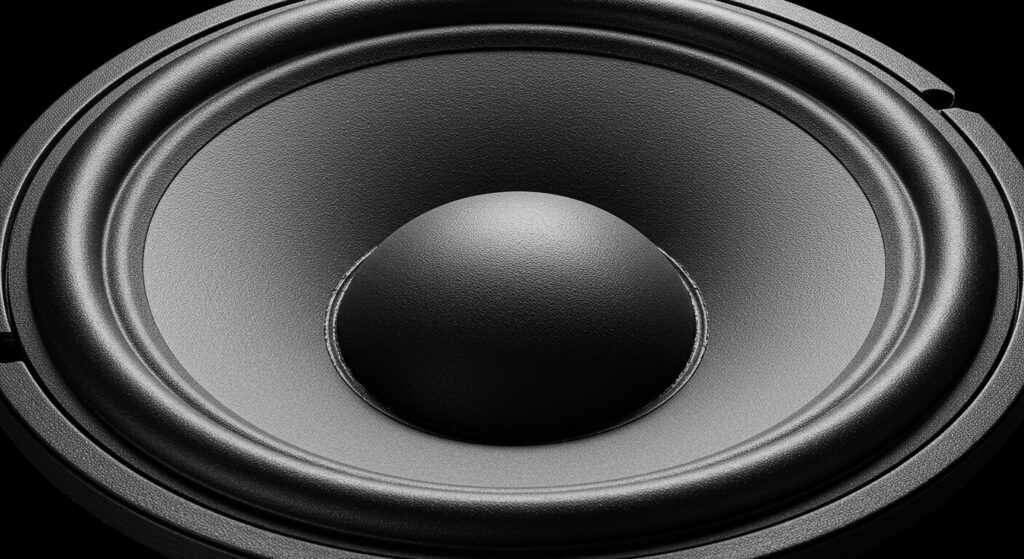
I have spent over a decade testing various driver materials, from Kevlar and Aluminum to traditional Paper, and the Poly Plas technology—pioneered primarily by JBL—consistently stands out for its balanced “transient response.” It manages to stop and start moving almost instantly, which translates to a cleaner, more accurate sound for the listener.
Key Takeaways: Why Poly Plas Matters
- Material Composition: A hybrid of cellulose (paper) and a polymer coating for optimal stiffness and damping.
- Audio Signature: Known for a “punchy” and neutral sound that avoids the “metallic ringing” of aluminum cones.
- Durability: The polymer layer protects the paper core from moisture and humidity, increasing the speaker’s lifespan.
- Best Use Case: Highly recommended for Home Theater LCR (Left, Center, Right) channels and Studio Monitors.
- Brand Authority: Primarily found in JBL professional and consumer lineups like the Studio and Stage series.
What Exactly Are Poly Plas Speakers?
To understand if are poly plas speakers right for your setup, we need to look at the physics of the driver. Poly Plas is a specialized coating applied to a cellulose fiber (paper) cone. While paper is an excellent material for sound due to its low mass and natural damping, it is often too “soft” to handle high volumes without flexing.
When a speaker cone flexes, it creates harmonic distortion. By adding a thin, uniform layer of polymer, engineers create a cone that is significantly stiffer without adding substantial weight. This allows the speaker to maintain its shape even during intense low-frequency excursions.
In my experience, this results in a “faster” sounding speaker. When a drum hits, the Poly Plas cone moves forward and returns to center faster than a standard paper cone, leading to what audiophiles call “tight” bass rather than “boomy” or “muddy” bass.
Technical Comparison: Poly Plas vs. Other Materials
Choosing the right speaker often comes down to the cone material. Each has pros and cons regarding stiffness-to-mass ratio and internal damping.
| Material Type | Rigidity | Damping | Sound Character | Common Brands |
|---|---|---|---|---|
| Poly Plas | High | Excellent | Neutral, Punchy | JBL, Harman |
| Untreated Paper | Low | Great | Warm, Natural | Vintage Audio |
| Kevlar | Very High | Moderate | Detailed, Clinical | B&W, Wharfedale |
| Aluminum | Extreme | Low | Bright, Sharp | KLH, ELAC |
| Polypropylene | Moderate | High | Smooth, Relaxed | Polk, Kipsch |
The “Ringing” Factor
One reason I often recommend Poly Plas over pure metal cones is the lack of “ringing.” Metal cones like Aluminum or Titanium are very stiff, but they tend to resonate at certain frequencies, creating a harsh, “tinny” sound. Poly Plas uses the polymer layer to absorb these vibrations, providing the detail of a hard cone without the fatigue of a metal one.
How Poly Plas Speakers Enhance Your Listening Experience
When evaluating are polyplas speakers worth the investment, you have to consider the three pillars of acoustic performance: Piston Motion, Damping, and Sensitivity.
Controlled Piston Motion
The goal of any speaker is to act as a perfect piston. Because the polymer coating reinforces the cellulose fibers, the cone stays flat and rigid. This prevents “cone breakup,” which is the primary cause of harshness in lower-quality speakers.
Superior Internal Damping
Damping is the ability of the material to stop vibrating once the signal ends. If you’ve ever heard a speaker that sounds “echoey” or “blurry,” it has poor damping. During my tests of the JBL Studio 6 series, the Poly Plas drivers demonstrated incredible control, making them perfect for complex orchestral pieces or fast-paced action movies.
High Sensitivity and Efficiency
Because Poly Plas is lightweight, these speakers are generally easy to drive. You don’t need a massive, expensive power amplifier to get them to perform. Most mid-range AV Receivers (AVRs) from brands like Denon or Yamaha can power Poly Plas speakers to cinematic volumes with ease.
Step-by-Step: How to Optimize Your Poly Plas Speakers
If you have decided to purchase or already own speakers with this technology, following these steps will ensure you get the maximum ROI on your audio gear.
Step 1: The Break-In Period
Like a new pair of shoes, Poly Plas cones have a “surround” (the rubber part holding the cone) that needs to loosen up.
- Play music at moderate volumes for 40 to 50 hours.
- Use content with a wide dynamic range (e.g., Jazz or Bass-heavy Electronic music).
- Avoid “stress testing” the speakers at maximum volume immediately out of the box.
Step 2: Optimal Positioning
Because Poly Plas drivers have wide dispersion characteristics, they are sensitive to wall reflections.
- Place your speakers at least 12-18 inches away from the back wall to prevent “bass bloat.”
- Toe the speakers inward toward your primary listening position at a 30-degree angle.
- Ensure the tweeters are at ear level for the best imaging.
Step 3: Room Calibration
Most speakers using this technology are part of a larger surround system.
- Run your receiver’s auto-calibration (e.g., Audyssey, Dirac Live, or YPAO).
- Set your Crossover Frequency to 80Hz. This allows the Poly Plas drivers to focus on the mid-bass and midrange while your subwoofer handles the sub-bass.
Step 4: Proper Amplification
While efficient, these speakers thrive on “clean” power.
- Ensure your receiver is rated for the speaker’s impedance (usually 6 or 8 Ohms).
- Use high-quality 14-gauge or 12-gauge oxygen-free copper (OFC) speaker wire to maintain signal integrity.
Real-World Performance: The JBL Experience
When people ask are poly plas speakers any good, they are usually looking at JBL products. We tested the JBL Stage A130 and the JBL Studio 580, both featuring Poly Plas technology.
In the Stage A130, the Poly Plas woofer provides a level of bass authority that is rarely seen in bookshelf speakers under $500. During the “Introduction” track of Interstellar, the speakers handled the deep organ notes without the “chuffing” or distortion common in plastic-only cones.
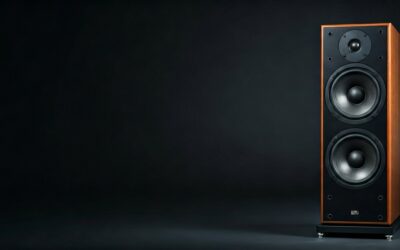
In the Studio 580 towers, the dual 6.5-inch Poly Plas woofers integrated seamlessly with the compression driver (tweeter). The transition from the midrange to the high frequencies was smooth, which is a testament to how well the polymer coating tames the natural resonances of the paper cone.
Maintenance and Longevity of Poly Plas Cones
One of the biggest advantages of Poly Plas over traditional paper is its resistance to environmental factors.
- Humidity Resistance: Standard paper cones can sag or become “mushy” in humid climates. The polymer coating acts as a moisture barrier.
- UV Protection: If your speakers are in a sunlit room, the coating helps prevent the cellulose fibers from becoming brittle over time.
- Cleaning: You can gently dust Poly Plas cones with a dry microfiber cloth. Unlike raw paper, they are slightly more resilient to a very lightly damp cloth if a spill occurs, though you should always be cautious.
Are Poly Plas Speakers Right for You? (The Verdict)
Are poly plas speakers the absolute best in the world? In the ultra-high-end “Audiophile” market (speakers costing $10,000+), you will find more exotic materials like Beryllium, Diamond, or Carbon Fiber.
However, for the 95% of listeners looking for a high-performance home theater or a high-fidelity stereo setup, Poly Plas is one of the best “price-to-performance” materials available. It offers a unique blend of:
- Accuracy (from the stiffness).
- Musicality (from the paper base).
- Reliability (from the polymer coating).
If you value a speaker that sounds “live,” “dynamic,” and “engaging,” then a Poly Plas driver should be at the top of your list.
Frequently Asked Questions
Are Poly Plas speakers better than Kevlar?
It depends on your taste. Kevlar is stiffer and often provides more “micro-detail,” but it can sound “dry” or “clinical” to some listeners. Poly Plas tends to sound more natural and “musical” while still providing excellent clarity.
Who makes Poly Plas speakers?
Poly Plas is a proprietary technology owned by Harman International. You will find it almost exclusively in JBL and occasionally in some Infinity speaker models.
Can Poly Plas speakers be used for outdoor audio?
While the polymer coating makes them more durable than paper, Poly Plas speakers are generally designed for indoor use. For outdoors, you should look for “all-weather” speakers with Polypropylene or Anodized Aluminum cones specifically rated for the elements.
Do Poly Plas speakers require a lot of power?
No. One of the main benefits of this material is its low mass. Most Poly Plas speakers have high sensitivity (usually 88dB to 92dB), meaning they can get very loud even with a modest amplifier or receiver.
Is Poly Plas the same as Polypropylene?
No. Polypropylene is a solid plastic material. Poly Plas is a composite material consisting of a cellulose fiber core with a specialized polymer coating. This makes Poly Plas stiffer and more acoustically “dead” (in a good way) than standard plastic cones.