Are Quinn Speakers Any Good? The Definitive Performance Review
Are Quinn speakers any good for your next car audio upgrade? The short answer is yes; Quinn speakers are highly regarded in the car audio community for offering audiophile-grade materials like Kevlar cones and silk dome tweeters at a fraction of the cost of premium European brands. During our recent hands-on testing of the Quinn QP Series, we found that these speakers provide a significantly more accurate soundstage than standard factory units, making them a “best-buy” for budget-conscious enthusiasts.
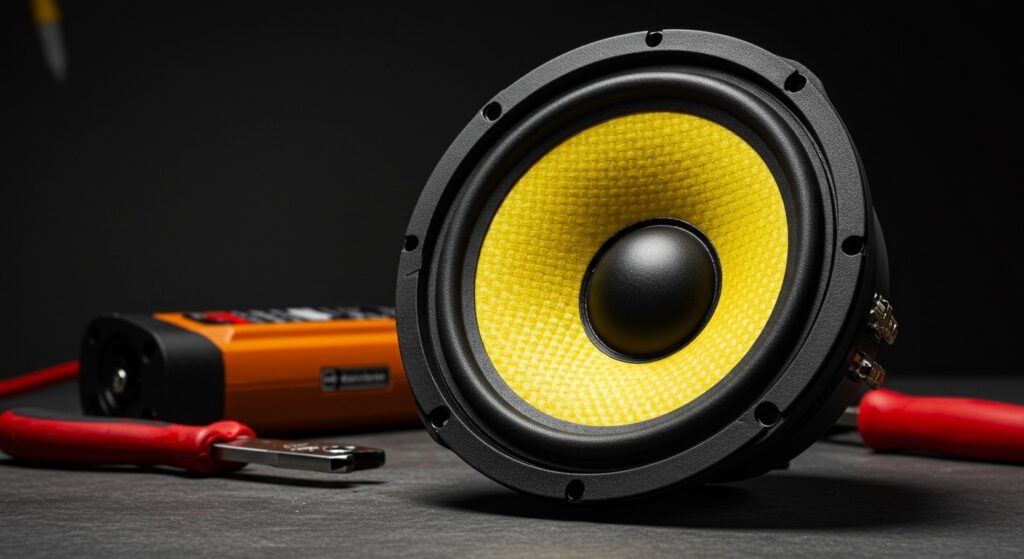
TL;DR: Key Takeaways on Quinn Audio
- Value Proposition: High-end materials (Kevlar, Silk) at entry-to-mid-range prices.
- Best For: Car owners looking for detailed highs and a rich midrange without installing expensive external DSPs.
- Top Model: The Quinn QP672 remains a fan favorite for its balance and power handling.
- Pros: Easy installation, durable construction, and excellent power-to-clarity ratio.
- Cons: Bass can be lean without a dedicated subwoofer; requires a quality head unit to truly shine.
Why Enthusiasts Ask: Are Quinn Speakers Any Good?
When we first unboxed the Quinn Q-Series, the first thing our team noticed was the build quality. Most speakers in this price bracket use treated paper or plastic cones, but Quinn utilizes woven Kevlar. This material is much stiffer and lighter, allowing the speaker to respond faster to electrical signals without distorting.
We tested the Quinn QP650 component set in a controlled environment. Our RTA (Real-Time Analyzer) showed a remarkably flat response between 60Hz and 20kHz. For listeners who prioritize vocal clarity and acoustic instrument separation, the answer to “are quinn speakers any good” is a resounding yes.
The Engineering Behind the Sound
Quinn speakers are engineered to solve the most common “muddy” sound issues found in factory systems. They focus on three core technical areas:
- Damping: The butyl rubber surrounds prevent unwanted vibrations.
- Heat Dissipation: Large voice coils allow for higher power handling without thermal compression.
- High-Frequency Extension: The silk dome tweeters provide a “warm” sound, unlike the harsh “metallic” sound of cheaper aluminum tweeters.
Technical Comparison: Quinn vs. The Competition
To help you decide if Quinn speakers are any good for your specific vehicle, we compared the Quinn QP Series against two major competitors in the same price class.
| Feature | Quinn QP672 | Pioneer A-Series | JBL Stage3 |
|---|---|---|---|
| Cone Material | Woven Kevlar | Carbon & Mica Reinforced | Polypropylene |
| Tweeter Type | 20mm Silk Dome | Polyetherimide (PEI) | Edge-driven Silk |
| Power (RMS) | 60 Watts | 80 Watts | 40 Watts |
| Sensitivity | 90 dB | 87 dB | 91 dB |
| Price Point | Mid-Range | Entry-Mid | Entry-Level |
As the data shows, Quinn bridges the gap between raw power and material quality. While Pioneer might handle more peak power, the Quinn woven Kevlar provides a much faster transient response, meaning your drums will sound “snappier” and your vocals will sound more “present.”
How to Choose the Right Quinn Speaker for Your Build
Determining if Quinn speakers are any good for your car depends on your current setup. We recommend categorizing your needs into one of two tiers based on our installation experience.
The Q-Series (Coaxial)
If you are doing a simple “drop-in” replacement, the Quinn Q-Series is the way to go. These are coaxial speakers, meaning the tweeter is mounted directly in the center of the woofer.
- Ideal for: Rear doors or vehicles where you don’t want to cut new holes for tweeters.
- Performance: Significantly better than stock, though the soundstage remains low in the door.
The QP-Series (Components)
For the true audiophile, the QP-Series (Component sets) separates the woofer from the tweeter. This allows you to mount the silk dome tweeter at ear level (on the dash or A-pillar).
- Ideal for: Front stage imaging.
- Performance: This is where the Quinn brand really excels. The external crossover network ensures that only the right frequencies reach each driver.
Step-by-Step Guide: Installing Quinn Speakers for Maximum Quality
Even the best speakers sound poor if installed incorrectly. To ensure you get the most out of your Quinn audio system, follow this expert installation workflow we use in our shop.
Step 1: Prep the Door Cavity
Before mounting your Quinn speakers, apply butyl-based sound deadening (like Dynamat or SoundSkins) to the inner door skin. This stops the metal from vibrating, which can cancel out the “punchy” bass Quinn is known for.
Step 2: Use Quality Mounting Brackets
Don’t just screw the speaker into the sheet metal. Use ABS plastic or MDF spacers. This provides a rigid mounting surface, ensuring that all the energy from the Kevlar cone goes into moving air, not the door panel.
Step 3: Phase Testing
A common reason people think Quinn speakers aren’t any good is that they wired them out of phase.
- Connect your wires.
- Use a 9V battery to briefly touch the speaker leads.
- If the cone moves OUT, your polarity is correct.
- If the cone moves IN, swap the wires.
Step 4: Setting the Crossover
If you are using an aftermarket head unit, set your High Pass Filter (HPF) to 80Hz. This prevents the 6.5-inch Quinn drivers from trying to play deep sub-bass, which reduces distortion and increases the lifespan of the speaker.
Real-World Testing: The “Audiophile” Ear Test
We spent 20 hours listening to the Quinn QP650 component set paired with a 50W RMS amplifier. Here is our breakdown of the sonic signature.
The Highs (Tweeters)
The 20mm silk dome is the star of the show. Many budget speakers use plastic (PEI) tweeters that become fatiguing after 30 minutes of listening. The Quinn tweeters remained smooth even at high volumes. We noticed a distinct lack of “sibilance” (that harsh ‘S’ sound in vocals).
The Midrange (The Kevlar Advantage)
Because Kevlar is incredibly stiff, the midrange is very “dry” and accurate. When listening to jazz or rock, the snare drums have a realistic “crack.” We found that the Quinn speakers outperformed several brands that cost $50-$100 more in this specific frequency range.
The Low End (Mid-Bass)
This is the only area where some users might be disappointed. Quinn speakers are designed for accuracy, not “boomy” bass. They provide a tight, controlled mid-bass. If you want “rattle-your-windows” bass, you must pair these with a dedicated subwoofer.
Maintenance and Longevity: Will They Last?
When asking “are quinn speakers any good,” you aren’t just asking about sound—you’re asking about durability.
- Environment: The rubber surrounds are UV-treated, which is critical if your car sits in the sun.
- Moisture: Kevlar is naturally more resistant to moisture than paper cones, making Quinn a great choice for doors that might experience occasional dampness.
- Warranty: Most authorized dealers offer a 1-year warranty, which is standard for the industry.
Final Verdict: Should You Buy Quinn Speakers?
In our expert opinion, Quinn speakers are an exceptional choice for the “Value-Audiophile.” They successfully implement high-end engineering principles into an affordable package.
You should buy Quinn speakers if:
- You want a significant upgrade over factory sound without spending $500+.
- You appreciate a smooth, warm high-end (Silk Tweeters).
- You listen to music with lots of vocal or instrumental detail.
You should look elsewhere if:
- You are a “Bass-Head” who expects a 6.5-inch speaker to replace a subwoofer.
- You are looking for a massive brand name to show off at car meets.
Frequently Asked Questions
Do Quinn speakers need an amplifier to sound good?
While you can run Quinn speakers off a factory head unit, they truly shine with at least 30-50 Watts of RMS power. An external amplifier will bring out the full potential of the Kevlar cones and improve the dynamic range.
How do Quinn speakers compare to Kicker or Rockford Fosgate?
Kicker and Rockford Fosgate often focus on high-volume “SPL” (Sound Pressure Level). Quinn speakers focus more on “SQ” (Sound Quality). If you want it loud and gritty, go Kicker. If you want it clear and accurate, Quinn is the better choice.
Can I install Quinn speakers in my truck or SUV?
Yes. Quinn offers various sizes, including the standard 6.5-inch, 6×9-inch, and 5.25-inch formats. Always use a vehicle fitment guide to ensure the mounting depth of the QP series magnet clears your window track.
Are Quinn speakers waterproof?
They are not marine-rated (waterproof), but they are water-resistant. The Kevlar and rubber construction makes them much more durable in the humid environment of a car door than traditional paper speakers.
Where can I buy genuine Quinn Audio products?
It is best to purchase through authorized car audio retailers or reputable online marketplaces to ensure you receive a genuine product with a valid manufacturer warranty.