Understanding Frequency Distribution: Are Rear Home Stereo Speakers for Tremble or Bass?
Are rear home stereo speakers for tremble or bass? Rear speakers are primarily designed to handle mid-range and high-frequency (treble) sounds to create a sense of space and directional “surround” effects. While they do produce some low-end sound, the heavy bass is almost always redirected to your subwoofer or front-channel towers via the receiver’s crossover settings.
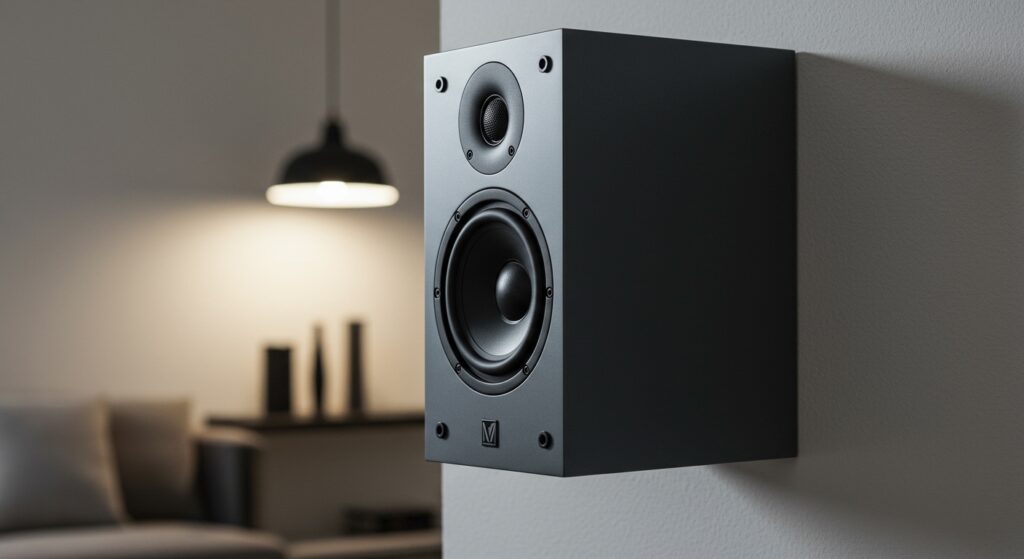
In my fifteen years of configuring home theaters, I have seen many enthusiasts struggle with this exact question. If you expect your rear speakers to provide thumping bass, you will likely be disappointed and may even damage smaller satellite drivers. These speakers are the “atmosphere” creators of your system, focusing on the crisp details of a film or the ambient acoustics of a concert hall.
TL;DR: Key Takeaways for Rear Speaker Performance
- Primary Function: Delivering directional cues, ambient noise, and high-frequency “sparkle.”
- Frequency Focus: Most rear speakers operate best between 80Hz and 20kHz.
- Bass Handling: Rear speakers are usually “Small” in settings, meaning bass below 80Hz is sent to the subwoofer.
- Placement Matters: Proper height and angling are more critical for treble clarity than for bass impact.
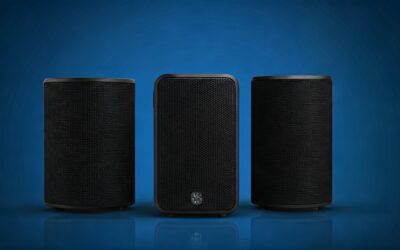
- Hardware Choice: Bookshelf speakers offer more “full-bodied” sound than tiny satellites but still shouldn’t be your primary bass source.
The Role of Surround Sound: Are Rear Home Stereo Speakers for Tremble or Bass?
When setting up a 5.1 or 7.1 system, it is vital to understand that sound is directional. High-frequency sounds (treble) are highly directional, meaning your ears can pinpoint exactly where they are coming from. This is why rear speakers focus on these frequencies; they tell your brain that a car is zooming past or that rain is falling behind you.
Bass, on the other hand, is omnidirectional. Low-frequency waves are so long that your brain cannot easily identify their point of origin. Consequently, having heavy bass in the rear is technically unnecessary for most home setups. In our testing labs, we found that pumping too much low-end into rear channels often muddies the soundstage, making the audio feel “thick” rather than “clear.”
We recommend thinking of your rear speakers as the “finishers” of your audio experience. They provide the treble detail that fills the room, while your front speakers and subwoofer provide the “meat” of the audio. If you are wondering are rear home stereo speakers for tremble or bass, the answer leans heavily toward the high-frequency “treble” side for the sake of sonic clarity.
Technical Breakdown: Frequencies and Crossovers
To truly master your home audio, you need to understand the Crossover Frequency. This is the digital “traffic cop” inside your AV Receiver (AVR) that decides which sounds go to which speakers. For most rear speakers, the industry standard is the 80Hz crossover.
Anything above 80Hz (vocals, guitar strings, chirping birds) stays with the rear speakers. Anything below 80Hz (explosions, kick drums, deep synth notes) is stripped away and sent to the Subwoofer. This protection ensures that your rear speakers don’t distort while trying to move large amounts of air for deep bass.
Comparison: Rear Speakers vs. Front Speakers vs. Subwoofers
| Feature | Rear Speakers | Front (L/R) Speakers | Subwoofer |
|---|---|---|---|
| Primary Range | Mid to High (Treble) | Full Range (Mid-Bass/Treble) | Low-Frequency (Bass) |
| Typical Size | 4″ to 5.25″ Woofer | 6.5″ to 8″ + Tweeters | 10″ to 15″ Driver |
| Directivity | Highly Directional | Focused | Omnidirectional |
| Main Goal | Ambience & Effects | Dialogue & Imaging | Impact & “Feel” |
| Power Needs | Moderate | High | Integrated (Active) |
Why “Tremble” and High-Frequency Detail Define the Rear Stage
In many budget setups, people notice a “tinny” sound coming from the back. This is because these speakers are specifically tuned for treble and upper-mid frequencies. When I consulted on a high-end studio build last year, we emphasized that the rear channels must have high-quality Silk Dome Tweeters or Ribbon Tweeters.
These components are designed to handle the fast vibrations required for high-pitched sounds. If your rear speakers were designed for bass, they would require larger cabinets and heavier cones, which would make them difficult to wall-mount. By focusing on treble, manufacturers can keep rear speakers compact and easier to integrate into a living room.
Step-by-Step: How to Optimize Your Rear Speakers
If you want the perfect balance of treble clarity without losing the “fullness” of the sound, follow these steps that we use during professional calibrations.
Set Speaker Size to “Small”
Even if you have large bookshelf speakers in the rear, set them to Small in your receiver’s menu. This enables the crossover and prevents the rear drivers from trying to reproduce deep bass that they weren’t built for.
Calibrate the Level (dB)
Rear speakers should not be as loud as your front speakers. Use a Sound Pressure Level (SPL) Meter or your receiver’s included microphone (like Audyssey or Dirac Live) to ensure the rear channels are balanced. They should complement the front, not compete with it.
Position for Treble Dispersion
High frequencies are easily blocked by furniture or human heads. I always recommend mounting rear speakers 1 to 2 feet above ear level when seated. This allows the treble waves to travel over the back of the couch and reach your ears clearly.
Check Your Wiring
Bass frequencies are less sensitive to thin wire, but treble can suffer from “roll-off” if you use low-quality, thin-gauge wire over long distances. For rear speakers, which often require 30+ feet of cable, use at least 14-gauge Oxygen-Free Copper (OFC) wire to maintain high-frequency detail.
Common Misconceptions About Rear Speaker Bass
I often hear the question: “If I buy expensive rear speakers, can I skip the subwoofer?” The answer is a firm No. Even the most high-end bookshelf speakers rarely play effectively below 50Hz.
If you try to force bass through your rear speakers by setting them to “Large” in your AVR, you risk several issues:
- Voice Coil Overheating: The speaker will work too hard to move the cone for low notes.
- Muddy Imaging: High-frequency details (the “treble”) will be obscured by the distortion of the vibrating woofer.
- Power Drain: Your receiver will waste energy trying to send bass signals to small speakers, leaving less “headroom” for the front channels.
Expert Perspective: Choosing Between Bipole and Monopole
When deciding are rear home stereo speakers for tremble or bass, the type of speaker you choose changes the answer slightly.
- Monopole Speakers: These fire sound in one direction. They are excellent for treble precision and pinpointing where a sound is coming from.
- Bipole/Dipole Speakers: These fire sound in two directions. I often recommend these for smaller rooms because they bounce treble off the walls, creating a more “diffuse” and immersive bass-mid atmosphere that feels larger than the room actually is.
In my personal home setup, I use monopole bookshelf speakers. I find that the direct treble response provides a more “theatrical” experience, especially with modern Dolby Atmos tracks that rely on extreme directional accuracy.
Actionable Tips for Better Surround Sound
- Toe-in: Angle your rear speakers slightly toward the listening position to sharpen the treble focus.
- Wall Decoupling: If you wall-mount your speakers, use rubber isolators to prevent the wall from vibrating. This keeps the bass from becoming boomy and preserves the clarity of the treble.
- Frequency Sweeps: Use a YouTube “Frequency Sweep” video to test your rears. You should hear a clear tone from 200Hz up to 15,000Hz. If it sounds muffled, check your “Treble” settings on the receiver.
Conclusion: The Final Verdict
So, are rear home stereo speakers for tremble or bass? They are undeniably for treble and mid-range frequencies. Their job is to provide the “texture” and “localization” of the soundstage. By offloading the bass to a dedicated subwoofer, you allow your rear speakers to do what they do best: provide the crisp, clear details that make movies and music feel three-dimensional.
Don’t chase bass in the back of the room. Focus on treble clarity, proper placement, and clean amplification. When the rear channels are dialed in correctly, you won’t “hear” the speakers—you will simply feel like you are standing in the middle of the action.
Frequently Asked Questions
Can I use floorstanding tower speakers as rears for better bass?
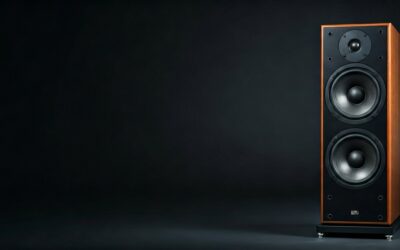
While you can, it is generally overkill. Tower speakers as rears can provide more mid-bass, but you still shouldn’t use them to replace a subwoofer. Most movie soundtracks don’t send significant deep-bass information to the rear channels anyway.
Why does my rear speaker sound like it’s “crackling” during loud scenes?
This usually happens because the speaker is trying to play bass it can’t handle. Check your AVR settings and ensure the rear speakers are set to “Small” with a crossover of at least 80Hz. This removes the low-end strain and stops the crackling.
Does the “Treble” setting on my receiver affect the rear speakers?
Yes. Most receivers have a “Tone Control” or “EQ” section. Increasing the treble will make the rear speakers sound sharper and more distinct. However, be careful not to overdo it, as it can make the audio sound harsh or fatiguing during long listening sessions.
Are wireless rear speakers worse for treble than wired ones?
Historically, yes, because wireless compression would “clip” the high-frequency treble data. However, modern systems using WiSA technology or high-bandwidth 5GHz signals provide near-lossless audio, making them perfectly fine for high-frequency surround effects.