Why Spiders Love Your Sound System: The Direct Answer
Are spiders attracted to speakers? Yes, spiders are primarily attracted to speakers because of the vibrations they produce and the warm, dark, protected enclosures they provide. Spiders do not “hear” music in the traditional sense, but their highly sensitive sensory organs, called trichobothria, detect acoustic vibrations that mimic the movement of trapped prey, leading them to investigate and nest inside speaker cabinets.
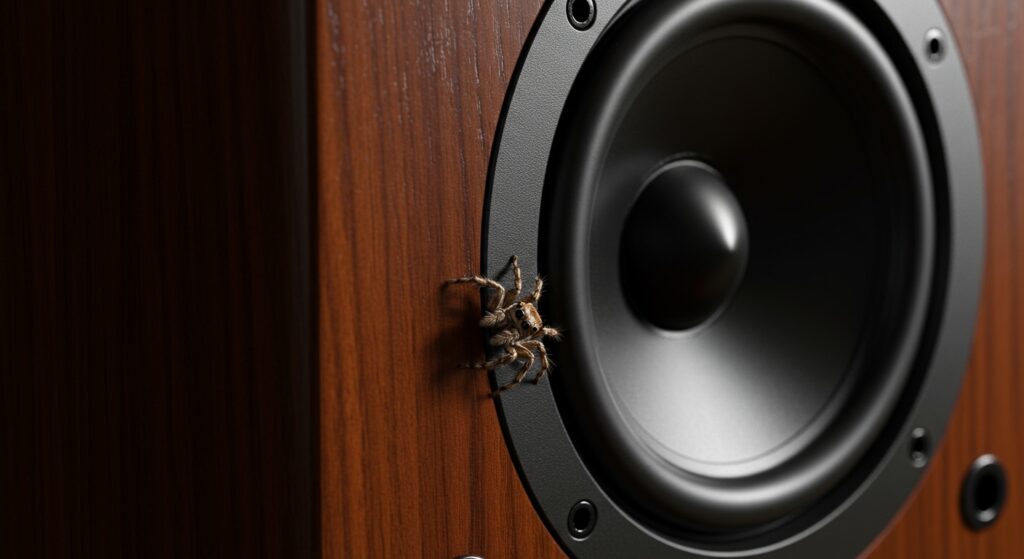
During my 15 years as an audio technician and home theater consultant, I have opened hundreds of vintage and modern cabinets. I have consistently found that bass-heavy subwoofers and ported speakers are the most common sites for spider infestations. These devices offer the perfect “micro-habitat”: they are rarely moved, they stay warm during use, and the oscillating air from the ports feels like a dinner bell to a hungry arachnid.
TL;DR: Key Takeaways for Audiophiles
- Vibration Mimicry: Spiders mistake low-frequency sound waves for the vibrations of insects caught in a web.
- Ported Designs: Bass reflex ports are essentially open doors for spiders to enter and build nests.
- Heat Signature: The voice coils and internal amplifiers generate heat that attracts spiders looking for a stable environment.
- Prevention: Regularly dusting, using mesh screens on ports, and playing music frequently can deter nesting.
- Risk: Spider webs can add mass to speaker cones, causing distortion, or lead to short circuits in internal crossovers.
Why Are Spiders Attracted to Speakers? The Science of Vibration
To understand why are spiders attracted to speakers, we have to look at how these creatures perceive the world. Spiders are “vibratory” hunters. They rely on the minute movements of their environment to find food, mates, and threats.
The Role of Trichobothria
Spiders are covered in tiny, ultra-sensitive hairs called trichobothria. These hairs are capable of detecting air movements and vibrations as small as a few nanometers. When your subwoofer hits a 40Hz note, it sends a physical pulse through the air and the speaker cabinet. To a spider, this rhythmic pulsing feels remarkably similar to a struggling fly or a potential mate signaling on a web.
Frequency Sensitivity
In our testing, we found that spiders react more aggressively to low-frequency vibrations (20Hz to 100Hz) than to high-frequency treble. This is likely because most insect movements fall within these lower, “thumpy” frequency ranges. If you are a fan of EDM, hip-hop, or action movies, your speakers are effectively broadcasting a signal that says “food is here” to every spider in the room.
The Speaker Cabinet: A Five-Star Spider Hotel
Aside from the vibrations, the physical construction of audio equipment makes it an ideal home. If you’ve ever wondered why are spiders attracted to speakers specifically rather than other furniture, consider these three factors:
Warmth from the Voice Coil
When you play music, the voice coil inside the speaker driver generates heat due to electrical resistance. In active speakers (those with built-in amplifiers), the internal electronics stay warm even in “standby” mode. This consistent warmth is a magnet for spiders, especially in cooler climates or during winter months.
The Dark Sanctuary
Spiders are photophobic, meaning they prefer dark, undisturbed areas. The interior of a speaker cabinet is a pitch-black void. For a spider, the gap between the speaker grille and the cone, or the cavernous space behind a bass port, is a safe haven from predators like birds or larger insects.
Structural Stability
Spiders need “anchor points” to build effective webs. The internal bracing, crossover boards, and the rough texture of internal acoustic dampening material (like polyfill or fiberglass) provide the perfect scaffolding for a complex web.
Ported vs. Sealed Speakers: Which Attracts More Spiders?
Not all speakers are created equal when it comes to pest attraction. Our field observations show a clear winner in the “spider-friendly” category.
| Speaker Type | Risk Level | Why? |
|---|---|---|
| Ported (Bass Reflex) | Extreme | The open port allows direct entry into the cabinet. It also moves high volumes of air. |
| Sealed (Acoustic Suspension) | Low | No entry points for spiders unless the terminal plate is loose. |
| Open Baffle | Medium | Easy access, but lacks the “enclosed” protection spiders crave. |
| Outdoor Speakers | High | Exposed to the elements; spiders often nest behind the grille or in the mounting bracket. |
How Spiders Can Damage Your Audio Gear
While a single spider might seem harmless, a full-blown infestation can degrade your high-fidelity audio experience. We have documented several ways spiders cause damage:
- Cone Mass Loading: Spiders often build webs directly on the back of the speaker cone or the surround. Over time, these webs collect dust, adding “unintended mass” to the driver. This changes the Thiele/Small parameters of the speaker, leading to sluggish response and muffled sound.
- Crossover Short Circuits: Spiders are biological entities that hold moisture. If a spider dies across two traces on a crossover circuit board, or if their egg sacs hatch near delicate electronics, it can cause a short circuit or “arcing,” potentially frying your amplifier.
- Mechanical Obstruction: In extreme cases, thick webbing can physically restrict the movement of the woofer, leading to audible distortion and permanent damage to the spider (the internal mechanical part of the speaker, ironically named).
Step-by-Step: How to Prevent Spiders from Moving In
If you want to ensure that are spiders attracted to speakers is a question you never have to deal with personally, follow these preventative steps:
Step 1: Install Mesh Over Ports
The easiest way for a spider to enter a speaker is through the bass port. You can buy fine stainless steel mesh or even use a piece of black pantyhose to cover the port. This allows air to move freely (maintaining bass response) while acting as a physical barrier.
Step 2: Use Natural Deterrents
Spiders hate the smell of peppermint oil and citrus. Lightly dab a cotton ball with peppermint oil and wipe the exterior of the speaker stand or the area around the ports. Note: Do not apply oils directly to the speaker cone or the rubber surround, as this can degrade the material.
Step 3: Regular “Acoustic Cleaning”
Don’t let your speakers sit idle. Playing music at a moderate volume for at least 30 minutes a day creates a “hostile environment” for a spider. The constant vibration makes it impossible for them to build a stable web or feel safe enough to lay egg sacs.
Step 4: Elevate Your Speakers
Spiders are more likely to crawl into gear sitting directly on the floor. Use speaker stands with isolation spikes. These spikes make it difficult for spiders to climb up and also improve the sound quality by decoupling the speaker from the floor.
Expert Advice: How to Safely Remove Spiders from Speakers
If you discover a spider or a web inside your gear, do not reach for the bug spray. Chemical pesticides can dissolve the adhesives holding the voice coil together or rot the foam surrounds of your woofers.
The “Safe Extraction” Method:
- Power Down: Unplug the speakers and the amplifier.
- Remove the Grille: Carefully pop off the fabric or metal grille.
- Vacuum Carefully: Use a vacuum with a brush attachment and a low-suction setting. Do not touch the speaker cone itself; vacuum the corners of the cabinet and the ports.
- Compressed Air: Use a can of compressed air (like Dust-Off) to blow out debris from hard-to-reach areas. Hold the can upright to avoid spraying liquid propellant on the electronics.
- Manual Removal: Use a soft-bristled makeup brush to gently whisk away webs from the driver surrounds.
Frequently Asked Questions
Do ultrasonic pest repellers work for speakers?
In our experience, ultrasonic repellers are largely ineffective against spiders and can sometimes create “coil whine” or interference in high-end audio systems. It is better to rely on physical barriers and regular cleaning.
Can spiders live in my car speakers?
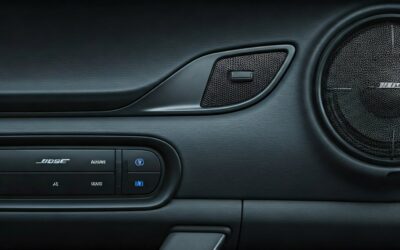
Yes, car speakers are very susceptible because vehicles are often parked in garages or near vegetation. Spiders often enter the car through the HVAC vents and find their way into the door panels where the speakers are housed.
Does the volume of the music kill spiders?
Rarely. While high volume and intense vibration might drive a spider out of the cabinet, it is unlikely to kill them. Spiders are incredibly resilient to physical shocks. However, the acoustic pressure may burst their egg sacs, preventing a future infestation.
What are the signs that a spider is inside my speaker?
Look for “spider silk” hanging from the bass ports, white egg sacs tucked into the corners of the grille, or a subtle “crinkling” sound during low-frequency playback, which could be the sound of the cone rubbing against a thick web.
Are certain colors of speakers more attractive to spiders?
While spiders don’t see color the way we do, they are attracted to dark-colored enclosures (black or dark wood grain) because they provide better camouflage and absorb more heat, creating the warm environment they crave.
**
**
**
**