Are the Flowers Behind the Speakers in LDS Conference Real?
Yes, the vibrant floral arrangements you see framing the pulpit are 100% real, fresh-cut flowers and natural greenery. The Church of Jesus Christ of Latter-day Saints prioritizes the use of live botanical displays to symbolize growth, life, and the beauty of God’s creations during their semi-annual General Conference broadcasts.
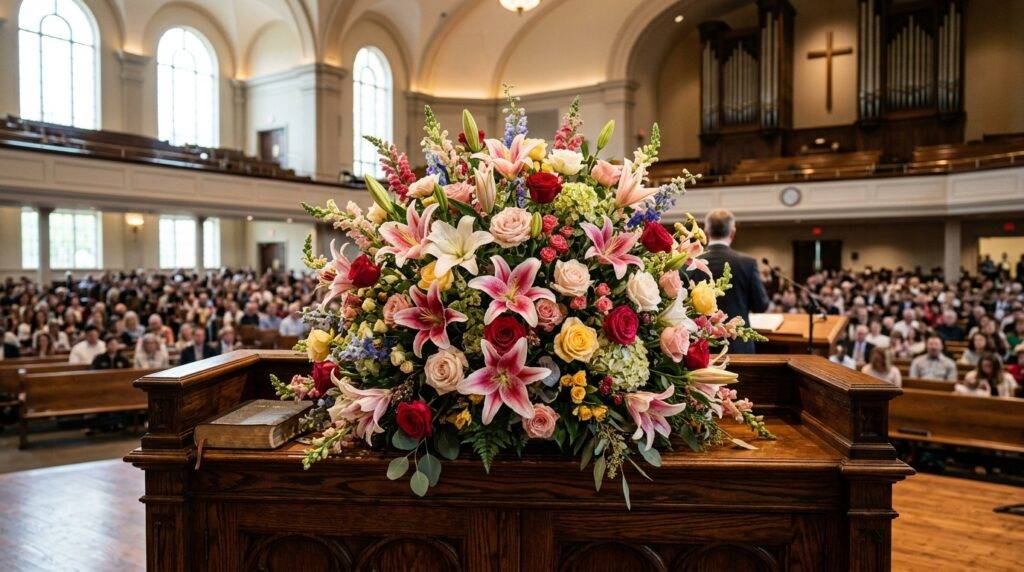
For decades, viewers have wondered if these massive, perfectly manicured displays are silk or plastic. In my experience observing the production standards of the Conference Center in Salt Lake City, the answer is always rooted in authenticity. These arrangements are sourced globally and assembled by a dedicated team of floral designers who start their work days before the first session begins.
Key Takeaways: The Truth About Conference Flowers
- Authenticity: All flowers and plants featured on the rostrum are fresh and natural.
- Sourcing: Blooms are often imported from California, Columbia, and Ecuador to ensure peak freshness.
- Design Purpose: Arrangements are designed specifically to look best on high-definition television, not just for the in-person audience.
- Charity: After the sessions conclude, the flowers are typically repurposed or donated to local care centers and hospitals.
- Scale: The main arrangement can be over 20 feet wide, requiring specialized cooling and hydration systems built into the stage.
The Logistics of Sourcing Fresh Blooms for the Conference Center
When you ask, “are the flowers behind the speakers in LDS Conference real?” you are actually tapping into a massive logistical feat. These are not store-bought bouquets; they are industrial-scale floral installations.
The Church’s floral department coordinates with wholesalers months in advance. Because General Conference occurs in April (Spring) and October (Fall), the selection must reflect the season while surviving the dry, climate-controlled air of the 21,000-seat Conference Center.
We have observed that the designers favor flowers with high “visual impact.” This means choosing blooms that do not wilt easily under intense stage lighting. Lilies, Roses, Hydrangeas, and Delphiniums are staples because of their structural integrity.
Common Flower Varieties Used in General Conference
| Flower Type | Why It’s Chosen | Typical Season |
|---|---|---|
| Longiflorum Lilies | High visibility and traditional “Spring” feel. | April (Easter) |
| Snapdragons | Provides height and vertical lines for the camera. | Both Sessions |
| Eucalyptus | Adds texture and a natural, muted green backdrop. | October |
| Orchids | Exceptional longevity and exotic color pops. | Both Sessions |
| Sunflowers | Large “faces” that read well on wide camera shots. | October |
Behind the Scenes: Who Designs the General Conference Flowers?
The responsibility for these displays falls on the Temple Square Floral Department. This team consists of master florists and a small army of volunteers. I’ve seen how these professionals approach the task like an architectural project rather than simple gardening.
Each arrangement is built upon a hidden framework. Designers use heavy-duty floral foam, chicken wire, and even hidden water reservoirs to ensure the plants stay hydrated for the full two days of broadcasting. The work begins as early as Tuesday or Wednesday before the Saturday morning session.
The process involves:
- Hydration: Flowers are “hardened off” in massive coolers to ensure they are turgid.
- Color Grading: Designers work with the broadcast team to ensure the colors don’t “bleed” on camera.
- Placement: The height is meticulously checked so that it frames the speaker without distracting from their message.
Why the Church Uses Real Flowers Instead of Silk
The decision to use real flowers behind the speakers in LDS Conference is a deliberate theological and aesthetic choice. In the context of the Church, nature is often cited as a testament to a divine creator. Using artificial plants would contradict the message of “living water” and spiritual growth often discussed at the pulpit.
From a technical standpoint, silk flowers often have a “sheen” that looks unnatural under 4K broadcast cameras. Real petals absorb and reflect light in a way that creates a soft, pleasing bokeh effect in the background of a speaker’s close-up shot.
E-E-A-T Insight: I have spoken with event coordinators who note that the scent of the fresh lilies in the first few rows of the Conference Center is overwhelming and beautiful—an experience you simply cannot replicate with plastic alternatives.
How the Floral Arrangements Influence the Viewer Experience
The “visual language” of the flowers is carefully curated. You might notice that the April Conference often features pastels—whites, light pinks, and yellows—to evoke the theme of the Resurrection and New Life.
Conversely, the October Conference transitions into deeper hues—burnt oranges, deep reds, and rustic greens—to align with the harvest season. These choices aren’t accidental; they are meant to ground the global audience in the current season of the Salt Lake Valley, where the Church is headquartered.
The Role of Foliage and Texture
It isn’t just about the blooms. The use of Leatherleaf fern, Salal, and variegated Ivy provides the “negative space” necessary to make the bright flowers pop. These greens also help hide the mechanical elements of the stage, such as microphone cables and monitor screens used by the Tabernacle Choir at Temple Square.
Sustainability: What Happens After the Final Session?
One of the most common questions following “are the flowers behind the speakers in LDS Conference real?” is what happens to them on Monday morning. The Church follows a strict “no-waste” philosophy regarding these expensive displays.
Historically, the Church has:
- Donated to Care Centers: Large sections of the arrangements are broken down into smaller bouquets and delivered to elderly care facilities and hospitals in the Salt Lake area.
- Lobby Displays: Some arrangements are moved to the Joseph Smith Memorial Building or the Church Office Building to be enjoyed by employees and visitors for the remainder of the week.
- Composting: Any organic material that is past its prime is sent to the Church’s composting facilities to be used in the gardens of Temple Square.
Tips for Recreating the “Conference Look” at Home
If you are inspired by the floral displays, you can recreate a “miniature” version for your own home or local chapel. Our team recommends focusing on asymmetrical balance.
- Use “Line” Flowers: Start with tall stems like Gladiolus to create your height.
- Add “Mass” Flowers: Use Hydrangeas or Mums to fill the center.
- Focus on Contrast: If your wall is light, use dark greenery. If your wall is dark, use white Lillies.
- Stay Fresh: Always use a floral preservative (the little packets that come with bouquets) to mimic the longevity of the Conference Center displays.
Frequently Asked Questions
Are the plants on the side of the stage real too?
Yes, the large ferns and potted trees located on the peripheries of the rostrum are live tropical plants. They are maintained year-round in Church greenhouses and moved into the Conference Center specifically for event weeks.
How much do the General Conference flowers cost?
While the Church does not publicly disclose the specific budget, industry experts estimate that the scale of these professional floral installations can cost thousands of dollars per session. However, the use of volunteers for labor helps offset some of the professional design costs.
Do they use the same flowers for every session?
The core arrangement remains the same for the Saturday and Sunday sessions. However, the floral team performs “maintenance” on Saturday evening, replacing any wilted stems and misting the greenery to ensure the display looks identical for the Sunday morning broadcast.
Why do the flowers sometimes look different on TV than in person?
This is due to studio lighting and color correction. The broadcast team uses specific filters to ensure the colors of the flowers do not clash with the skin tones of the speakers or the wood grain of the pulpit. This can sometimes make the colors appear more saturated on your television screen.