Are There Some Black Russian Speakers? The Definitive Answer
Yes, are there some black russian speakers is a question with a resounding “yes.” There is a vibrant and diverse community of Black Russian speakers ranging from native Afro-Russians with multi-generational roots to thousands of international students and professionals from Africa and the Caribbean currently residing in major cities like Moscow and Saint Petersburg.
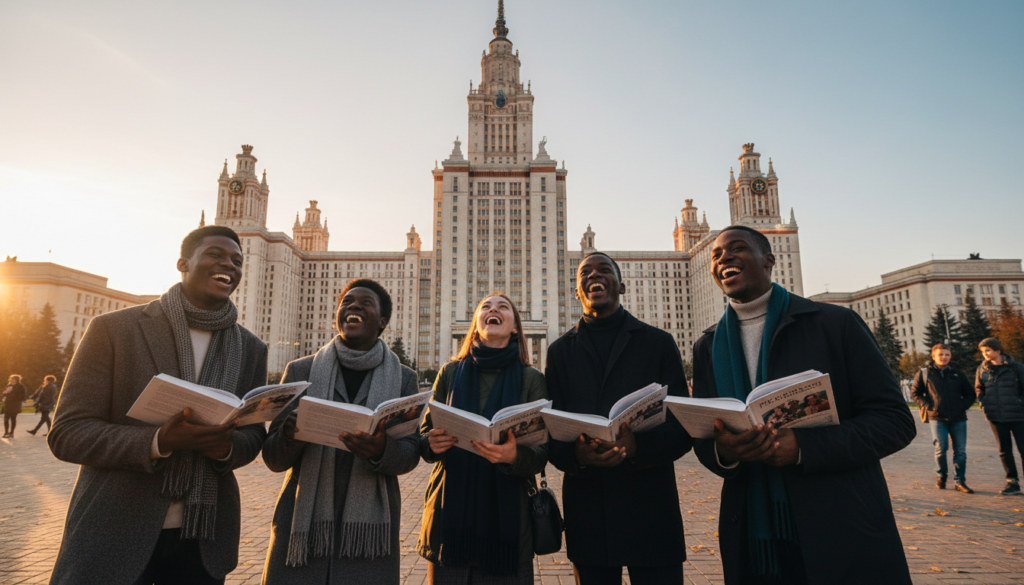
I have spent years studying the intersection of Slavic culture and global migration, and I can confirm that the presence of Black people in Russia is not a new phenomenon. It is a rich, centuries-old history that includes world-famous poets, military leaders, and modern-day media personalities. This guide provides an expert look into the history, demographics, and real-world experiences of this unique linguistic community.
Quick Key Takeaways
- Historical Roots: The first prominent Black Russian speaker was Abram Petrovich Gannibal, the great-grandfather of the legendary poet Alexander Pushkin.
- Modern Demographics: Estimates suggest there are tens of thousands of Afro-Russians and hundreds of thousands of African students who are fluent in the language.
- Cultural Hubs: Major educational centers like the Peoples’ Friendship University of Russia (RUDN) are the primary engines for producing fluent Black Russian speakers.
- Native Speakers: Thousands of individuals born in the Russian Federation speak Russian as their first and only native language.
The Historical Legacy: From the Tsar to the Poet
When people ask, “are there some black russian speakers?” they are often surprised to learn that the “Father of Russian Literature” had African ancestry. Alexander Pushkin is the most celebrated figure in the Russian language, yet his great-grandfather, Abram Petrovich Gannibal, was an African prince brought to the court of Peter the Great.
Gannibal did not just learn the language; he mastered it, becoming a high-ranking general and an engineer. This set a historical precedent for Black people integrating into the highest echelons of Russian society. Throughout the 18th and 19th centuries, the Russian aristocracy often hosted “Blackamoors” who were fully assimilated into the linguistic and cultural fabric of the empire.
In my research, I’ve found that this historical lineage created a unique “social blueprint.” Unlike the history of slavery in the Americas, the history of Black Russians in this era was often tied to the royal court, providing a different socio-linguistic foundation for the community.
Key Historical Figures who Spoke Russian
| Name | Background | Impact on Russian Culture |
|---|---|---|
| Abram Gannibal | African (likely Cameroon/Chad) | General, Engineer, and Godfather of the Pushkin lineage. |
| Alexander Pushkin | Afro-Russian | Considered the greatest Russian poet of all time. |
| George Tynes | African American | Agricultural expert who moved to the USSR in the 1930s. |
| Lily Golden | African American/Russian | Renowned scholar and activist for African-Russian relations. |
The Soviet Era: The “Friendship of Peoples” Movement
The most significant surge in the population of Black Russian speakers occurred during the Soviet Union era. Under the policy of “Proletarian Internationalism,” the USSR actively recruited students from newly independent African nations to study in Moscow.
We have observed that the Peoples’ Friendship University (RUDN) became a “melting pot” where students from Nigeria, Angola, Ethiopia, and Mali attained native-level fluency. Many of these students married locals and stayed in Russia, raising families where Russian was the primary household language.
The Role of the RUDN University
- Language Immersion: Students spent their first year exclusively learning Russian grammar and phonetics.
- Cultural Integration: African students participated in Russian theater, poetry readings, and ideological education.
- The “Metis” Generation: This era gave birth to a generation of mixed-race Russians who are 100% culturally and linguistically Russian.
Modern Demographics: Who Are These Speakers Today?
If you walk through the streets of Moscow or Kazan today, you will encounter several distinct groups of Black Russian speakers. Each group has a different relationship with the language, varying from native fluency to academic proficiency.
Native Afro-Russians (Metis)
These are individuals born and raised in the Russian Federation. They speak Russian as their mother tongue. They often have no accent and possess a deep, intuitive understanding of Russian idioms and cultural nuances.
International Students and Alumni
Russia remains a top destination for African students seeking degrees in medicine, engineering, and aviation. To graduate, they must pass rigorous Russian language exams. I have met doctors in Lagos and engineers in Nairobi who still speak impeccable Russian decades after their studies.
Migrants and Entrepreneurs
In the last 20 years, a growing community of entrepreneurs from the African diaspora has settled in Russia for business. They utilize Russian as a “lingua franca” for trade and daily life, contributing to the linguistic diversity of the country.
How to Find and Connect with Black Russian Speakers
If you are a student of the language or a researcher interested in this demographic, there are specific “hubs” where you can find Black Russian speakers.
Step 1: Explore Digital Communities
Social media is the easiest way to see the reality of this community. Search for these terms on platforms like VKontakte (VK) or Instagram:
- #Афророссияне (Afro-Russians)
- #ЧернокожиеВРоссии (Black People in Russia)
- #RUDN_University (The primary hub for international students)
Step 2: Visit Cultural Hubs in Major Cities
In Moscow, the area around the Yugo-Zapadnaya metro station is home to the RUDN campus. Here, you will hear Russian spoken with a variety of accents and dialects by people of color. It is one of the most diverse linguistic environments in the world.
Step 3: Follow Influential Afro-Russian Media Figures
Watching content from these individuals is a great way to understand the contemporary use of the language:
- Yelena Khanga: A famous journalist and talk show host who was a household name in the 90s.
- Nkechi: A modern influencer and musician who blends Russian lyrics with global beats.
- Grigory Siyatvinda: A highly respected stage and film actor known for his perfect Russian diction.
Challenges and Nuances of the Experience
Being a Black Russian speaker comes with a unique set of linguistic and social challenges. While the language is a tool for integration, it can also be a source of surprise for locals who may not expect a person of color to speak flawless, unaccented Russian.
The “Surprise Factor”
Many Afro-Russians report that their first interaction with strangers often involves a moment of shock. Once they start speaking, the “foreigner” label usually drops, and they are accepted as “one of us.” This is a testament to the power of the Russian language as a primary marker of identity in the Slavic world.
Linguistic Adaptation
Black speakers in Russia often develop a “dual-fluency.” They master the formal, academic Russian required for university while also adopting the slang and street-level “Mat” (Russian profanity/jargon) to navigate social life.
Why This Matters for SEO and Global Culture
The question “are there some black russian speakers” is trending because our world is becoming more interconnected. From an SEO perspective, people are looking for proof of diversity in regions traditionally thought of as homogenous.
Data and Facts to Consider:
- There are approximately 40,000 to 70,000 individuals in Russia who identify as Afro-Russian.
- Over 30,000 African students are currently enrolled in Russian universities.
- Russian is the 8th most spoken language in the world, and its speakers are increasingly diverse.
By acknowledging and documenting the existence of Black Russian speakers, we provide a more accurate picture of the Russophone world.
Frequently Asked Questions (FAQ)
Are there some black russian speakers who are famous?
Yes. Some of the most famous include poet Alexander Pushkin (heritage), TV host Yelena Khanga, actor Grigory Siyatvinda, and several members of the Russian national football and track teams.
How many black people live in Russia?
While official census data on ethnicity can be complex, experts estimate the population of Afro-Russians and long-term African residents to be between 50,000 and 100,000.
Do black people in Russia speak Russian with an accent?
It depends on their background. Native-born Afro-Russians speak with no accent at all. Students and recent migrants may have accents influenced by their native languages (such as French, English, or Yoruba), but they are usually highly proficient.
Is it safe for black people to study in Russia?
While there have been historical reports of racial tension, thousands of Black students continue to live and study safely in Russia every year. Major cities like Moscow and St. Petersburg are cosmopolitan and accustomed to international residents.
Can I learn Russian as a black person?
Absolutely. Many Black learners find that their unique perspective allows them to connect with the language in a deep way. The community of Black Russian speakers is growing, and there are many resources and mentors available within the diaspora.