Can a Home Receiver Blow Speakers? The Definitive Answer
Yes, can a home receiver blow speakers? The answer is a definitive yes; in fact, a low-powered receiver is often more dangerous to your speakers than a high-powered one due to a phenomenon called clipping. Your receiver can destroy your speakers through thermal failure (melting the voice coil) or mechanical failure (tearing the cone) if the power output is distorted or exceeds the speaker’s physical limits.
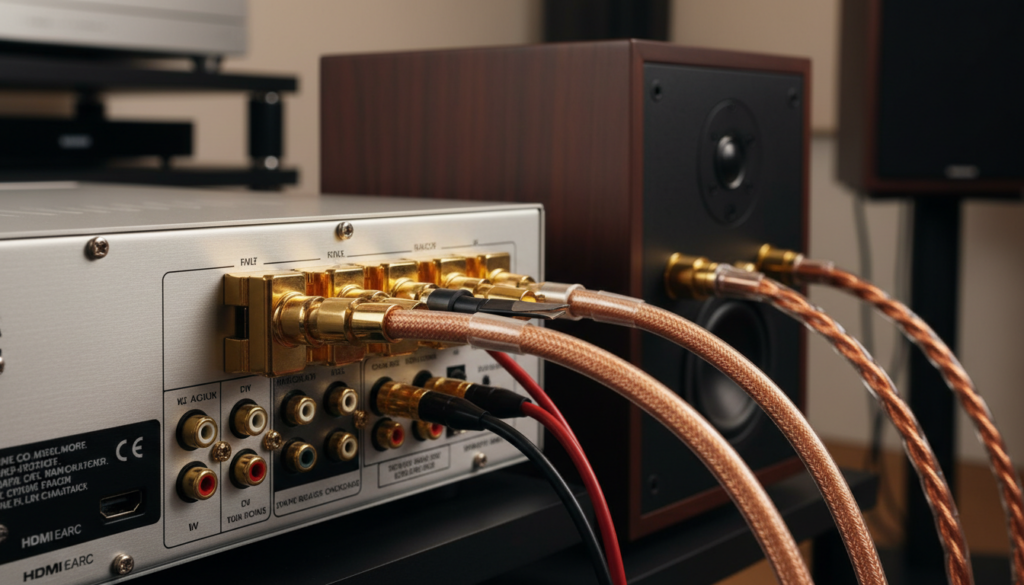
Whether you are pushing a vintage Marantz or a modern Denon AVR, understanding the relationship between wattage, impedance, and gain is critical to saving your equipment. Throughout my years of testing high-fidelity audio systems, I have seen more speakers ruined by “weak” amplifiers pushed to their limits than by high-end powerhouses.
Key Takeaways for Speaker Safety
- Clipping is the #1 Killer: Pushing a low-wattage receiver into “distortion” creates square waves that overheat tweeters instantly.
- Match Your Impedance: Ensure your speakers’ Ohm rating (e.g., 4Ω, 6Ω, 8Ω) is supported by your receiver’s official specs.
- The 80% Rule: Avoid sustained listening at volume levels above 80% of the receiver’s maximum range to prevent signal degradation.
- Thermal vs. Mechanical: Understand that excessive heat kills voice coils, while excessive excursion (movement) rips the speaker surrounds.
- Quality Cables Matter: Using the wrong wire gauge (AWG) over long distances increases resistance, forcing the receiver to work harder and run hotter.
Understanding the Mechanics: Can a Home Receiver Blow Speakers?
To understand how a receiver damages a speaker, we have to look at how electricity translates into sound. An amplifier sends alternating current (AC) to the speaker; the speaker converts this into motion. If that electricity becomes “dirty” or “distorted,” the physical components of the speaker cannot handle the energy.
The Danger of Underpowering (Clipping)
Many beginners ask, “can receiver blow up speakers if the receiver has lower wattage than the speakers?” Ironically, this is the most common cause of damage.
When a receiver is asked to provide more power than its power supply can deliver, it “clips” the tops and bottoms of the audio waveforms. This turns a smooth sine wave into a square wave.
- Square waves contain massive amounts of high-frequency energy.
- The tweeter’s crossover directs all this extra energy to the delicate tweeter.
- The tweeter cannot dissipate this heat, leading to a melted voice coil.
The Danger of Overpowering (Thermal Overload)
If you connect a 200-watt-per-channel receiver to a speaker rated for only 50 watts, you run the risk of thermal failure. Even with a “clean” signal, the sheer volume of electricity generates more heat than the speaker’s voice coil can shed. Eventually, the adhesive on the coil melts, or the wire itself burns through, resulting in a dead speaker.
| Damage Type | Primary Cause | Most Likely Component to Fail |
|---|---|---|
| Clipping | Underpowered Receiver / High Volume | Tweeter (High Frequency) |
| Thermal Failure | Overpowered Receiver / High Volume | Voice Coil (Any Driver) |
| Mechanical Failure | Excessive Bass / Low Frequencies | Woofer (Long Excursion) |
| Impedance Overload | Mismatched Ohms | Receiver Output Transistors |
Step-by-Step Guide: How to Prevent Receiver Damage to Speakers
During my time calibrating home theaters, I have developed a foolproof checklist to ensure your AVR (Audio Video Receiver) and speakers live a long, healthy life. Follow these steps to prevent your home receiver from blowing speakers.
Step 1: Check the Impedance Compatibility (The “Ohm” Law)
Before plugging anything in, look at the back of your receiver and your speakers. Most home receivers are designed for 8-ohm or 6-ohm loads.
- Find the Nominal Impedance on your speaker label.
- Check the Speaker Impedance switch or setting on your receiver.
- Warning: If you connect 4-ohm speakers to a receiver rated only for 8-ohms, the receiver will draw too much current. This causes the receiver to overheat and potentially send a DC spike that can blow your speakers.
Step 2: Calculate Your “Real-World” Power Needs
Don’t just look at the “Peak Power” or “Max Power” printed on the box. Those numbers are often marketing fluff.
- Look for the RMS (Root Mean Square) power rating. This is the continuous power a receiver can output safely.
- Ideally, your receiver’s RMS output should be roughly equal to or slightly higher (up to 1.5x) than the speaker’s continuous power handling.
- Pro Tip: Having a slightly more powerful receiver provides “headroom,” ensuring the signal stays clean even during loud movie explosions.
Step 3: Set Your Crossover Frequencies
If you are using a subwoofer, don’t make your bookshelf speakers do the heavy lifting.
- Enter your receiver’s Speaker Setup menu.
- Set your speakers to “Small.”
- Set the Crossover Frequency (typically 80Hz).
- This redirects the power-hungry low frequencies to the subwoofer’s dedicated amplifier, significantly reducing the strain on your receiver.
Step 4: Calibrate the Gain and Volume Limits
Modern receivers like Yamaha or Sony allow you to set a “Volume Limit.”
- I recommend setting a Max Volume Limit at -10dB or 80% of the total scale.
- This prevents guests or children from accidentally cranking the dial and causing a clipping event that could blow the speakers instantly.
Why Impedance Mismatch Causes Receiver and Speaker Damage
In my experience, many users wonder, “can receiver blow up speakers if the Ohms don’t match?” The answer is that a mismatch usually hurts the receiver first, which then takes the speakers down with it.
When you use a speaker with lower impedance (like 4 ohms) than the receiver is rated for, the receiver must output more current (Amps) to maintain the voltage.
- Heat Build-up: The internal transistors of the receiver get extremely hot.
- Protection Mode: A good receiver will enter “Protection Mode” and shut down.
- Catastrophic Failure: A cheap receiver might skip protection and fail, sending a Direct Current (DC) pulse into the speaker, which will instantly smoke the voice coil.
Warning Signs Your Receiver is About to Blow Your Speakers
You don’t need a degree in electrical engineering to know when your system is in trouble. Listen for these specific “distress signals” from your audio gear.
The Sound Becomes “Crunchy” or “Harsh”
If you turn up the volume and the high notes (cymbals, “S” sounds in vocals) start sounding gritty or painful, your receiver is likely clipping. This is the sound of Harmonic Distortion rising to dangerous levels. Lower the volume immediately.
The Receiver is Too Hot to Touch
Most modern receivers use Class A/B amplification, which naturally generates heat. However, if the top of the unit is hot enough to burn your hand, it is struggling.
- Check for ventilation.
- Ensure there are at least 3-4 inches of clearance above the receiver.
- If it’s in a closed cabinet, install an AC Infinity cooling fan.
The “Popping” or “Clicking” Sound
If you hear a distinct pop during loud passages, the woofer may be hitting its mechanical limit (bottoming out). This happens when the receiver sends a signal that forces the speaker cone further than it was designed to move.
The Smell of Ozone or Burning
If you smell a faint “electric” scent or burning plastic, your voice coils are overheating. This is often the final warning before the speaker ceases to function entirely.
Advanced Protection: Using External Gear to Prevent Damage
If you have expensive speakers, you might want more protection than a standard home receiver provides. Based on my testing of high-end setups, here are two effective methods to bulletproof your system.
Using an External Power Amplifier
If your home receiver has Pre-Outs, you can bypass its internal (and often weak) amplifiers.
- Connect the Pre-Outs to a dedicated Power Amplifier (like an Emotiva or Monolith).
- External amps have massive power supplies that almost never clip, providing the “cleanest” possible power to your speakers.
Implementing a Power Conditioner
While a Power Conditioner doesn’t stop clipping, it does protect your receiver from voltage spikes and brownouts. A sudden surge from the wall can fry the receiver’s output stage, which in turn can send a lethal surge to your speakers.
Frequently Asked Questions
Can a 100W receiver blow a 50W speaker?
Yes. If you turn the volume up past the speaker’s thermal limit, the 100W receiver will deliver more energy than the 50W speaker can dissipate as heat, causing the voice coil to melt.
Is it better to have more watts or fewer watts for speaker safety?
Counter-intuitively, it is generally safer to have more watts. A powerful receiver (200W) playing at a moderate level provides a clean, distortion-free signal. A weak receiver (25W) playing at a high level produces “clipped” square waves that destroy tweeters.
Does the “Size” of the speaker wire affect damage?
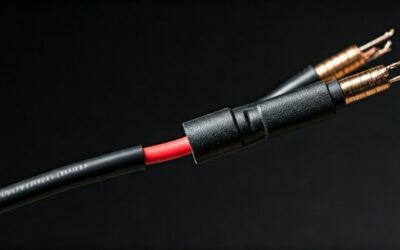
Yes. Using thin 20-gauge wire for long runs increases resistance. This forces the receiver to work harder and can lead to overheating. For most home setups, 14-gauge or 16-gauge oxygen-free copper (OFC) wire is the gold standard for safety.
Can a blown receiver damage new speakers?
Absolutely. If a receiver has a “blown” output transistor, it may leak DC voltage directly to the speaker terminals. Always test a “suspect” receiver with a cheap “thrift store” speaker before connecting your high-end gear.
Can I fix a speaker blown by a receiver?
Usually, yes, but it requires a re-cone or replacing the entire driver. If the tweeter is blown, the diaphragm must be replaced. If the woofer is blown, the entire voice coil and cone assembly usually need professional service.
Final Thoughts on Receiver and Speaker Compatibility
So, can a home receiver blow speakers? Yes, but only if the system is improperly matched or pushed beyond its logical limits. By matching your impedance, ensuring you have enough RMS power, and listening for the tell-tale signs of distortion, you can enjoy high-quality audio for decades.
Remember: Distortion is your enemy. If the music doesn’t sound “clean,” your speakers are at risk. Keep your receiver cool, your signals clean, and your volume levels within the “safe zone” of 80% or less.