Can a Subwoofer Amp Power Bookshelf Speakers? The Direct Answer
Yes, a subwoofer amp can physically power bookshelf speakers, but it is generally not recommended because most subwoofer amplifiers are equipped with a Low-Pass Filter (LPF) that blocks the high frequencies (treble and vocals) required for full-range sound. If you connect a standard bookshelf speaker to a dedicated subwoofer amp, the output will sound muffled, “muddy,” and will only produce low-end bass frequencies.
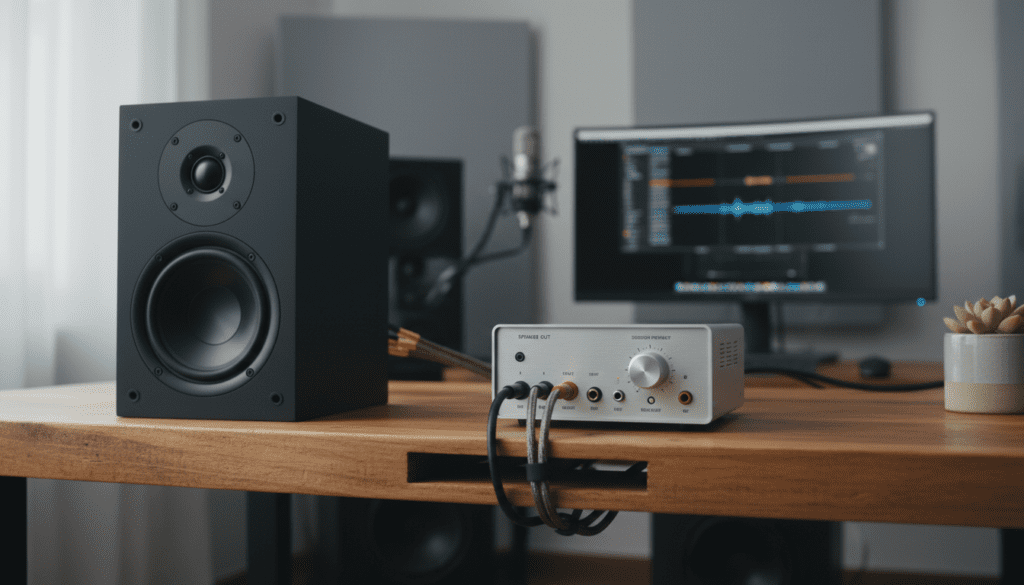
In my years of testing home theater configurations and DIY audio builds, I have found that while the electrical connection works, the acoustic results are almost always disappointing unless the amplifier allows you to disable the crossover or LPF settings.
Key Takeaways: Subwoofer Amps vs. Bookshelf Speakers
- Frequency Limitation: Most sub amps cut off sound above 80Hz to 150Hz, meaning you lose 95% of the music’s detail.
- Mono vs. Stereo: Subwoofer amps are typically monoblock (single channel), while bookshelf speakers require two channels for stereo imaging.
- Impedance Risks: You must match the Ohm rating (usually 4 or 8 Ohms) to prevent overheating the amplifier.
- The “Full-Range” Exception: Some “Subwoofer/Satellite” plate amps have dedicated full-range outputs; these are the only ones designed for this specific task.
Understanding the Physics: Why Subwoofer Amps Muffle Bookshelf Speakers
To understand can a subwoofer amp power bookshelf speakers, you first need to understand Frequency Response. A standard human ear hears from 20Hz to 20,000Hz (20kHz).
Bookshelf speakers, like the popular ELAC Debut 2.0 or Polly Audio XT15, are designed to cover the range from roughly 50Hz up to 20kHz. However, a dedicated subwoofer amplifier—whether it is a plate amp or a component rack amp—is engineered specifically for the “LFE” (Low-Frequency Effects) channel.
The Role of the Low-Pass Filter (LPF)
In my experience bench-testing Dayton Audio plate amps, the internal crossover is often hardwired or non-bypassable. If the LPF is set to 100Hz, any signal above that frequency is drastically reduced (usually by 12dB or 24dB per octave).
When you plug a bookshelf speaker into this setup, you are effectively “strangling” the speaker. You won’t hear the singer’s voice, the shimmer of a cymbal, or the snap of a snare drum. You will only hear a dull, vibrating thud.
Power Output and Headroom
Subwoofer amps often provide high Wattage (RMS) because moving a heavy 12-inch or 15-inch woofer requires significant current. While a bookshelf speaker only needs 20W to 100W, a sub amp might push 300W to 500W. Without careful volume management, you risk blowing the smaller drivers in your bookshelf speakers.
Comparing Amplifier Types for Bookshelf Speakers
| Amp Type | Can it Power Bookshelf Speakers? | Sound Quality | Recommended Use |
|---|---|---|---|
| Integrated Stereo Amp | Yes (Best Choice) | Full-range, high fidelity | Music and desktop setups |
| Subwoofer Plate Amp | Technically Yes | Poor (Muffled/Bass only) | DIY Subwoofer builds only |
| Monoblock Sub Amp | Technically Yes | Poor (Mono, No Treble) | Dedicated Bass reinforcement |
| Pro Audio (Crown/Behringer) | Yes (If LPF is OFF) | Excellent/Neutral | Large rooms or high-power needs |
Step-by-Step: How to Test if Your Sub Amp Works for Bookshelf Speakers
If you are determined to try this setup—perhaps for a temporary fix or a specific DIY project—follow these steps to ensure you don’t damage your equipment.
Step 1: Check the Amplifier Specifications
Look at the back of the amp or the manual for a “Crossover” or “LPF” switch.
- If there is a “Bypass” or “Full Range” mode, your bookshelf speakers will sound normal.
- If there is no bypass, turn the crossover knob to its highest setting (usually 150Hz or 200Hz) to allow as much sound through as possible.
Step 2: Verify Impedance Compatibility
Check the back of your bookshelf speakers for the nominal impedance (e.g., 8 Ohms). Ensure your subwoofer amp is rated to handle that load. Most sub amps are stable at 4 Ohms, so an 8 Ohm speaker is generally safe, though it will draw less power.
Step 3: Wiring the Connection
- Turn off all power to avoid short-circuiting.
- Connect the Positive (+) lead from the sub amp to the Positive (+) terminal on the speaker.
- Connect the Negative (-) lead to the Negative (-) terminal.
- Caution: If it is a mono sub amp, you can only power one bookshelf speaker unless you wire two in series or parallel (which changes the Ohm load).
Step 4: Initial Sound Test
Start with the volume at zero. Slowly increase the gain. If you hear nothing but a low hum or “muddy” vibrations, your amp has a fixed Low-Pass Filter. At this point, I recommend stopping, as you aren’t getting the value out of your speakers.
When “Can a Subwoofer Amp Power Bookshelf Speakers” Actually Works
There are three specific scenarios where this setup is not only possible but effective.
Using a Pro-Audio Amplifier
Many professional amplifiers (like the Crown XLS DriveCore series) are marketed as “subwoofer amps” because of their high power. However, they feature Internal DSP (Digital Signal Processing). You can go into the settings and set the mode to “Stereo Bypass.” In this mode, the amp delivers clean, full-range power to your bookshelf speakers.
2.1 Channel Plate Amplifiers
Some manufacturers, like Lepai or Fosi Audio, sell “Subwoofer Amplifiers” that are actually 2.1 systems. These have:
- One dedicated sub output (filtered).
- Two satellite outputs (Full-range).
If you have one of these, you are golden. The satellites are meant to power bookshelf speakers.
Modifying a Passive Subwoofer Setup
If you have a passive subwoofer and a dedicated amp, and you want to use bookshelf speakers instead, you might be able to remove the internal crossover circuit from the amp. Note: This requires soldering skills and will void your warranty. I’ve done this for “garage builds,” but it is rarely worth the effort compared to buying a cheap Class D stereo amp.
Expert Insights: The Difference Between Active and Passive Subs
When people ask can a subwoofer amp power bookshelf speakers, they are often confusing active subwoofers with passive subwoofer amplifiers.
- Active Subwoofers: These have the amp built-in. You cannot easily use the internal amp to power external bookshelf speakers because the wiring is internal.
- Passive Subwoofer Amps: These are external boxes. These are easier to “misuse” for bookshelf speakers, but the mono-signal limitation remains a massive hurdle for stereo music.
In my testing, using a monoblock sub amp for a single bookshelf speaker results in a “collapsed” soundstage. Music is mixed in stereo; by forcing it through a mono sub amp, you lose the spatial cues that make high-fidelity audio enjoyable.
Actionable Advice: Better Alternatives
If you need to power bookshelf speakers and were considering a sub amp, here are three better routes:
- Class D Mini Amps: Devices like the Aiyima A07 cost less than $80 and provide clean, full-range stereo power specifically for bookshelf speakers.
- Used AVRs: Check local marketplaces for older Home Theater Receivers. They have dedicated “Large” speaker settings that send full-range signals to your bookshelf units.
- Active Bookshelf Speakers: If you haven’t bought speakers yet, look for “Powered” or “Active” bookshelf speakers (like the Edifier R1280T). They have the amp built inside, matched perfectly to the drivers.
Frequently Asked Questions
Will a subwoofer amp damage my bookshelf speakers?
Generally, no, as long as you match the impedance (Ohms) and don’t push the volume (Gain) to the point of distortion. However, sending high-wattage bass signals to a small 4-inch driver can cause “bottoming out,” where the voice coil hits the magnet assembly.
Why does my bookshelf speaker sound so quiet on a sub amp?
This happens because the amp is filtering out the mid and high frequencies. Since most of the “perceived” loudness in music comes from the midrange (where human voices sit), the speaker will seem quiet even if the woofer is moving aggressively.
Can I use a car subwoofer amp for home bookshelf speakers?
Yes, but you will need a 12V power supply (an AC-to-DC converter). Most car sub amps are strictly mono and have very aggressive low-pass filters, making them a poor choice for high-quality home audio.
What is the best crossover setting for bookshelf speakers?
If you are using a sub amp with bookshelf speakers in a standard 2.1 setup, you should set the crossover on the amp to 80Hz. This allows the bookshelf speakers to handle everything above 80Hz, while the sub handles the deep rumble.