Can After Market Amp and Speakers be Hooked Up? The Short Answer
Yes, can after market amp and speakers be hooked yp? Absolutely. You can install an aftermarket amplifier and high-fidelity speakers in virtually any vehicle, regardless of whether you are keeping the factory head unit or installing a new one. This process involves bridging the gap between your car’s power supply, the audio source, and the new hardware using high-quality wiring harnesses, RCA cables, and power kits.
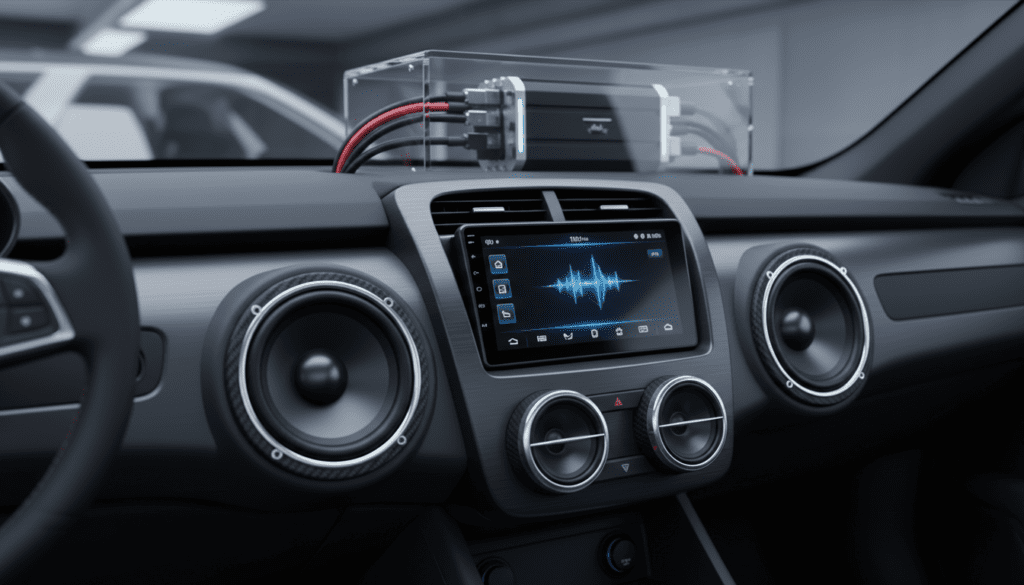
I have spent over a decade stripping interiors and chasing “alternator whine” in everything from vintage muscle cars to modern EVs. In my experience, the leap in sound quality from factory paper-cone speakers to a dedicated component speaker system powered by a Class D amplifier is the single best investment you can make for your commute. While the wiring might look like a “nest of snakes” at first, following a structured signal path makes the installation manageable for any DIYer.
TL;DR: Key Takeaways for Aftermarket Audio
- Compatibility: You can hook up an amp to a factory radio using a Line Output Converter (LOC).
- Power: Always run a dedicated fused power wire directly from the battery; never tap into existing cabin fuses for an amp.
- Grounding: Your ground wire must be the same gauge as your power wire and bolted to the bare metal of the chassis.
- Impedance: Ensure your speakers’ Ohms (Ω) match the stable output of your amplifier to avoid overheating.
- Sound Quality: Sound deadening (butyl rubber) in the doors is just as important as the speakers themselves for mid-bass response.
The Core Components of an Aftermarket System
Before we pick up a screwdriver, we need to understand the ecosystem. When people ask if can after market amp and speakers be hooked yp, they often worry about the “handshake” between different brands. Fortunately, car audio is largely standardized.
The Audio Source (Head Unit)
Your radio sends the low-level signal. If you have an aftermarket head unit (Pioneer, Sony, Alpine), you will use RCA outputs. If you have a factory radio, you will likely tap into the existing speaker wires to get a signal.
The Amplifier
The amp takes the weak signal from the radio and uses 12V power from your battery to “magnify” it. We typically use multi-channel amps (4-channel for door speakers) or mono-block amps for subwoofers.
The Speakers
Stock speakers are usually made of cheap paper and tiny magnets. Aftermarket speakers use materials like polypropylene, silk, or Kevlar. They require more power to move these stiffer, more durable materials, which is why an amp is so beneficial.
Wiring and Interconnects
This is the “circulatory system.” You need Oxygen-Free Copper (OFC) wiring for the best conductivity. Avoid Copper Clad Aluminum (CCA) if you want your system to last and run cool.
| Component | Function | Expert Pro-Tip |
|---|---|---|
| Power Wire | Delivers 12V from Battery | Use OFC wire to prevent voltage drops. |
| Ground Wire | Completes the circuit | Keep it under 18 inches and bolted to bare metal. |
| RCA Cables | Carries audio signal | Keep these away from power wires to avoid “hum.” |
| Speaker Wire | Connects Amp to Speakers | 16-gauge is standard; 14-gauge for high power. |
| Fuse Holder | Protects the car from fire | Place within 12-18 inches of the battery. |
Step 1: Planning and Tool Preparation
When I start a build, I lay everything out on a workbench. If you are wondering can after market amp and speakers be hooked yp without special tools, the answer is no. You need a few specific items to ensure the connections don’t vibrate loose.
Necessary Tools for the Job:
- Wire Strippers/Crimpers: For clean connections.
- Digital Multimeter: Essential for testing 12V power and setting amplifier gain.
- Panel Popping Tools: Plastic levers to remove door panels without scratching the plastic.
- Soldering Iron & Heat Shrink: For “permanent” connections (avoid twist-and-tape!).
- Socket Set: To disconnect the battery and seat bolts.
Safety Warning: Always disconnect the Negative (-) battery terminal before touching any wiring. I once saw a guy weld a wrench to a firewall because he skipped this step. Don’t be that guy.
Step 2: Installing the Aftermarket Speakers
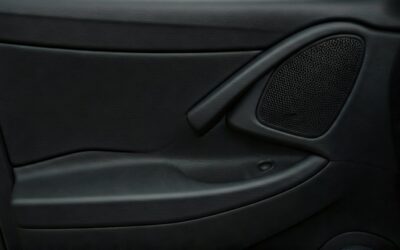
Most people start here. To hook up your speakers, you must first remove the factory door panels.
- Remove Door Panels: Locate hidden screws behind door handles and in armrest pockets. Use your panel tools to pop the plastic clips.
- Unplug Factory Speakers: Most use a proprietary plastic plug. You can either cut this or buy a vehicle-specific wiring adapter.
- Mounting the New Speaker: Aftermarket speakers often have different hole patterns. You may need mounting brackets (scosche or metra) to fit a 6.5-inch speaker into a 6×9-inch factory hole.
- Phasing: Ensure the positive (+) and negative (-) terminals match. If you “out-of-phase” your speakers (one wired backward), the bass will cancel out, and it will sound thin and hollow.
Step 3: Running Power and Ground Wires
This is the hardest part of the “can after market amp and speakers be hooked yp” puzzle. You have to get a thick wire from the engine bay into the cabin.
The Firewall Pass-Through
Look for a factory rubber grommet where existing wires pass through the firewall. I usually use a coat hanger or a professional wire fisher to poke through the rubber. Lubricate the wire with a little dish soap to make it slide through easily.
Proper Grounding Technique
Your amp needs a path back to the battery via the car’s chassis.
- Find a solid metal bolt (like a seat belt bolt).
- Sand the paint away until you see shiny silver metal.
- Use a ring terminal to secure the wire.
- Note: A bad ground is the #1 cause of amplifier failure and “clipping.”
Step 4: Getting the Audio Signal (LOC vs. RCA)
How does the amp know what to play?
Option A: Aftermarket Head Unit
If your radio has RCA Pre-outs on the back, simply plug in your RCA cables and run them down the opposite side of the car from your power wire.
Option B: Factory Radio (The LOC Method)
If you are keeping the stock screen, you need a Line Output Converter (LOC). This device taps into your rear speaker wires and converts the high-level signal into a low-level RCA signal that the amp can understand.
- Expert Insight: I highly recommend an active LOC (like the AudioControl LC2i). It corrects “bass roll-off,” a feature where factory radios turn down the bass as you increase the volume to protect cheap stock speakers.
Step 5: How to Hook Up the Aftermarket Amp
Now we bring it all together. The amplifier acts as the hub.
- Remote Turn-On Wire: This is a thin (usually blue) wire that tells the amp to turn on when the radio is on. Without this, your amp stays off.
- Speaker Wire Output: Run new wires from the amplifier’s output terminals back to your speakers.
- The “Big Three” Rule: If you are installing an amp over 1000W RMS, we recommend upgrading your car’s factory wiring (Battery to Ground, Chassis to Engine, Alternator to Battery) to handle the current.
Step 6: Tuning and Setting the Gain
Once everything is “hooked yp,” don’t just turn the volume to 100. You need to tune the Gain Control.
Gain is NOT a volume knob. It is a sensitivity match between your radio and the amp.
- Turn the radio to about 75% volume.
- Slowly turn the gain up until you hear distortion (crackling or clipping).
- Back it off slightly.
- Use a Multimeter to target a specific AC voltage if you want to be precise (Voltage = √(Watts x Ohms)).
Common Installation Mistakes to Avoid
In my years of troubleshooting, these are the errors that pop up most often when people ask can after market amp and speakers be hooked yp:
- Running Power and RCA Side-by-Side: This creates electromagnetic interference, resulting in a high-pitched “whining” noise that follows your engine RPM.
- Under-Sized Wiring: Using 8-gauge wire for a 2000W amp will cause the wire to heat up and potentially melt.
- Ignoring the Fuse: Placing the fuse near the amp instead of the battery. If the wire shorts out in the middle of the car, the whole wire becomes a heating element.
- Poor Speaker Seals: Not using foam “fast rings” to seal the speaker against the door panel. This causes “acoustic short-circuiting” where the sound waves from the front and back of the speaker cancel each other out.
FAQ: Frequently Asked Questions
Can I use my factory speaker wires with a new amp?
Yes. While running new 16-gauge wire is better, you can “speed wire” from the amp back to the factory harness behind the radio. This is often easier than fishing wires through the accordion boots in the door jams.
Will an aftermarket amp drain my battery?
Only if it is wired incorrectly. If your remote turn-on wire is connected to a “constant” 12V source instead of a “switched” source, the amp will stay on when the car is off, killing the battery overnight.
Do I need a capacitor for my aftermarket audio?
In most cases, no. A capacitor is a “band-aid” for a weak electrical system. If your lights are dimming, you are better off upgrading to an AGM battery or a High-Output Alternator.
Can after market amp and speakers be hooked yp to a leased car?
Yes, but I recommend using T-harnesses. These allow you to tap into the factory wiring without cutting or splicing, making it easy to return the car to “stock” when the lease ends.
What is the difference between Peak Power and RMS?
Always look at RMS (Root Mean Square). “Peak Power” is a marketing gimmick. RMS represents the continuous power the amp can produce and the speakers can handle without damage.
META_TITLE: Can After Market Amp and Speakers be Hooked Up? Pro Guide
META_DESC: Can after market amp and speakers be hooked yp? Learn how to install an amplifier and speakers to factory or aftermarket radios with our expert DIY guide.
SLUG: can-aftermarket-amp-and-speakers-be-hooked-up
IMAGE_PROMPT: A high-quality, close-up photo of a modern car amplifier being wired with thick blue and red copper cables, with professional tools like wire strippers and a multimeter nearby on a clean workbench. No text.