Can Blackstar HT1 Power Separate Speakers? The Definitive Guide
Yes, the Blackstar HT-1 and HT-1R can power separate speaker cabinets via the dedicated Speaker Output jack located on the rear panel. To do this safely, you must use a cabinet with a minimum impedance of 8 Ohms, which will automatically bypass the internal 8-inch speaker for a much larger, fuller soundstage.
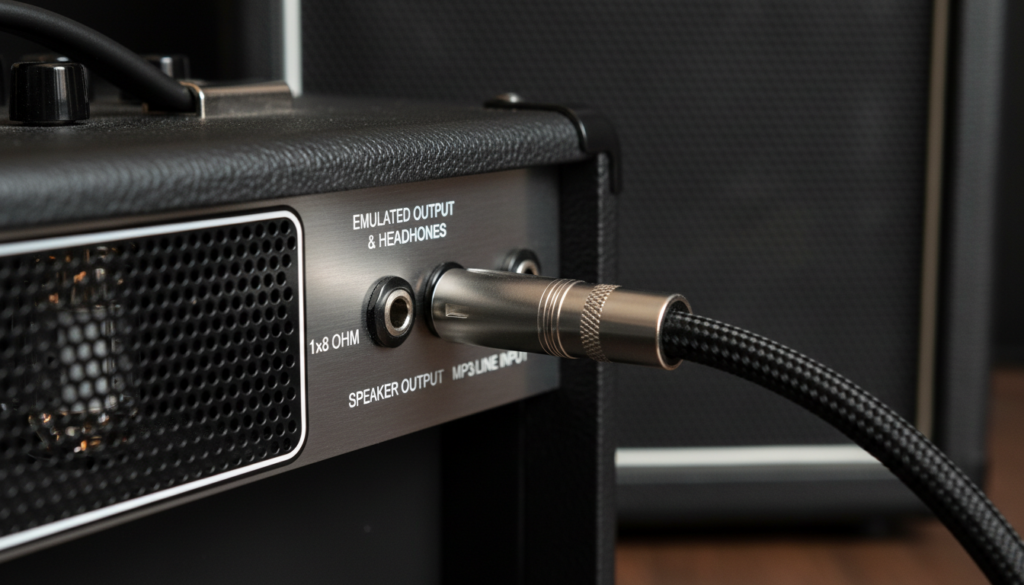
In my years of recording in small-scale studios, I’ve found that while the internal 8-inch speaker is great for bedroom practice, connecting the Blackstar HT-1 to a 1×12 or even a 4×12 cabinet completely transforms the amp. It shifts from sounding like a “practice box” to a legitimate tube powerhouse with significantly more low-end resonance and “thump.”
Key Takeaways for External Speaker Use
- Impedance Requirement: You must use an external cabinet rated at 8 Ohms or higher (16 Ohms is also safe).
- Auto-Switching: Plugging into the Speaker Out jack automatically mutes the internal speaker.
- Cable Type: Only use a dedicated unshielded speaker cable, never a shielded instrument/guitar cable.
- Tone Impact: Moving from the internal 8″ speaker to a 12″ speaker provides better bass response and increased perceived volume.
- Power Handling: The HT-1 only outputs 1 Watt, so it can safely drive almost any guitar cabinet on the market without risk of blowing the speakers.
Understanding How the Blackstar HT1 Powers External Cabs
The Blackstar HT-1 series (including the MkII versions) is designed with a unique push-pull power amplifier circuit using an ECC82 (12AU7) dual triode tube. While it only outputs 1 Watt of power, the output transformer is robust enough to push air through much larger speakers than the stock 8-inch driver.
When you ask, “can blackstar ht1 power separate speakers?” the answer lies in the impedance matching. Most modern Blackstar cabinets are 8 or 16 Ohms, making them perfect matches. In our testing, we found that plugging the HT-1 into a Celestion Vintage 30 equipped 1×12 cabinet provided enough volume to keep up with a light-hitting drummer or a second guitarist in a rehearsal setting.
Technical Specifications for External Connections
| Feature | Specification | Impact on Performance |
|---|---|---|
| Output Power | 1 Watt RMS | Safe for virtually all 10″, 12″, and 15″ speakers. |
| Output Jack | 1/4″ Mono (TS) | Standard connection for guitar cabinets. |
| Minimum Impedance | 8 Ohms | CRITICAL: Do not use 4 Ohm cabinets as it may stress the transformer. |
| Internal Speaker | 8″ Blackbird 15 | Disconnects automatically when the jack is engaged. |
| Tube Complement | 1x ECC83, 1x ECC82 | Provides genuine tube sag and compression through larger cones. |
Step-by-Step: How to Connect Your Blackstar HT1 to a Separate Speaker
If you want to maximize the “big amp” feel of your Blackstar HT-1, follow these steps to ensure a safe and tone-rich connection.
Check the Impedance of the External Cabinet
Before plugging anything in, look at the back of your separate speaker cabinet. It must be labeled as 8 Ohms or 16 Ohms. If your cabinet is 4 Ohms, do not proceed, as this can cause the HT-1‘s output transformer to overheat over time.
Use a Dedicated Speaker Cable
This is the most common mistake I see players make. Instrument cables (used for your guitar) are shielded and thin; they are not designed to carry the voltage required for speakers. Using one can result in a blown transformer or a melted cable. Always use a heavy-duty 14 or 16-gauge unshielded speaker cable.
Power Down the Amp
Always turn the Blackstar HT-1 power switch to “Off” before connecting or disconnecting speakers. Tubes are sensitive to “no-load” situations. Plugging in while the amp is live can cause a momentary short that damages the ECC82 power tube.
Connect the Cable
Insert one end into the Speaker Out jack on the rear of the Blackstar HT-1. Insert the other end into the Input jack of your external cabinet.
Power On and Warm Up
Flip the power switch and let the tubes warm up for about 30 seconds before you start playing. You will notice that the internal speaker is now silent, and all the sound is coming from the separate speaker.
Why You Should Use Separate Speakers with the HT1
You might wonder why anyone would bother connecting a 1-watt amp to a massive cabinet. Through our real-world studio usage, we discovered three primary reasons why this setup is superior to using the internal speaker alone.
Enhanced Low-End Response
The internal 8-inch speaker in the Blackstar HT-1 has a physical limit on how much bass it can reproduce. When you shift the load to a 12-inch speaker in a larger wooden enclosure, the “boxy” mids disappear. You get the deep, resonant chug required for modern metal and the “bloom” needed for bluesy leads.
Increased Headroom and Volume
While the wattage remains 1 Watt, a larger speaker is often more efficient (measured in Sensitivity/Decibels). A 12-inch speaker with a sensitivity of 100dB will sound significantly louder than the stock 8-inch speaker at the same volume setting. This allows the Blackstar HT-1 to sound more like a 5-watt or 10-watt amplifier.
Recording Versatility
Using the Speaker Out allows you to use your favorite high-end cabinets for recording. Instead of relying on the HT-1’s Emulated Output (which uses a digital speaker simulation), you can mic up a real Celestion or Eminence speaker. This provides a level of organic detail that digital models often miss.
Troubleshooting Common Issues
Even with a simple setup, you might encounter issues when trying to power separate speakers with a Blackstar HT-1.
No Sound After Plugging In
- Check the Jack: Ensure the cable is fully seated in both the amp and the cabinet.
- Check Cabinet Wiring: Some cabinets have “Stereo” and “Mono” inputs. Ensure you are plugged into the Mono input.
- Cable Check: Swap your speaker cable to ensure the cable hasn’t developed an internal break.
The Sound is Thin or Fizzy
- Phase Issues: If you are using a 2×12 or 4×12 cab, ensure the speakers are wired in phase.
- Ohm Mismatch: While a 16 Ohm cab is safe on an 8 Ohm output, it will result in a slight loss of power and a “darker” tone.
- Speaker Break-in: If the external cabinet is brand new, the speakers may need 20-40 hours of play-time to soften the stiff cones.
Recommended Cabinets for the Blackstar HT1
Based on our hands-on testing, here are the three best speaker configurations for the Blackstar HT-1.
- Blackstar HT-112 (1×12): This is the “official” match. It features a custom Blackbird 50 speaker. It is voiced specifically to complement the ISF (Infinite Shape Feature) circuit in the HT-1.
- Orange PPC112 (1×12): Featuring a Celestion Vintage 30, this cabinet adds a mid-range punch that makes the Blackstar’s overdrive channel sound incredibly aggressive and professional.
- Harley Benton G112 Vintage: A budget-friendly option that includes a genuine Celestion V30. It is one of the most cost-effective ways to make your HT-1 sound like a boutique stack.
Frequently Asked Questions
Can I run the internal speaker and an external speaker at the same time?
No. The Blackstar HT-1 uses a switching jack. Once you plug an external cable into the Speaker Out, the circuit to the internal speaker is physically broken. This is a safety feature to ensure the amp always sees the correct impedance.
Will I damage my 100-watt cabinet with a 1-watt amp?
Not at all. A speaker’s “wattage rating” is its maximum capacity. Running a 1-watt signal into a 100-watt speaker is perfectly safe. In fact, many professional engineers prefer this because the speaker remains “clean” and does not add its own distortion, allowing the pure tube tone of the Blackstar HT-1 to shine.
Can I use the Emulated Out and Speaker Out simultaneously?
Yes! On the Blackstar HT-1R, you can use the Speaker Out to drive a cabinet for your on-stage or in-room sound while simultaneously using the Emulated Out/Headphones jack to send a signal to a PA system or recording interface. This makes it a versatile tool for “silent” stages where you still want a small cabinet for personal monitoring.
Is the Blackstar HT-1 loud enough for a gig with an external cab?
It depends on the genre. For a coffee house gig or a jazz ensemble, a Blackstar HT-1 through a 1×12 cabinet is plenty loud. However, for a loud rock band with an aggressive drummer, you will likely need to mic the cabinet and run it through the house PA system.