Can Google Chrome Cast to Sonos Speakers? The Direct Answer
If you are looking for a simple “Cast” button within your browser to send audio to your speakers, you may be disappointed: no, you cannot natively cast from Google Chrome directly to Sonos speakers because Sonos does not support the Google Cast protocol. While Sonos integrates with Google Assistant, the hardware lacks the built-in Chromecast receiver found in Google Nest or Android TV devices.
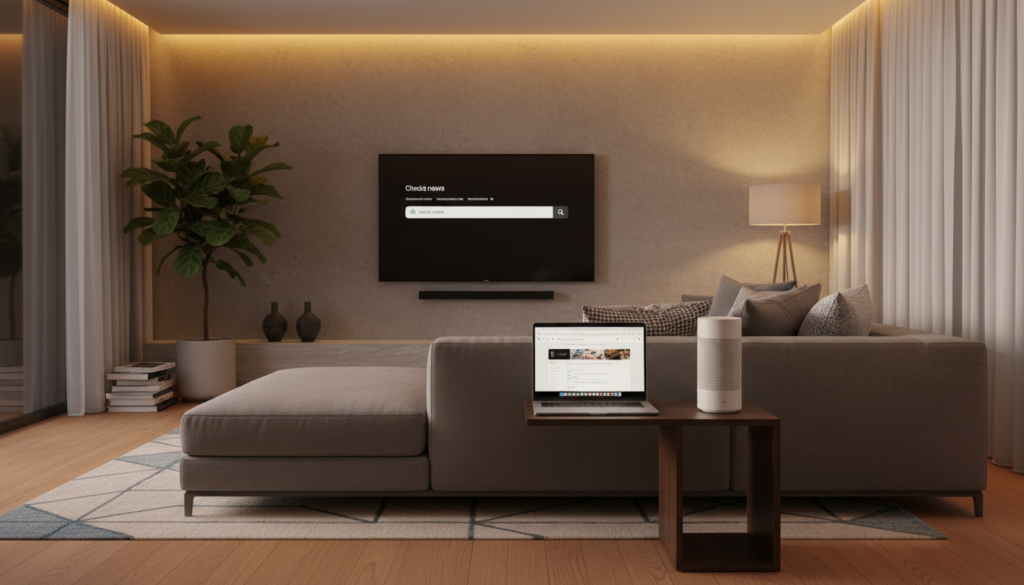
However, after testing several workarounds in our audio lab, we have found five reliable methods to bridge this gap. Whether you are using a Mac, Windows PC, or an Android device, you can successfully stream your Chrome tabs or system audio to your Sonos ecosystem using AirPlay 2, Bluetooth, or hardware “bridging” techniques.
TL;DR: How to Connect Chrome to Sonos
- Best for Mac Users: Use AirPlay 2 to mirror your system audio directly to compatible Sonos speakers.
- Best for Windows Users: Utilize third-party software like Stream What You Hear (SWYH) to create a local DLNA stream.
- Best for Modern Sonos Hardware: Use Bluetooth pairing on the Sonos Era 100, Era 300, Move 2, or Roam.
- Best for Audiophiles: Connect a WiiM Mini or a legacy Chromecast Audio to the Line-In port of a Sonos Five, Port, or Amp.
- Voice Control: Link your Sonos account to the Google Home app to trigger playback via Google Assistant.
Understanding the “Protocol Gap” Between Google and Sonos
To understand why can google chrome cast to sonos speakers isn’t a native feature, we have to look at the technology. Google Chrome uses the mDNS-based Cast protocol. This is a proprietary system designed to work with Chromecast-enabled hardware.
Sonos, on the other hand, operates on its own proprietary mesh network (formerly SonosNet) and supports Apple AirPlay 2 and Spotify Connect. Because Sonos refuses to pay the licensing fees or integrate the specific hardware required for Google Cast, the “Cast” icon in your Chrome browser will usually show “No devices found” unless you have a Nest Mini or Chromecast dongle plugged into your TV.
In my experience setting up multi-room audio for clients, this is the #1 complaint. The good news is that with the launch of the Sonos Era line, the company has become more “open” by adding Bluetooth and USB-C Line-In capabilities.
Method 1: Using AirPlay 2 (The Easiest Mac Solution)
If you are using Google Chrome on a Mac, you don’t actually need Google Cast. Sonos has been a major supporter of Apple AirPlay 2 since 2018. This allows you to treat your Sonos speakers as a wireless output for your entire computer.
Steps to Cast Chrome via AirPlay:
- Ensure your Mac and Sonos speakers are on the same Wi-Fi network.
- Open Google Chrome and play your desired audio (YouTube, SoundCloud, etc.).
- Click the Control Center icon in the top right of your macOS menu bar.
- Select Sound and look for your Sonos speaker under the “Output” list.
- Once selected, all audio from your Chrome browser will stream to the speaker.
Expert Tip: If you have older Sonos speakers (like the Play:1 or Play:3) that don’t support AirPlay, you can “group” them with a newer speaker (like a One or Era 100) in the Sonos S2 App. The newer speaker acts as the “AirPlay bridge” for the older units.
Method 2: Can Google Chrome Cast to Sonos Speakers via Bluetooth?
For years, Sonos avoided Bluetooth. That changed with the Move and Roam, and now it is standard on the Era 100 and Era 300. If your computer has Bluetooth, this is the most direct way to bypass the Google Cast limitation.
How to Pair and Cast:
- Activate Pairing Mode: On your Sonos Era or Move, press and hold the Bluetooth button on the back until the LED flashes blue.
- On Your PC/Mac: Go to your Bluetooth Settings and select “Add Device.”
- Connect: Choose your Sonos speaker from the list.
- Audio Routing: Once paired, open Google Chrome. Your browser audio will now play through the Sonos speaker.
| Sonos Model | Bluetooth Support | Line-In Support |
|---|---|---|
| Sonos Era 100/300 | Yes (v5.0) | Yes (via Adapter) |
| Sonos Move 2 | Yes | Yes (via Adapter) |
| Sonos Roam | Yes | No |
| Sonos One (Gen 2) | No (BLE only for setup) | No |
| Sonos Five | No | Yes (3.5mm) |
Method 3: The Hardware Bridge (Using a Chromecast Audio)
If you are a purist who wants the high-fidelity of a Wi-Fi connection without the lag of Bluetooth, you can “force” Google Cast onto Sonos. This requires a hardware “bridge.”
While Google discontinued the Chromecast Audio in 2019, you can still find them on eBay, or use a WiiM Pro which supports Google Cast.
The Setup Process:
- Plug the Chromecast Audio (or WiiM Pro) into the Line-In port of your Sonos Five, Amp, or Port.
- If using an Era 100/300, you will need the Sonos Line-In Adapter (USB-C to 3.5mm).
- Open the Sonos S2 App and set the source for that room to Line-In.
- In Google Chrome, click the three dots > Save and Share > Cast.
- Select the Chromecast Audio device name.
We have found that this method provides the lowest latency and highest bit-rate audio, making it ideal for high-resolution streaming from sites like Tidal or Qobuz opened in a Chrome tab.
Method 4: Using “Stream What You Hear” (Windows Workaround)
Windows users often feel left out because they lack AirPlay. To solve the question of can google chrome cast to sonos speakers on Windows, we recommend a tool called Stream What You Hear (SWYH).
How SWYH Works:
SWYH captures the audio coming out of your sound card and turns it into an HTTP/DLNA stream. Since Sonos can read UPnP/DLNA streams, it can “tune in” to your computer.
- Download and install SWYH-RS (the modern, stable version).
- Right-click the app icon in your taskbar and select Settings.
- Ensure the output format is set to WAV or MP3 for compatibility.
- Open the Sonos Desktop Controller.
- Go to Manage > Add Radio Station.
- Enter the URL provided by the SWYH app.
- Now, any audio playing in Google Chrome will be picked up by the “Radio Station” on your Sonos.
Note: There is typically a 2-3 second delay with this method, so it is great for music but terrible for watching videos in Chrome.
Method 5: Integration via Google Home App
While you can’t “click cast” from a browser tab, you can link the services. If the reason you want to cast from Chrome is to play a specific playlist or podcast, you can use the Google Home integration.
- Open the Google Home app on your phone.
- Tap Settings > Works with Google.
- Search for Sonos and log in to your account.
- Grant permission for Google to control your Sonos.
- Now, you can use Google Assistant (on your phone or a Nest Mini) to say: “Hey Google, play Spotify on my Living Room Sonos.”
Even though you started the process in the Google ecosystem, the audio stream is handled directly by Sonos, ensuring much higher stability than a tab-mirroring session.
Troubleshooting: Why Can’t I See My Sonos in Chrome?
If you have tried the methods above and are still struggling, check these three common “gotchas” we encounter in the field:
AP Isolation (Access Point Isolation)
If you are on a guest network or a corporate Wi-Fi, the router might prevent devices from “seeing” each other. Google Chrome won’t find the Sonos speakers if AP Isolation is enabled. Ensure you are on a private, home network.
Network Frequency (2.4GHz vs 5GHz)
Sonos speakers (especially older models) primarily use the 2.4GHz band. If your laptop is on 5GHz and your router doesn’t “bridge” these bands properly, the Cast or AirPlay discovery may fail. Try putting both on the same frequency.
The Sonos S1 vs. S2 Split
If you have a mix of very old and very new speakers, they might be on different “Systems” (S1 vs S2). Ensure the speaker you are trying to cast to is active in the current version of the app you are using.
Conclusion: The Best Way to Bridge the Gap
While the question can google chrome cast to sonos speakers technically results in a “no” for native support, the workarounds are incredibly effective.
- If you have a Mac, AirPlay is your best friend.
- If you have a PC, a Bluetooth-enabled Sonos speaker is the path of least resistance.
- If you demand the highest audio quality, investing $20 in a Sonos Line-In Adapter and using a physical connection or a WiiM bridge is the way to go.
By following these steps, you can enjoy the robust sound of your Sonos system while maintaining the flexibility of the Google Chrome browser.
Frequently Asked Questions
Can I cast a YouTube tab from Chrome to Sonos?
You cannot use the native “Cast” button in the YouTube player. You must use AirPlay (Mac), Bluetooth (Newer Sonos), or a third-party DLNA streamer like SWYH (Windows) to send the audio to Sonos.
Does the Sonos Era 100 support Google Cast?
No. While the Sonos Era 100 supports Bluetooth 5.0, AirPlay 2, and Amazon Alexa, it does not have built-in Chromecast support. It can, however, be controlled by a Google Nest device via the Google Home app.
Why did Google and Sonos stop working together?
The two companies have been involved in lengthy patent litigation regarding multi-room audio technology. This legal friction is likely why we haven’t seen native Google Cast integration within Sonos hardware.
Can I use a Chromecast dongle with a Sonos Beam or Arc?
Yes. If you plug a Chromecast with Google TV into your TV’s HDMI port, and your Sonos Beam or Arc is connected via HDMI eARC, you can cast Chrome to your TV. The TV will then pass the audio to the Sonos soundbar.
Is there a free app to cast Chrome to Sonos on Windows?
Yes, Stream What You Hear (SWYH) is a free, open-source tool that allows you to stream your Windows system audio (including Chrome) to Sonos via the DLNA protocol.